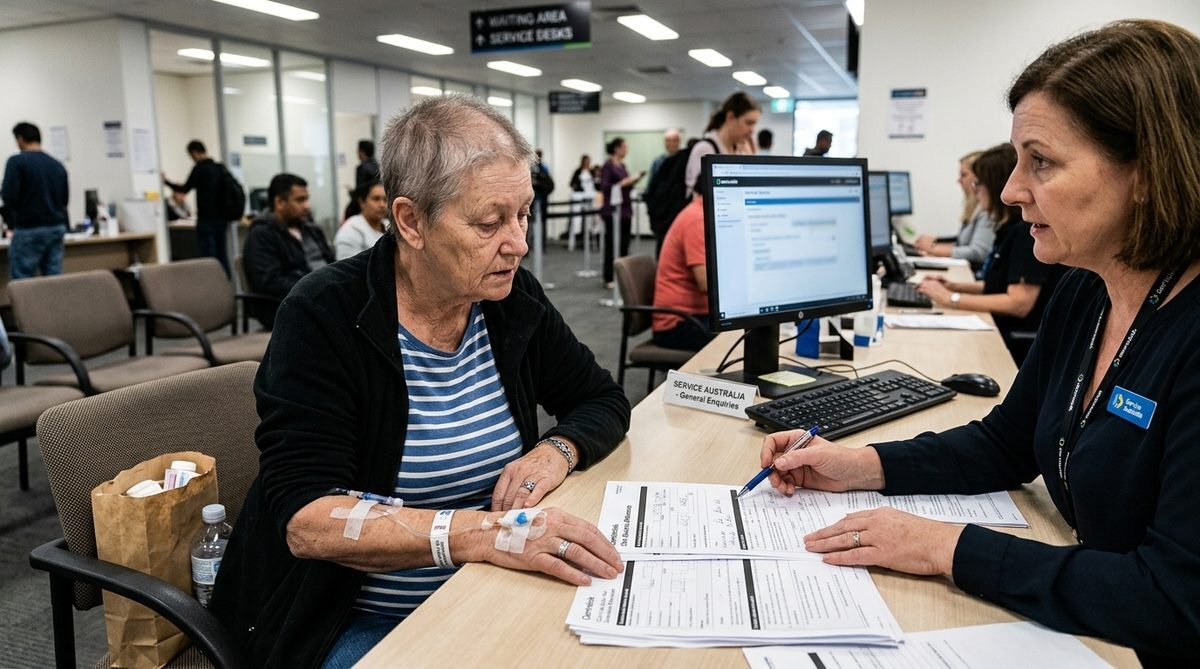
Why am I being charged a Medicare surcharge?

You are usually being charged because your income went over the Medicare Levy Surcharge threshold and you did not have approved private patient hospital cover for the full relevant period. The charge is worked out through your tax return. It may appear even if your employer withheld tax, you have Medicare, or you hold another type of health policy.
Its formal name is the Medicare Levy Surcharge, often shortened to MLS. It is not the same as the standard Medicare levy paid by many Australian taxpayers. To check the charge, match four parts of your tax assessment: the income used for MLS purposes, your family status, your policy type and the number of covered days reported. private hospital cover for you and your family
Why can my taxable income look safe while the surcharge still appears?
The MLS does not use only the taxable income figure near the top of your return. The Australian Taxation Office uses a wider measure called income for Medicare Levy Surcharge purposes.
This measure can include reportable fringe benefits and reportable super contributions. It may also count net investment losses and some foreign employment income. Those amounts can push you over the relevant threshold, even when deductions brought your taxable income below it.
Take a worker whose taxable income drops after claiming a rental property loss. The loss may cut ordinary taxable income, but the MLS calculation can add that net investment loss back. The worker sees a surcharge and thinks the return is wrong. In fact, the two calculations use different income measures.
Salary sacrifice can create the same sort of surprise. Extra employer super contributions may be reportable, even though the money never entered your bank account. So a payment summary or income statement can affect your MLS position in an easy-to-miss way.
Open the MLS section of your lodged return and check each adjustment. Don't compare the threshold with your salary alone. Use the final MLS income figure in the tax calculation.
Can my partner's details change the result?
Yes. Your spouse and dependent children can change which threshold applies, although the surcharge itself is assessed against your own income.
For MLS purposes, a spouse can include someone you lived with as a couple. The meaning is wider than legal marriage. If you had a spouse during the tax year, the return may ask for their income and the dates when the relationship applied.
The family threshold is higher than the single threshold. It can also rise when there are dependent children after the first child. But using the family threshold does not mean one partner's surcharge is simply based on the couple's combined income. Each adult's own situation still counts.
One common data problem happens when a return lists the taxpayer as single for the whole year, even though they married, separated or began living with a partner during that year. Another happens when the spouse income field is blank. Tax software may then produce an estimate from missing details.
Check the status and dates. Don't just pick the answer that describes your life on the day you lodge. The return covers the full income year, so a relationship change partway through may alter the result.
Why did my private health policy fail the test?
The MLS test calls for eligible private patient hospital cover. Extras cover alone does not pass. Neither does ambulance-only cover. Many overseas visitor policies and health discount products also fail the test.
This catches people out because an insurer may sell several products under the same brand. Someone can pay monthly premiums, claim dental benefits and still have no hospital cover for MLS purposes. The tax rule checks the cover held, not whether you paid money to a health company.
The hospital policy must also follow government rules, including limits on the allowed excess. A compliant insurer will normally report the policy details through a private health insurance statement. If you're unsure, ask the insurer one clear question: was this exact policy appropriate private patient hospital cover for Medicare Levy Surcharge purposes on each date shown?
Don't trust the policy name alone. Words like health, medical or comprehensive do not prove MLS compliance. Check the product record and cover dates.
Why does the number of covered days matter?
The surcharge can apply for each day you lacked eligible cover while the rule applied to you. Buying a policy near the end of the tax year won't wipe out earlier uncovered days.
Suppose a taxpayer began compliant hospital cover on 1 March. The insurer reports cover from that date, so the tax return may still charge MLS for the earlier part of the income year. This will usually mean a partial surcharge, not an all-or-nothing charge.
Gaps may also appear when a policy starts after confusion about a waiting period, ends because of a missed premium or changes while switching funds. Even a one-day data gap can affect the covered-day count, though the taxpayer thought the policies joined without a break.
Compare the insurer's start and end dates with those entered in the tax return. If you changed insurers, check both statements. Together, they should cover the full period across both policies without counting any day twice.
Why can payroll withholding leave a bill at tax time?
Your employer usually withholds tax from your wages using the details available to payroll. It may not know your spouse's income, investment results or private hospital cover. It may also have no record of reportable amounts added later.
So withholding can cover ordinary income tax and the standard Medicare levy, yet fall short of the final MLS amount. The surcharge appears when all your yearly details come together in the return.
This doesn't mean payroll charged you incorrectly. Withholding is a prepayment estimate. Your notice of assessment gives the final calculation.
The same thing can happen when your income jumps late in the year due to a bonus, capital gain or extra contract work. Hospital cover bought after that jump only affects later covered days. It doesn't work backwards.
Could the insurer or tax return data be wrong?
Yes. Before accepting the charge, compare your assessment with the source records. Mistakes often involve missing policy dates, the wrong spouse status or an amount placed in the wrong return field.
Use this review order:
- Confirm the notice labels the amount as Medicare Levy Surcharge.
- Find the income for MLS purposes used in the return.
- Check your spouse status and dependent child details for the relevant dates.
- Download the private health insurance statement for each policy held.
- Match every covered day against the return.
- Ask the insurer to correct any data it reported incorrectly.
If the insurer says its report was wrong, wait for the corrected details or get written proof before amending the return. If the policy data is right but your lodged answers were wrong, you may need an amendment. Keep the statements and calculation records that back up the change.
A tax agent can help if the return includes trusts, foreign income or tricky family dates. The aim is to trace the assessed amount back to its inputs. Guessing from the size of the final bill rarely reveals the problem.
Does this have anything to do with American Medicare?
No. Search results often mix Australian tax rules with Medicare (United States). The name is shared, but the systems are different.
In Australia, the Medicare Levy Surcharge is an income tax measure tied to eligible private hospital cover. In the United States, Medicare is a federal health insurance program, mainly for older people and some younger people with disabilities. Higher-income US beneficiaries may pay income-based adjustments on certain Medicare premiums, but those charges are not Australia's MLS.
Health insurance in the United States also uses terms such as premiums, deductibles and employer plans under a different legal system. Advice about a US Medicare premium can't explain a line on an Australian Taxation Office assessment. Make sure any guide you read covers Australian income years and Australian private patient hospital cover.
What do most people miss when checking the charge?
The name of the policy proves very little
A policy can offer useful benefits without passing the MLS hospital-cover test. Extras claims and membership cards don't prove eligibility.
The tax result follows dates, not intentions
Planning to buy cover or paying after a policy lapsed won't change the uncovered period. The calculation counts the days when valid cover was in place.
A large tax bill is not automatically a large surcharge
Your final amount may combine the MLS with ordinary tax, a private health insurance rebate adjustment and too little withholding. Read each line of the assessment before blaming the whole balance on Medicare.
The cheapest policy may solve only the tax issue
A basic compliant hospital policy may cut future MLS exposure, but its exclusions and excess can limit how useful it is for treatment. Tax treatment and useful health protection are separate choices. Read the product terms before choosing cover on price alone.
How can you verify the calculation from your records?
Gather your notice of assessment, lodged tax return and insurer statements. Mark the exact MLS amount first. Then note the income figure used for MLS purposes and the surcharge rate applied in the return.
Next, check whether the return treated you as single or part of a family for each relevant period. Review dependent child details where they apply. Match the hospital-cover dates against a calendar, especially if you joined, cancelled or changed funds during the year.
If every input is right, the surcharge is likely the intended result under the tax rules. If one input is wrong, fix that source instead of changing unrelated figures. The insurer fixes insurer reporting. A tax return amendment fixes taxpayer entries. The Australian Taxation Office can explain an assessment, but it can't turn extras cover into eligible hospital cover.
Actionable takeaway: Compare your MLS income, family details and eligible hospital-cover dates with your lodged return before paying or amending the assessment.
The Fee may be a Medicare levy surcharge, which Medicare (Australia) applies through the tax system when an eligible taxpayer does not hold an appropriate level of private hospital cover.
Common questions
How do I avoid paying Medicare levy surcharge?
You can avoid the surcharge by having approved private hospital cover for you and your family. You may also avoid it if your income is below the yearly limit.
What triggers Medicare levy surcharge?
The surcharge applies when your income is above the yearly limit and you do not have approved private hospital cover. It may apply for each day you are without cover.
Why is my Medicare levy surcharge so high?
The amount rises as your income increases and can be up to 1.5% of your income. You may also pay more if you lacked hospital cover for most or all of the year.
Who is required to pay the Medicare levy surcharge in 2026?
In the 2025–26 tax year, it generally applies to singles earning over $101,000 and families earning over $202,000 without approved private hospital cover. The family limit rises by $1,500 for each child after the first.

How Much Does It Cost to Have Your Prostate Removed Privately in Melbourne?
Read article →
Is It Worth Having Your Prostate Removed in Melbourne?
Read article →
Can You Get Anything Free if You Have Cancer in Melbourne?
Read article →
What Are the Negatives of Removing Your Prostate in Melbourne?
Read article →
Is Prostate Cancer Classed as a Disability in Melbourne?
Read article →