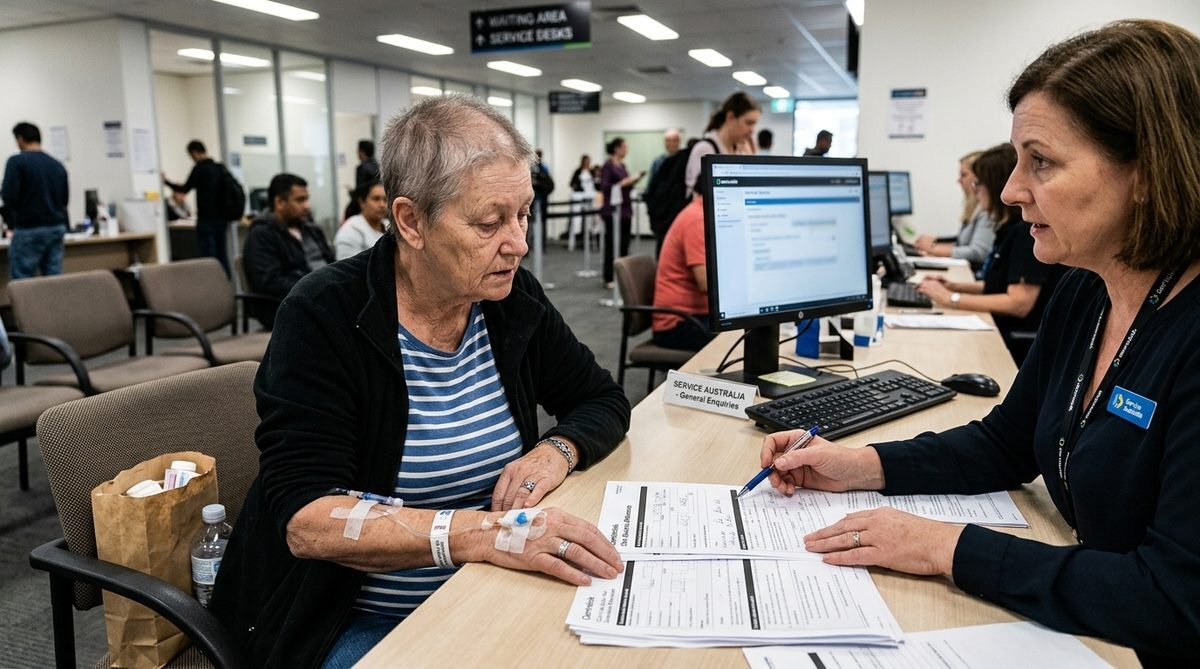
Which Prime Minister Started Medicare? The Story Behind Australia's Health System
Bob Hawke introduced Medicare in Australia on 1 February 1984. That's the direct answer. Hawke's Labor government brought it in after a previous attempt under Gough Whitlam had been blocked and then dismantled by the Fraser government.
When Labor won back power in 1983, Medicare was a core commitment. Hawke followed through on it within the first year of his prime ministership.
But the fuller story goes back further than Hawke, and understanding it tells you a lot about why Medicare works the way it does today.
Who Really Brought Medicare Into Australia?
The honest answer is that two prime ministers shaped what became Medicare. Gough Whitlam laid the groundwork. Bob Hawke finished the job.
Whitlam introduced Medibank in 1975, which was the first version of universal health cover in Australia. It passed through parliament after a double dissolution election, but by the time it launched properly, Whitlam's government was already under pressure.
Malcolm Fraser won the 1975 election and began winding Medibank back. By 1981, it had effectively been gutted, replaced with a private insurance model that left many Australians without affordable cover.
When Bob Hawke won the 1983 election, universal health insurance was back on the table. His health minister Neal Blewett did most of the technical design work. The name changed from Medibank to Medicare, the funding model was redesigned, and on 1 February 1984, the system went live.
So Whitlam had the idea and the political will. Hawke had the circumstances and the execution. If you had to pick one name, the history books point to Hawke as the prime minister who started Medicare as it exists today.
When Did Medicare First Start in Australia?
Medicare officially started on 1 February 1984. That date marks when Australians could first use a Medicare card to access subsidised GP visits and hospital treatment without paying upfront at a public hospital.
The lead-up was politically messy. The Australian Medical Association opposed it. Private insurers lobbied hard against it. There were arguments about whether bulk billing would survive, whether specialists would participate, and whether the whole thing was financially sustainable.
I find it interesting that the opposition to Medicare at the time used almost identical arguments to those made against Medibank in 1975. The language changed slightly, but the concerns were the same: costs would blow out, doctors would leave, quality would drop. None of those predictions proved accurate in the way critics claimed.
By the late 1980s, Medicare had broad public support across party lines. Even when the Howard government made changes to encourage private health insurance uptake in 1999 and 2000, they left the Medicare structure intact. That says something about how embedded it became, and how quickly.
Who Introduced the Medicare Levy in Australia?
The Medicare Levy was introduced by the Hawke government at the same time Medicare launched in 1984. It started at 1% of taxable income. The reasoning was straightforward: if everyone benefits from the system, everyone contributes to funding it through their tax.
The levy has changed over time. It rose to 1.25% in 1986, then to 1.5% in 1993. After the Port Arthur massacre in 1996, the Howard government temporarily raised it to 1.7% to fund the gun buyback scheme, then brought it back to 1.5%.
It sat there until 2014, when the Gillard and then Rudd government had already legislated an increase to 2% to fund the National Disability Insurance Scheme. That 2% rate is where it sits today.
There is also a Medicare Levy Surcharge, which is a separate charge on higher income earners who do not hold private hospital cover. That was introduced in 1997 under John Howard. It is often confused with the Medicare Levy itself, but they are two different things. The levy funds Medicare. The surcharge is designed to push higher earners toward private insurance to reduce pressure on the public system.
What Most Articles Get Wrong About Medicare's Origins
A lot of writing about Medicare treats it as a purely political story, a Labor idea that conservatives opposed and Labor delivered. That framing misses something important.
The design of Medicare was genuinely influenced by the failures of Medibank. Whitlam's team built Medibank quickly and under political pressure. When Fraser dismantled it, the architects of what became Medicare studied exactly where Medibank had been vulnerable.
They made the funding mechanism harder to quietly defund. They built the bulk billing incentive into the fee structure rather than as a bolt-on. And they tied the levy directly to the program so any politician who wanted to cut Medicare had to explain why they were keeping the levy.
That is not just political history. It is a lesson in policy design. One of my clients who works in health administration once told me that Medicare's durability has less to do with it being popular and more to do with it being structurally difficult to remove. You can change the settings, but the frame is load-bearing.
The second thing most articles miss is the role of the states. Hospital funding under Medicare is a shared federal-state responsibility, and the original Medicare agreements required each state to sign on. Some were reluctant.
The negotiation process is rarely mentioned, but it shaped what public hospital access actually looks like depending on where you live in Australia.
Third, and this one genuinely surprises people: Medicare does not cover everything. Dental, most physio, and most allied health services are not covered as standard. The system was designed around GP and hospital care.
When people are shocked that their physio bill is not covered by Medicare, it is because Medicare was never designed to cover it. That original scope decision from 1984 is still shaping what Australians pay out of pocket today.
How Medicare Works Now
The basic structure has not changed much since 1984. Medicare sets a fee for each medical service, called the Medicare Benefits Schedule fee. For most GP visits, Medicare pays 100% of that scheduled fee if the doctor bulk bills.
If the doctor charges more than the schedule fee, you pay the gap.
For specialist visits, Medicare pays 85% of the schedule fee. You pay the rest plus any gap the specialist charges above the schedule fee. For procedures in hospital, there are different rules depending on whether you are a public or private patient.
The system is administered by Services Australia, which most people interact with through myGov or the Medicare app. Claims are mostly automatic now for bulk billing providers. You do not fill out paper forms in most cases. The doctor sends the claim electronically and the payment goes directly to them.
One of my clients, a practice manager at a busy suburban GP clinic, described the billing system to me once as genuinely well-designed at the technical level, even if the fee schedule itself has not kept pace with the cost of running a practice.
That gap between what Medicare pays and what it costs to deliver care is why bulk billing rates have been falling in recent years, particularly in cities where rents and staff costs are high.
The Medicare Levy: Who Pays It and Who Does Not
Most Australian residents pay the Medicare Levy as part of their income tax. It appears on your tax assessment as a separate line item. At 2% of taxable income, someone earning $80,000 pays $1,600 per year.
There are exemptions. People on very low incomes pay a reduced levy or none at all. The threshold changes each year. In 2023-24, the threshold for individuals was around $26,000. Below that, no levy. Between that and a shade above $32,000, a reduced levy. Above that, the full 2%.
Some categories of people are exempt regardless of income: certain blind pensioners, people entitled to a full government health care card in some circumstances. The rules are detailed and the ATO website has the current thresholds.
The levy does not entitle you to more Medicare coverage. It is a tax, not a premium. You cannot opt out of it by paying for private insurance. The Medicare Levy Surcharge works the other way: it adds an extra charge if you earn above a threshold and do not have private hospital cover. But the base levy is universal for taxpayers above the threshold.
Who Has Original Medicare?
This question comes up often because of confusion between the Australian Medicare system and the American Medicare program, which covers people aged 65 and over in the United States. In that context, "original Medicare" refers to the traditional fee-for-service parts of the US system, Part A and Part B, as opposed to Medicare Advantage plans.
In Australia, there is no concept of "original Medicare" as a distinct tier. Every Australian resident enrolled in Medicare has the same basic entitlements. There is no age restriction, no enrolment window, and no split between original and advantage versions. You are either enrolled or you are not.
If you have moved to Australia from the US and are used to thinking about Medicare in American terms, the Australian system is quite different. It is closer to what Americans would call a single-payer system, where the government insurer covers everyone rather than a specific demographic.
FAQ
Which prime minister started Medicare in Australia?
Bob Hawke. Medicare launched on 1 February 1984 under his Labor government. Gough Whitlam had introduced an earlier version called Medibank in 1975, but it was dismantled before Hawke's government redesigned and relaunched it as Medicare.
When did Medicare first start in Australia?
1 February 1984 is the official start date of Medicare in Australia.
Who introduced the Medicare Levy?
The Hawke government introduced the Medicare Levy in 1984 alongside Medicare itself. It started at 1% and has been adjusted several times since, sitting at 2% today.
Does the Medicare Levy cover all healthcare costs?
No. The levy contributes to funding the system, but Medicare itself does not cover dental, most physio, or the majority of allied health services as standard. There are specific Medicare-funded programs for some allied health visits under a GP care plan, but the base system was designed around GP and hospital care.
Can you opt out of the Medicare Levy if you use private health insurance?
No. The Medicare Levy is a tax. You cannot opt out by holding private insurance. What private hospital cover does is protect you from the Medicare Levy Surcharge, which is an additional charge applied to higher income earners without it. Those are two separate things.
Is Australian Medicare the same as American Medicare?
No. Australian Medicare covers all residents universally. American Medicare is a federal program covering people aged 65 and over, plus some people with disabilities. The name is the same but the structure and scope are completely different.
What This Means for You
Understanding where Medicare came from helps you understand what it is designed to do, and where its edges are. It covers GP visits, public hospital treatment, and specialist consultations at a subsidised rate. It does not cover everything, and the gap between the Medicare schedule fee and what providers actually charge has been growing. You can learn more about how Medicare works and your coverage options.
If you are managing a health condition that involves regular allied health or specialist care, knowing the boundaries of Medicare coverage lets you plan your out-of-pocket costs more accurately. A GP can set up a Chronic Disease Management plan that gives you Medicare-subsidised allied health visits, up to five per calendar year. That is not widely known and is often underused.
The single most useful thing you can do: book a GP visit specifically to review what Medicare-funded services you are eligible for given your health situation. Most people are not using everything available to them.
Explore related health and wellbeing guides
This article is part of PTNA's consumer health and wellbeing library. Browse the Health & Wellbeing Resources hub to find related guides by topic, including Australian health cover, Medicare, prostate health, mental health, disability support and life insurance.
How Much Does It Cost to Have Your Prostate Removed Privately in Melbourne?
Read article →
Is It Worth Having Your Prostate Removed in Melbourne?
Read article →
Can You Get Anything Free if You Have Cancer in Melbourne?
Read article →
What Are the Negatives of Removing Your Prostate in Melbourne?
Read article →
Is Prostate Cancer Classed as a Disability in Melbourne?
Read article →