What's the Pillow Trick for Sleep Apnea? How Positioning Can Cut Your AHI in Half
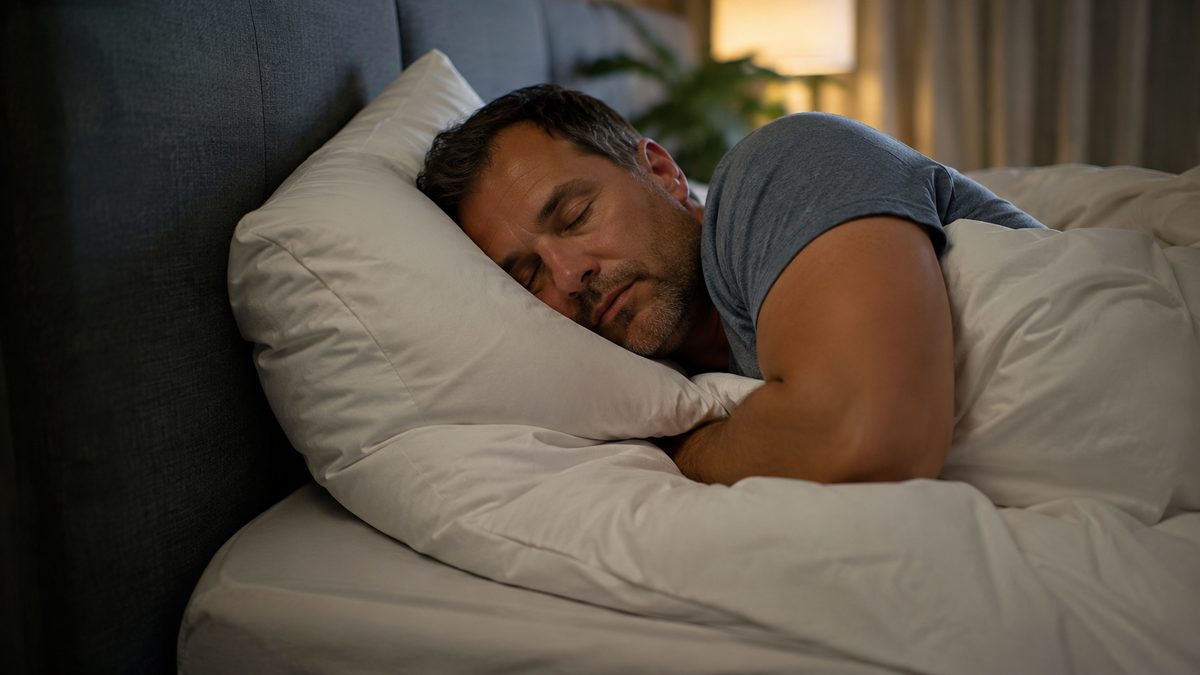
The pillow trick for sleep apnea means using a specially shaped pillow or positioning device to keep you off your back while you sleep. When you sleep on your back, gravity pulls the soft tissue in your throat downward and blocks your airway.
Roll onto your side or stomach, and that airway stays open. For people whose apnea is significantly worse in the supine position, this one change can reduce their AHI (apnea-hypopnea index) by 50 to 70 percent within a month, with improvements showing up after just one night.
It works best for mild-to-moderate sleep apnea, and adherence rates sit around 85 to 90 percent, which beats CPAP by a wide margin. But it's not a fix for everyone. If your AHI stays above 15 after four weeks of consistent positional therapy, or your baseline AHI is above 30, you'll likely need CPAP or another medical intervention on top of it.
Why Does Sleeping Position Change Everything?
Your airway is held open by muscle tone. When you fall asleep, those muscles relax. On your back, gravity makes the tongue and soft palate drop toward the back of your throat. The space narrows.
Airflow becomes turbulent, which causes snoring. When it collapses fully, breathing stops entirely. That's an apnea event.
On your side, gravity pulls that tissue sideways rather than straight back. The airway stays wider. Breathing stays easier.
This is why sleep specialists categorize some patients as having positional obstructive sleep apnea (POSA): their AHI is at least twice as high when lying on their back compared to other positions. Studies suggest roughly half of all OSA patients fall into this category, making them the ideal candidates for positional therapy.
The mechanism is straightforward, but execution matters. Simply telling someone to sleep on their side rarely works long term because people move around unconsciously. The pillow trick works because it creates a physical barrier or support structure that makes rolling onto your back uncomfortable enough that your body avoids it, even during sleep.
What Is the Pillow Hack for Sleep Apnea, Exactly?
The pillow hack refers to any low-tech positional strategy that keeps you off your back. The most well-known version is the tennis ball technique: you sew a tennis ball into the back of your pajama top. Rolling onto it becomes uncomfortable, so you roll back.
It sounds crude, and it is. But it has decades of clinical use behind it.
More refined versions include full-length body pillows placed behind your back to prevent rolling, wedge pillows that prop you into a semi-lateral position, and purpose-built positioning pillows like the Posiform. Posiform was studied in 28 patients with POSA and showed significant reductions in supine sleep time after just one night, with effects maintained at one month.
A mattress and pillow system designed specifically for prone (stomach) sleeping was tested in 14 patients with mild to severe OSA. Mean AHI dropped from 26 to 8 and the oxygen desaturation index fell from 21 to 7 after four weeks. Supine sleep time fell from 128 minutes to 10 minutes per night. These are meaningful numbers for a non-invasive intervention.
Newer wearable sensor devices worn on the chest or back vibrate when you roll supine and train your body to avoid that position over time. A randomized controlled trial comparing one of these devices to oral appliance therapy in 99 patients with mild-to-moderate POSA found both treatments reduced AHI significantly, with no meaningful difference in effectiveness between them. Median AHI dropped from 13.0 to 7.0 in the positional therapy group.
Adherence was 89.3 percent for the positional device versus 81.3 percent for oral appliances. That adherence gap matters clinically.
What Is the 4% Rule for Sleep Apnea?
The 4% rule refers to how oxygen desaturation is measured during a sleep study. An apnea event is typically counted when your blood oxygen level drops by 4 percent or more from baseline. This is the threshold used to calculate your oxygen desaturation index (ODI), which runs alongside your AHI as a key diagnostic number.
Some sleep labs use a 3% threshold instead, which will produce a higher event count for the same night of sleep. This matters when you're comparing results across different studies or different sleep clinics, because the same patient can appear to have more or fewer events depending on which rule is applied.
When your doctor discusses your sleep study results, ask which desaturation threshold was used, especially if you're borderline between mild and moderate classifications.
For positional therapy specifically, the ODI is a useful secondary measure alongside AHI. In the prone positioning study mentioned above, ODI fell from 21 to 7 after four weeks, which reflects a real improvement in overnight oxygenation, not just fewer counted events.
Does the Pillow Trick Work as Well as a CPAP Machine?
For patients with mild-to-moderate positional sleep apnea, positional therapy can match CPAP in terms of AHI reduction, and it often wins on adherence. CPAP is more universally effective because it works regardless of position, but roughly half of patients struggle with long-term CPAP use due to mask discomfort, claustrophobia, noise or dry mouth.
A Cochrane review covering positional devices including lumbar binders, backpacks, full-length pillows, the tennis ball technique and sensor-based alarms concluded that these interventions are less invasive than CPAP and are expected to have better adherence. The review noted that newer generation positional therapy devices offer advantages over the traditional tennis ball technique, with higher compliance rates and substantial disease alleviation.
Where CPAP wins is in severe cases. If your AHI is above 30 regardless of position, or your apnea isn't position-dependent, a pillow alone won't cut it.
In clinical practice, positional therapy works best as a standalone treatment for mild-to-moderate POSA, or as a complement to CPAP or oral appliances to reduce overall pressure requirements.
A head-positioning pillow tested in 25 patients with positional OSAS reduced the objective snoring index from 218 events per hour to 115 events per hour over three nights. Snoring reduction alone isn't the goal, but it signals that the airway is staying more open, which is the point.
Can I Get Tirzepatide If I Have Sleep Apnea?
Tirzepatide, sold under the brand name Mounjaro and Zepbound, is a GLP-1 and GIP receptor agonist approved for type 2 diabetes and obesity. It's attracted significant interest in sleep apnea circles because obesity is one of the strongest modifiable risk factors for OSA, and tirzepatide produces meaningful weight loss in many patients.
In 2024, the FDA approved tirzepatide specifically for moderate-to-severe obstructive sleep apnea in adults with obesity, based on trial data showing substantial AHI reductions alongside weight loss. So yes, if you have sleep apnea and meet the eligibility criteria (typically a BMI above 30, or above 27 with a weight-related comorbidity), tirzepatide is a legitimate treatment option to discuss with your doctor.
It's not a replacement for positional therapy or CPAP in the short term. Weight loss takes months to translate into airway changes. Positional therapy can start working the first night. The two approaches aren't competing with each other.
If you're working on losing weight through medication or otherwise, positional therapy can manage your symptoms in the meantime while the underlying physiology changes.
Whether tirzepatide is right for you depends on your overall health picture, other medications, and how your sleep apnea presents. That conversation belongs with a GP or sleep specialist who knows your full history.
What Most Articles Get Wrong About Positional Therapy
Three things come up repeatedly that most coverage either glosses over or misses entirely.
First, not all side sleeping is equal. Sleeping on your right side increases the chance of acid reflux compared to your left side, and in some patients this can actually worsen sleep fragmentation. If you have gastroesophageal reflux alongside sleep apnea, left-side positioning is preferable. Most articles recommend side sleeping without making this distinction.
Second, the adaptation period is real and matters. In the prone positioning study, patients had a four-week adaptation period before final measurements were taken. In the Posiform pillow study, benefits were seen after one night but evaluated again at one month.
If you try a positioning pillow for three nights and give up because it feels awkward, you're quitting before your body has adjusted. Two to four weeks is the minimum trial period worth running.
Third, positional therapy doesn't address all the structural causes of sleep apnea. It reduces gravitational airway collapse. It doesn't change nasal anatomy, jaw position, or tongue size. Patients with significant anatomical contributors to their OSA will see less benefit from positioning alone, which is why a formal diagnosis and sleep study matters before deciding which treatment path to take.
Frequently Asked Questions
How do I know if my sleep apnea is positional?
A sleep study (polysomnography or home sleep test) will show your AHI in different positions. If your supine AHI is at least twice your non-supine AHI, you have positional OSA. Your sleep report should include this breakdown. If it doesn't, ask your sleep specialist to pull the positional data.
Is a body pillow as good as a specialised positioning pillow?
A standard body pillow placed behind your back can work for some people, but purpose-built positioning pillows are designed to maintain a specific angle and resist compression throughout the night. The consistency matters more than the price point. A cheap pillow that deflates by 2am isn't doing its job.
Can the pillow trick cure sleep apnea permanently?
No. It manages the condition while you're using it. If you stop using the positioning device, your sleep position will revert and so will your AHI. Some patients who lose weight or have surgical interventions see long-term improvement, but positional therapy itself is ongoing management, not a cure.
What if I naturally roll onto my back no matter what I do?
This is where the sensor-based wearable devices have an advantage over passive pillows. They detect when you roll supine and vibrate to prompt a position change without waking you fully. After several weeks of use, many patients report their body learns to avoid the supine position automatically. Clinical trial data shows adherence above 89 percent with these devices.
Is positional therapy safe to try without a diagnosis?
Sleeping on your side instead of your back carries essentially no risk. The intervention itself is safe. The risk is in using it as a reason to avoid getting a proper diagnosis. If you snore heavily, wake gasping, feel unrefreshed after a full night's sleep or have a partner who has noticed you stop breathing, get a sleep study. Positional therapy can run alongside that process, not instead of it.
When to See a Sleep Specialist
Try positional therapy for four weeks with consistency. If your snoring is significantly reduced and you're waking up feeling rested, that's a good signal it's working. If you have access to a wearable sleep tracker with blood oxygen monitoring, a sustained drop in overnight desaturation events is even stronger evidence.
See a specialist if your symptoms aren't improving, if you have severe daytime sleepiness, if you've been diagnosed with moderate-to-severe OSA, or if you have cardiovascular conditions that make untreated apnea higher risk. Positional therapy is a real and evidence-backed option, but it sits inside a broader clinical picture that a GP or sleep physician should be helping you navigate.
If you're in Australia, a sleep specialist can order a formal sleep study and help you identify whether you have positional OSA specifically, which determines whether the pillow trick is likely to work for your case or whether you need something more.
The One Thing to Do This Week
If you suspect your sleep apnea or snoring is worse when you sleep on your back, start tonight. Place a firm pillow or rolled blanket behind your lower back to make supine sleep uncomfortable. Do it for two weeks.
If you notice better sleep, less snoring, or more energy during the day, you likely have positional OSA and a proper positioning device or sleep study is worth pursuing. If nothing changes, the answer is a sleep study rather than more pillow experiments.Sources
Explore related health and wellbeing guides
This article is part of PTNA's consumer health and wellbeing library. Browse the Health & Wellbeing Resources hub to find related guides by topic, including Australian health cover, Medicare, prostate health, mental health, disability support and life insurance.
How Much Does It Cost to Have Your Prostate Removed Privately in Melbourne?
Read article →
Is It Worth Having Your Prostate Removed in Melbourne?
Read article →
Can You Get Anything Free if You Have Cancer in Melbourne?
Read article →
What Are the Negatives of Removing Your Prostate in Melbourne?
Read article →
Is Prostate Cancer Classed as a Disability in Melbourne?
Read article →