What is the rule of 9 for psoriasis?
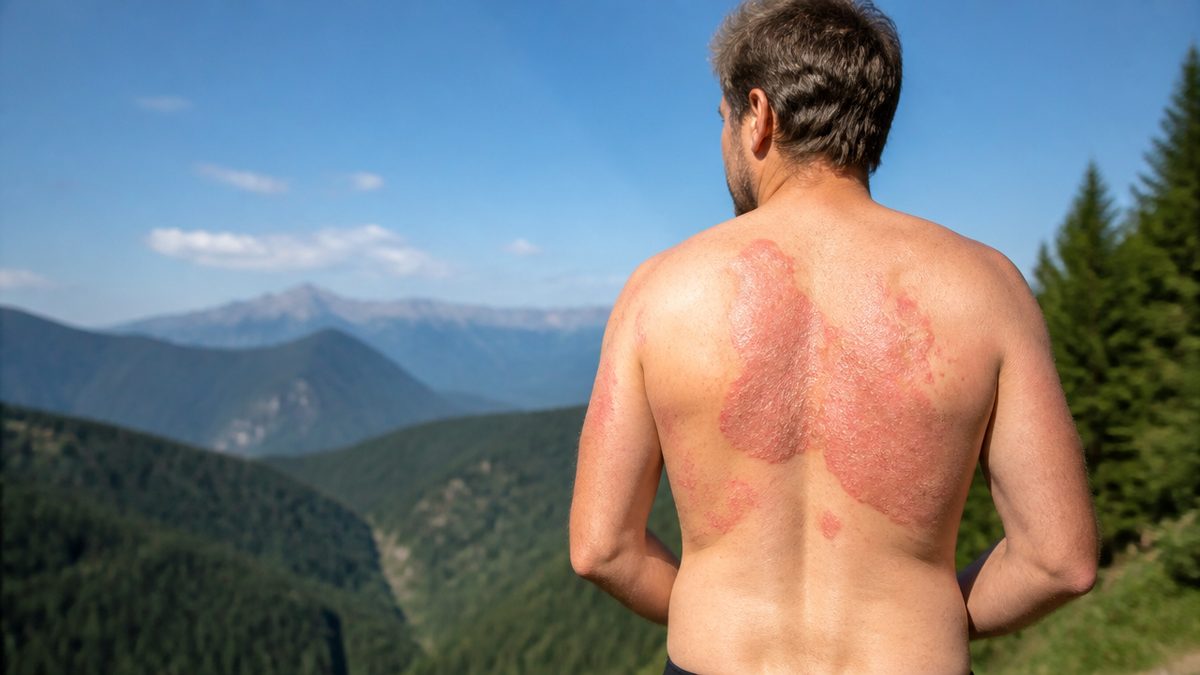
The rule of 9 for psoriasis is a quick way to estimate how much of the body's skin is affected. It splits the body into areas worth 9%, 18%, or 1% of the total skin surface. A clinician can use these figures to make a rough Body surface area estimate.
The method was made for assessing burns. It can still give a broad estimate for widespread psoriasis, but it's often too rough for small or scattered plaques. So clinicians may use the palm method or the Psoriasis Area and Severity Index instead.
The number doesn't tell the whole story. A small plaque on a hand, foot, face, or genital area may cause more trouble than a larger patch hidden under clothing. The estimate must be viewed alongside plaque location, symptoms, daily impact, and signs of joint disease. impact on daily life
How is the body divided under the rule?
The adult rule of nines gives each large body region a set share of the total skin. The values are:
- Head and neck: 9%
- Each arm: 9%
- Front of the torso: 18%
- Back of the torso: 18%
- Each leg: 18%
- Genital and perineal area: 1%
Together, these regions equal 100% of the skin. The front and back of an arm can each count as about 4.5%. The front or back of one leg can each count as about 9%.
A clinician doesn't count a whole region when psoriasis covers only part of it. If plaques cover about half of one arm, the rough estimate is 4.5%. If they cover one-quarter of the front torso, it's about 4.5%.
The maths looks exact on paper. The result is still an estimate. Plaques rarely stop neatly at the borders shown on the chart.
They may form small islands across several regions, with wide gaps of clear skin between them.
How would the calculation work in a real case?
Imagine plaques cover about half of the front of one leg. The whole leg represents 18%, while its front represents about 9%. Half of that front surface would equal about 4.5% of the body.
Now imagine extra plaques cover one-quarter of an arm. One arm represents 9%, so one-quarter equals about 2.25%. Add both estimates and the affected Body surface area is roughly 6.75%.
The useful figure is the skin that's actually affected, not the full value of every region with a plaque. Counting the whole leg because it has one small patch would greatly overstate the result.
In real life, the estimate can vary between observers. One person may judge a plaque field as half of the lower leg, while another calls it one-third. Photos taken in similar light can make follow-up estimates more consistent, though they don't replace a skin examination.
Why is Body surface area measured?
Body surface area gives clinicians a shared way to describe how much of a Skin condition is present. It helps them record a starting point, track changes, and make treatment decisions.
Psoriasis affecting less than 3% of the body is often described as mild by surface area. Around 3% to 10% may be classed as moderate. More than 10% may be classed as severe.
These cut-offs are common guides, not complete diagnoses.
Surface area can show whether treatment is shrinking the affected skin. If an estimate falls from 12% to 4%, that's useful evidence of improvement. But the remaining 4% may still matter a great deal if it covers the palms or soles.
Body size doesn't change the percentage. One whole arm is about 9% in a small adult and about 9% in a large adult. The real skin area differs, but its share of that person's body stays similar.
Why can the rule give a poor psoriasis estimate?
The rule works best when damage covers broad, joined areas. Psoriasis often forms plaques with jagged shapes and clear spaces between them. Adding fractions of large body regions can soon become guesswork.
Scalp psoriasis is another snag. Hair can hide plaque borders and make redness hard to see. Thick scale may also spread through only part of a visible patch.
The head and neck together count as 9%, but that figure is far too large for a few scalp plaques.
Skin folds cause a similar problem. Plaques under the breasts, between the buttocks, or in the groin may cover little skin while causing soreness and rubbing. The chart can show a low percentage even when the impact on sleep, movement, work, or sex is high.
Many summaries miss this point: extent and burden aren't the same measure. The rule estimates extent. It doesn't measure pain, itch, cracking, bleeding, embarrassment, or lost sleep.
When is the palm method more useful?
The patient's palm, including the fingers, is often used as a rough guide to 1% of Body surface area. A clinician can compare each psoriasis patch with that hand-sized unit, then add the units together.
This method works better for scattered plaques than the rule of nines. For example, several patches across both legs might fill about four palm areas if mentally placed together. That gives an estimate near 4%, even though the plaques appear across regions worth 36% under the rule of nines.
The patient's own hand should be used because hand size tends to match body size. Using the clinician's hand may skew the count. Definitions differ too.
Some methods use the full palm and fingers, while others mean only the palm without the fingers. The same method should be used at every visit so the figures can be compared.
The palm method is still rough. Small gaps between plaques can be tricky to subtract. Someone counting at home may also include red marks left after a plaque has settled, even though those marks are no longer active psoriasis.
How is the Psoriasis Area and Severity Index different?
The Psoriasis Area and Severity Index, often called PASI, measures more than how much skin is involved. It also scores plaque redness, thickness, and scaling across body regions.
PASI gives a score from 0 to 72. A higher score points to greater combined extent and plaque severity. The system is widely used in clinical trials and specialist care because it tracks treatment response in a set way.
The two methods answer different questions. The rule of nines asks, “How much skin appears affected?” PASI asks, “How extensive and physically severe are the plaques?”
A person may have a modest affected area with thick, inflamed plaques. A surface estimate alone can miss that useful detail.
PASI has limits as well. It takes more time, needs training, and may understate the burden of psoriasis in small, high-impact sites. It's less useful for a quick home check.
Clinicians may pair it with a quality-of-life questionnaire or a close review of special sites.
Why does plaque location sometimes matter more than percentage?
A low Body surface area doesn't always mean a minor problem. Psoriasis on the hands can split when someone grips tools, washes dishes, types, or lifts weights. A small sole plaque can make every step hurt.
Eyelid or facial plaques can affect comfort and confidence even when they cover far less than 1%.
Think of a hairdresser with plaques across the fingertips and around several nails. The total affected area may be below one palm. Yet shampoo, gloves, chemicals, and repeated hand movement can cause pain every day.
A surface-only score would show a small number while missing the impact on work.
Nail changes also fit badly into a skin-area calculation. Pitting, lifting, thickening, or colour change may affect tiny surfaces. These signs still need review because nail psoriasis can be hard to treat and may occur with joint symptoms.
Here's another often-missed point: the rule should never be used to brush off symptoms. It's a measuring tool, not a test of whether someone deserves care.
Can children be assessed with the same chart?
The standard adult rule is less accurate for young children because their body proportions are different. A child's head makes up a larger share of the total skin, while the legs make up a smaller share. Those proportions shift as the child grows.
Clinicians can use an age-adjusted chart, such as the Lund and Browder chart, when they need a more accurate estimate. The palm method can also help with small areas when the child's own hand is used as the guide.
Parents shouldn't turn the estimate into a home diagnosis. Ringworm, eczema, drug reactions, and other rashes can look like psoriasis. A clinician must first identify the Skin condition before a severity number means much.
What should be recorded with the percentage?
A useful psoriasis record includes the estimated percentage and the sites involved. It should also note itch, soreness, cracking, bleeding, and sleep loss when present. Joint pain, morning stiffness, swollen fingers or toes, and heel pain should be reported because a skin percentage can't assess joints.
Photos can help show change when the distance, angle, and lighting stay the same. A dated note can record whether plaques are spreading, flattening, or making less scale. Treatment use matters too.
A flare after missed applications means something different from a flare despite correct use.
Don't scrape off scale before judging a patch. Scraping can irritate the skin, cause bleeding, and change how it looks. Estimate the active plaque as it is.
Home records work best as evidence for an appointment, not as a reason to change prescribed medicine. A clinician may weigh the percentage against treatment history, disease in special sites, and its effect on daily life.
What mistakes make the estimate less useful?
The most common mistake is counting every body region that has psoriasis instead of counting only the skin covered by plaques. One small spot on each limb doesn't mean that 54% of the body is affected.
Another mistake is counting red or dark marks as active plaques. Skin colour can stay changed after inflammation settles. Active psoriasis may have scale, raised edges, thickness, or ongoing symptoms, though it can look different across skin tones.
Switching methods also makes follow-up figures hard to compare. A palm count at one visit and a rough rule-of-nines count at the next may suggest a false rise or fall. Write down which method produced each estimate.
False precision causes trouble as well. A result such as 6.75% may come from rough visual fractions, so it shouldn't be treated like a lab value. Writing “about 7%” is a better match for the method.
How should you use the rule before an appointment?
Use the chart to make a rough baseline. Mark each affected region on a simple body outline, then estimate only the share covered by plaques. If the plaques are small and scattered, count how many of your own full palms they would fill when placed together.
Take the estimate, photos, and symptom notes to the appointment. Point out high-impact sites even if they add little to the percentage. Mention any joint symptoms without waiting for the skin score to rise.
A doctor or dermatologist may confirm the estimate, use PASI, or pick another tool. A lower number doesn't block treatment when psoriasis affects sensitive sites or has a strong impact on daily life.
What is the one action to take now?
Map the active plaques, estimate their total area with one consistent method, and take that record to a qualified clinician for assessment.
Common questions
What clears up psoriasis fast?
Steroid creams can calm mild psoriasis quickly, while light therapy or prescription medicine may help larger areas. A doctor can choose the safest treatment because psoriasis has no instant cure.
What organ is linked to psoriasis?
Psoriasis is mainly linked to the immune system becomes too active and affects the skin. It may also raise the risk of problems involving the joints, heart, and liver.
How do Japanese treat psoriasis?
In Japan, doctors treat psoriasis with creams, light therapy, and medicines that calm the immune system. The treatment depends on how much skin is affected and how serious it is.
When is psoriasis considered severe?
Psoriasis is often considered severe when it covers more than 10% of the body, or about ten palm-sized areas. It may also be severe if it greatly affects daily life or involves sensitive areas.
How Much Does It Cost to Have Your Prostate Removed Privately in Melbourne?
Read article →
Is It Worth Having Your Prostate Removed in Melbourne?
Read article →
Can You Get Anything Free if You Have Cancer in Melbourne?
Read article →
What Are the Negatives of Removing Your Prostate in Melbourne?
Read article →
Is Prostate Cancer Classed as a Disability in Melbourne?
Read article →