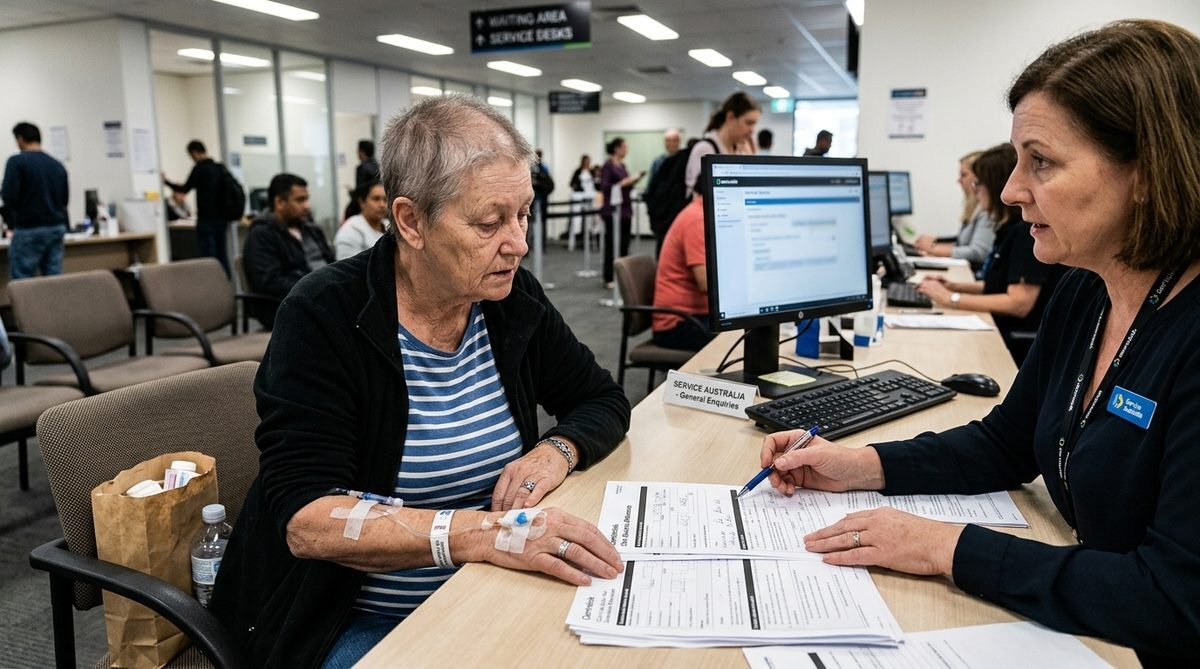
What Is the Best Private Health Insurance in Australia? A Straight Answer

The best private health insurance in Australia depends on one thing: what you actually need it for. A 28-year-old with no dependants needs a completely different policy than a 45-year-old with a family and a bad knee. Most comparison articles skip that part. This one won't.
What I found after working through dozens of policies is that the funds people assume are the best — the big names — are often not the best value. Smaller, member-owned funds consistently outperform on claims paid and premium increases. The data backs this up.
Which Private Health Insurance Has the Best Value in Australia?
The Australian Prudential Regulation Authority (APRA) publishes quarterly data on every registered health fund. When you look at the percentage of premiums returned to members as benefits, member-owned funds like Teachers Health, Police Health, and Defence Health regularly sit above 90 cents returned per dollar collected. Some of the large for-profit funds sit closer to 80 cents.
That gap matters. On a $3,000 annual premium, the difference between an 82% and a 92% benefit ratio is $300 a year you either get back in claims or you don't.
For the general population, the funds that consistently rate well on value across independent reviews include Bupa, HCF, and Medibank for accessibility and breadth of network. But for pure value, nib and HCF tend to offer competitive entry-level hospital policies, and HCF's More for Members program returns additional benefits on extras claims that most funds don't offer.
One angle most articles miss: restricted funds are often the best option if you qualify. If you work in education, emergency services, or defence, you may have access to a fund that is closed to the general public and structured entirely around member benefit rather than profit. Check eligibility before you default to an open fund.
Is Private Health Insurance Worth It in Australia?
For most people earning above $93,000 as a single or $186,000 as a family, yes — and the reason is tax, not just health cover.
The Medicare Levy Surcharge (MLS) adds 1% to 1.5% of your taxable income if you don't hold hospital cover and earn above those thresholds. On a $120,000 income, that's $1,200 a year paid to the ATO instead of to a health fund. A basic hospital policy often costs less than the surcharge, which means you come out ahead financially and get cover on top of it.
The Lifetime Health Cover (LHC) loading is the other factor. If you don't take out hospital cover before July 1 following your 31st birthday, you pay a 2% loading on your premium for every year you were without cover, up to a maximum of 70%. Someone who waits until 40 to take out cover pays 20% more on their premium for ten years. In my experience, this loading surprises people more than any other feature of the Australian system.
For lower income earners below the MLS threshold, the calculation is less clear-cut. The Australian Government Rebate on private health insurance reduces your premium by 24.608% to 32.812% depending on age and income tier (current rates from the Department of Health). That rebate makes cover more affordable, but if you're rarely hospitalised and have no chronic conditions, the out-of-pocket costs on a basic policy may outweigh the benefits in any given year.
What I'd say is this: the question isn't whether private health insurance is worth it in the abstract. It's whether it's worth it for your income, age, and health situation right now.
What Does Private Health Insurance Cover in Australia?
Australian private health insurance splits into two distinct products. Understanding the difference is the most important thing before you buy.
Hospital Cover
Hospital cover pays for treatment as a private patient in a public or private hospital. This includes the hospital accommodation, theatre fees, and your doctor's fees up to the Medicare Benefits Schedule (MBS) rate. If your specialist charges above the MBS rate, you pay the gap unless your fund has a gap cover arrangement with that doctor.
Hospital policies are tiered into four categories under the Australian Government's Gold, Silver, Bronze, and Basic framework introduced in 2019. Gold covers everything including joint replacements, heart surgery, and pregnancy. Basic covers very little beyond psychiatric care and rehabilitation. Silver and Bronze sit in between with defined clinical categories.
The tiering system was designed to make comparison easier. In practice, funds can add restricted benefits within a tier, which means a Silver policy from one fund may cover a procedure that a Silver policy from another fund covers only partially. Always check the clinical categories list, not just the tier label.
Extras Cover
Extras cover (also called ancillary or general treatment cover) pays for services outside hospital: dental, optical, physiotherapy, chiropractic, psychology, and more. It does not interact with Medicare at all. You pay the provider, claim back a percentage from your fund, and the fund sets its own annual limits per service.
Extras is where most people overpay. A comprehensive extras policy can cost $800 to $1,500 a year per person. If you only use dental and optical, a mid-range extras policy at $400 to $600 a year will likely return more than it costs. What I found is that people buy comprehensive extras because it feels safer, then claim $200 a year in dental and nothing else.
Run the numbers on what you actually used in the last two years. That tells you what level of extras you need.
What Is the Difference Between Hospital and Extras Cover in Australia?
Hospital cover is regulated by the federal government, must meet minimum standards, and interacts with Medicare. Extras cover is not regulated in the same way, does not interact with Medicare, and the benefits are set entirely by the fund.
You can buy them separately or as a combined policy. Buying them separately from different funds is legal and sometimes cheaper. Some funds offer better hospital cover, others offer better extras. There is no rule that says you have to bundle them.
The MLS and LHC loading only apply to hospital cover. Extras cover alone does not satisfy either requirement. This is a common misunderstanding that costs people money.
How Much Does Private Health Insurance Cost in Australia?
Based on current market data, here are approximate monthly costs for a single adult in their 30s with no LHC loading, before the government rebate is applied.
| Cover Type | Tier / Level | Monthly Cost (approx) |
|---|---|---|
| Hospital only | Basic | $80 to $110 |
| Hospital only | Bronze | $110 to $160 |
| Hospital only | Silver | $150 to $220 |
| Hospital only | Gold | $200 to $320 |
| Extras only | Basic | $30 to $60 |
| Extras only | Mid | $60 to $100 |
| Extras only | Comprehensive | $100 to $160 |
Couples and family policies roughly double the single rate, though most funds offer a small discount for bundling. Premiums increase every April 1 following the federal government's approval of industry-wide increases. The average approved increase in 2024 was 3.03%, the lowest in over two decades according to the Department of Health.
After the government rebate, a 35-year-old earning $80,000 would receive a 24.608% reduction on their premium. On a $180 per month Silver hospital policy, that brings the effective cost to around $136 per month.
What Most People Get Wrong When Choosing a Policy
The biggest mistake is choosing based on brand recognition. Medibank and Bupa are the two largest funds by membership. Size does not equal value. Both have faced criticism from the Private Health Insurance Ombudsman for complaint volumes relative to membership. The Ombudsman's annual report is public and worth reading before you commit.
The second mistake is ignoring the excess. Most hospital policies let you choose an excess of $0, $250, $500, or $750 per admission (or per year for some funds). A $750 excess policy can cost $50 to $80 less per month than a $0 excess policy. If you're young and healthy and go to hospital once every five years, the $750 excess option saves you money over time. If you have a chronic condition and expect admissions, the $0 excess makes more sense.
The third mistake, and the one I see most often, is not checking whether your preferred doctors and hospitals are in the fund's agreement network. If your surgeon doesn't have a gap cover agreement with your fund, you can face out-of-pocket costs of hundreds to thousands of dollars even with Gold cover. Call the fund before you switch and ask specifically about your hospital and your specialist.
FAQ
Can I switch health funds without losing my waiting periods?
Yes. If you switch to an equivalent or lower level of cover, your waiting periods transfer. If you upgrade to a higher level of cover, you serve new waiting periods only for the additional benefits. This is protected under the Private Health Insurance Act 2007.
What is the two-month waiting period for extras?
Most extras services have a two-month waiting period from when you join. Dental major (crowns, bridges) typically has a 12-month wait. Orthodontics often has a 12-month wait with a separate lifetime limit. Pre-existing conditions for hospital cover have a 12-month waiting period.
Does private health insurance cover ambulance?
It depends on your state and your policy. Queensland and Tasmania residents get ambulance cover through their state government. In other states, ambulance cover is either included in some hospital policies or available as a standalone add-on. Check your policy document specifically for ambulance, because it is not automatically included.
What is the Medicare Levy Surcharge threshold in 2024?
The MLS applies to singles earning above $93,000 and families earning above $186,000. These thresholds are indexed and confirmed annually by the ATO. The surcharge rate is 1% for income up to $108,000, 1.25% up to $144,000, and 1.5% above that.
Is there a best time of year to switch health funds?
Switching before April 1 each year means you lock in the current premium before the annual increase takes effect on your new fund. Some funds also run promotions with waived waiting periods or reduced premiums in the months leading up to the increase.
What is the best private health insurance in Australia for families?
For families, Gold hospital cover becomes more relevant because pregnancy and birth are only covered under Gold. HCF, Bupa, and nib all offer competitive family Gold policies. The key variables are the excess structure (most funds charge per adult, not per child), the extras dental limits for children, and whether orthodontics is included. Compare on those three points specifically.
The One Thing to Do Before You Buy
Use the government's own comparison tool at privatehealth.gov.au to filter policies by tier, price, and clinical category. It pulls live data from every registered fund. Then call the two or three funds that come up and ask one question: does your fund have a gap cover agreement with [your hospital] and [your specialist's name]? That single answer will tell you more than any star rating.
Explore related health and wellbeing guides
This article is part of PTNA's consumer health and wellbeing library. Browse the Health & Wellbeing Resources hub to find related guides by topic, including Australian health cover, Medicare, prostate health, mental health, disability support and life insurance.
How Much Does It Cost to Have Your Prostate Removed Privately in Melbourne?
Read article →
Is It Worth Having Your Prostate Removed in Melbourne?
Read article →
Can You Get Anything Free if You Have Cancer in Melbourne?
Read article →
What Are the Negatives of Removing Your Prostate in Melbourne?
Read article →
Is Prostate Cancer Classed as a Disability in Melbourne?
Read article →