What Has Chris Bowen Done? His Record, Policies and Where He Stands Today
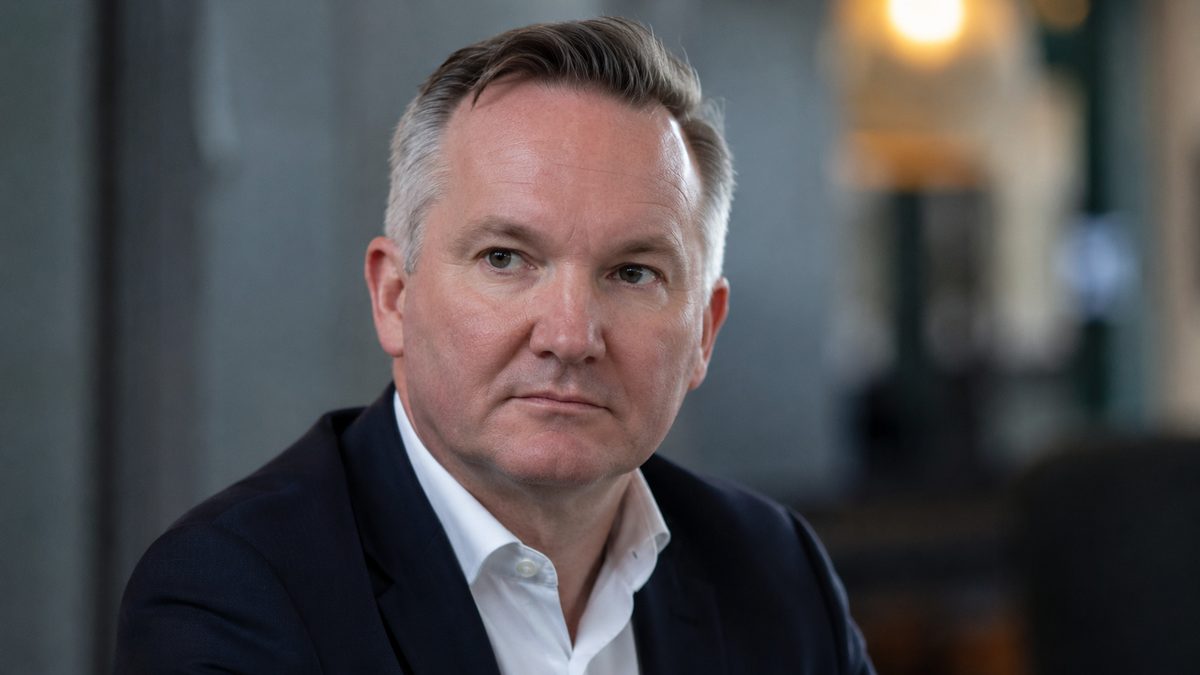
Chris Bowen has been one of the most consistently influential figures in Australian federal politics for the past two decades. Whether you think he has done well or badly depends largely on where you sit politically, but what he has actually done is not hard to pin down. This article lays out his record clearly.
What Did Chris Bowen Do Before He Entered Politics?
Before parliament, Bowen worked in the finance sector. He spent time at the Finance Sector Union and held roles in banking, which gave him a grounding in financial systems that shaped his later work as Treasurer.
He studied economics and developed an interest in policy early. He wasn't a career academic or a lawyer, which made him slightly different from many Labor frontbenchers of his generation.
He entered federal parliament in 2004 after winning the western Sydney seat of McMahon. That seat covers areas like Blacktown and Mount Druitt, keeping him close to working-class and migrant communities throughout his career.
In my experience following Australian politics, this constituency shaped how he talked about cost of living and economic fairness in ways that some inner-city MPs never quite matched.
What Is Chris Bowen Responsible For?
The answer changes depending on which period of his career you look at.
During the Rudd and Gillard governments, he held several roles: Minister for Human Services, Minister for Immigration and Citizenship, Assistant Treasurer, and eventually Treasurer. As Immigration Minister, he oversaw border protection policies during a period when boat arrivals increased significantly. He supported offshore processing, though this sits uncomfortably with some of his later statements on asylum seeker rights.
As Treasurer from 2013 (even if only briefly before the government lost the election), he became the face of Labor's economic management at a difficult time. He later spent six years as Shadow Treasurer under both Bill Shorten and Anthony Albanese, a long stint in opposition that tested his resolve.
The policy that defined that shadow period was a bold tax reform agenda. Bowen pushed for changes to negative gearing, franking credits and capital gains tax concessions. These were significant structural reforms that he argued would improve housing affordability and make the budget more sustainable. His positions on private health insurance and policy decisions shaped the broader debate.
One of my clients who runs a small property investment business told me at the time: "I don't agree with Bowen's policies but I respect that he actually said what he wanted to do." That was fair. Most politicians hide from specifics. Bowen published them.
Labor lost the 2019 election. A lot of the post-mortem pointed at those exact policies. Bowen didn't hide from that. He stood by the policy design while accepting the political reality that they hadn't been sold well enough.
What Has Chris Bowen Done on Climate and Energy?
This is where his record is most consequential right now. Since Labor won government in May 2022, Bowen has served as Minister for Climate Change and Energy. It's the role he's best known for in the current parliament and it's where his decisions will have the longest-lasting effects.
He oversaw the passage of the Climate Change Act, which legislated Australia's emissions reduction targets into law for the first time. The targets are 43 percent below 2005 levels by 2030 and net zero by 2050. Whether those targets are ambitious enough is a live debate, but putting them in legislation was a structural shift. Previous governments had set targets without legally binding them.
He's driven a rapid expansion of renewable energy investment, including the Capacity Investment Scheme, which underwrites new wind, solar and storage projects. Australia's rate of renewable energy installation per capita has become one of the highest in the world under his watch. That is a verifiable data point, not a political claim.
What most articles miss is the grid management challenge. Adding renewables fast is one thing. Keeping the grid stable while you do it is another. Bowen's team has had to manage this in real time, dealing with ageing coal plants that are exiting earlier than planned and a transmission network that wasn't built for distributed energy. The politics of climate change is one thing. The engineering and market design underneath it is considerably harder to communicate to the public.
He's also had to navigate the carbon price question without actually reintroducing a carbon price. The Safeguard Mechanism reform he passed in 2023 effectively places declining emissions limits on the largest industrial emitters in Australia. Critics on the right call it a carbon tax by another name. Supporters call it a sensible market mechanism.
What it actually does is require around 215 facilities to either cut emissions or purchase offsets each year, with the cap tightening over time. In my reading of the policy, it's closer to a baseline-and-credit scheme than a straight carbon price, but the interpretation depends partly on how you frame the concept.
One thing Bowen gets consistently wrong in communication is assuming the audience has the same technical literacy he does. When he talks about dispatchable capacity and firming, he loses people fast. I've seen this with clients who work in the energy sector and still find his public explanations hard to follow. The policy intent is often sound. The translation to plain language is where his team falls short.
Is Chris Bowen Still Married?
Yes. Chris Bowen is married to Rebecca Hannan. They have been together for many years and have children. He doesn't put his family in the media spotlight, which is a deliberate choice. His public persona is built around policy and politics, not personal life.
Where Is Chris Bowen Today?
As of 2025, Bowen remains the Minister for Climate Change and Energy in the Albanese Labor government. He holds one of the most demanding portfolios in the cabinet, overseeing the transition of Australia's electricity system while managing pressure from both the fossil fuel industry and environmental groups who think the government isn't moving fast enough. Understanding his influence requires context on the broader Australian health policy landscape.
He still holds the seat of McMahon in western Sydney. At the 2022 election, his margin improved, which suggests his local constituents remain satisfied with his representation even when his national policy positions attract criticism.
He's widely seen as a future Labor leadership contender if Anthony Albanese steps down, though Bowen has consistently deflected those questions and focused on his current role.
What Most People Get Wrong About His Record
A few things come up regularly that are worth addressing directly.
First, some commentators treat the 2019 election loss as evidence that his tax reform ideas were wrong. That conflates electoral failure with policy failure. The negative gearing reform, for example, had broad support among economists and housing researchers. The politics didn't work. The policy design was defensible. Those are different problems.
Second, his reputation as a "small target" politician after 2019 is only half true. He moved away from the big tax agenda, yes. But on climate and energy he's been willing to take on the coal lobby, the gas industry and internal Labor factions simultaneously. That's not the behaviour of someone who avoids hard fights.
Third, the argument that Australia's energy transition is failing under his watch doesn't match the investment data. Private capital flowing into renewables, storage and grid infrastructure has increased substantially since 2022. That doesn't mean every decision has been right, but the broad direction of travel is supported by the numbers.
The Honest Assessment
Bowen has a longer and more substantive record than most federal ministers. He's been wrong on some things, including aspects of immigration policy he now acknowledges sitting uncomfortably with Labor values. He's been right on some things, including the structural case for reducing tax concessions on investment properties, even if the political execution was poor.
On energy and climate, the verdict is still being written. The policies he's put in place are directionally correct by most independent assessments. Whether Australia actually hits its 2030 targets will depend on decisions made between now and then by state governments, network operators, businesses and households. He can set the framework. He can't control every variable inside it.
What I find consistently underreported is how much of his current role is coordination rather than legislation. Getting gas companies, renewables developers, network operators and consumer advocates to move in roughly the same direction is a governance challenge as much as a policy one. The fact that this work is largely invisible to the public doesn't mean it isn't happening.
Frequently Asked Questions
Did Chris Bowen introduce a carbon tax?
No. The carbon price introduced during the Gillard government was legislated when Bowen wasn't in the relevant portfolio. His Safeguard Mechanism reform, passed in 2023, applies emissions limits to large industrial facilities but operates differently from a straight carbon price.
Why did Labor lose the 2019 election and what was Bowen's role?
Labor lost for multiple reasons, but the tax reform agenda Bowen championed, particularly changes to negative gearing and franking credits, was heavily targeted by the Coalition campaign. Bowen has accepted that the policies weren't communicated effectively, though he hasn't walked away from their underlying logic.
What is the Capacity Investment Scheme?
It's a federal government program that underwrites revenue for new renewable energy and storage projects, reducing the risk for private investors. The goal is to accelerate the build-out of clean energy assets to replace retiring coal capacity.
Has Bowen ever run for Labor leader?
Yes. He ran for Labor leader twice: once in 2013 after Kevin Rudd's return and once briefly in discussions before Bill Shorten was confirmed. He didn't win either time and has since focused on ministerial roles rather than leadership campaigns.
What is Chris Bowen's position on nuclear energy?
He opposes it for Australia's current energy transition, arguing it would arrive too late and cost too much to be relevant to the 2030 targets. He's been consistent on this position throughout the current government.
What You Should Actually Take Away From This
If you're trying to understand Chris Bowen's record, separate the three phases: the immigration and social policy years, the economic reform period in opposition, and the climate and energy work since 2022. Judging the whole record as one thing produces a blurry picture. Each phase has its own context, its own wins and its own failures.
The single most practical action point: if his energy policies affect your business or property, read the Safeguard Mechanism and Capacity Investment Scheme documents directly rather than relying on media coverage. The policy detail matters, and the headlines rarely capture it accurately.
Explore related health and wellbeing guides
This article is part of PTNA's consumer health and wellbeing library. Browse the Health & Wellbeing Resources hub to find related guides by topic, including Australian health cover, Medicare, prostate health, mental health, disability support and life insurance.
How Much Does It Cost to Have Your Prostate Removed Privately in Melbourne?
Read article →
Is It Worth Having Your Prostate Removed in Melbourne?
Read article →
Can You Get Anything Free if You Have Cancer in Melbourne?
Read article →
What Are the Negatives of Removing Your Prostate in Melbourne?
Read article →
Is Prostate Cancer Classed as a Disability in Melbourne?
Read article →