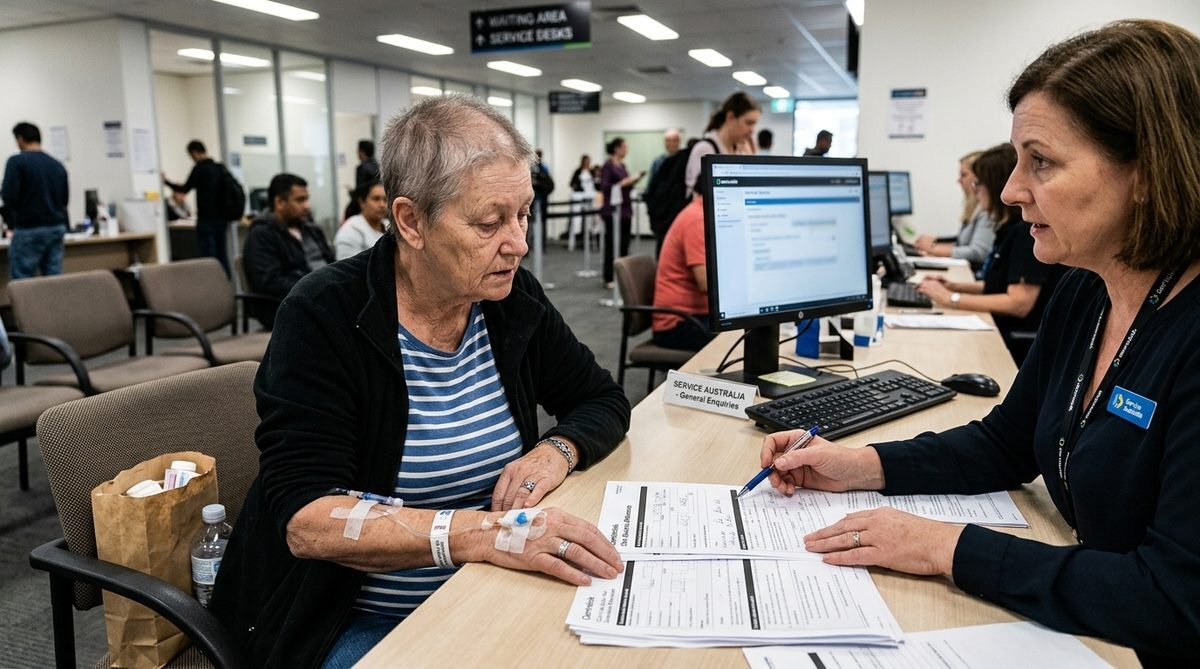
What Did Australia Have Before Medicare? The Health System Nobody Talks About

Before Medicare, getting sick in Australia was a financial gamble. Whether you got care depended on who you worked for, which friendly society you'd joined, or whether your local hospital had a charity ward with a bed available. There was no safety net.
If you fell through the gaps, you fell hard.
Most Australians today assume universal healthcare has always been here. It hasn't. Understanding what came before tells you why the current system exists, what it still misses, and why private health cover still matters.
What Was Used Before Medicare?
The system before Medicare was a patchwork. It was never designed as a system at all. It grew from three separate streams: friendly societies, private health insurance, and charity-based hospital care.
Friendly societies were the dominant model for most working Australians from the mid-1800s through to the mid-20th century. They were mutual aid organisations, essentially member-owned clubs where you paid a weekly contribution and received access to a contracted doctor, known as a lodge doctor, along with some sickness benefits if you couldn't work. The Independent Order of Odd Fellows, the Manchester Unity, and dozens of similar organisations had millions of members across Australia.
At their peak in the 1930s, friendly societies covered roughly half the adult male workforce.
The key word there is male. Wives and children were often not covered, or covered at reduced rates. Women who worked were largely excluded from the lodge system. If a family's main earner died or became permanently disabled, the sickness benefit stopped.
Private health insurance as we know it today began to formalise in the 1950s. Hospital benefit organisations like the Hospital Benefits Association of Victoria and the Medical Benefits Fund of Australia emerged to fill gaps the friendly societies left. The federal government under Robert Menzies introduced subsidies to encourage voluntary private insurance.
By the 1960s, a significant portion of Australians held some form of private cover. But voluntary meant optional. A large percentage of the population, particularly low-income earners, migrants, and the elderly, remained uninsured.
Public hospitals existed throughout this period, but they operated on a two-tier model. Patients with insurance or money were admitted as private patients in private wards. Those without were admitted to public wards, often called charity wards, where care was provided but conditions were frequently overcrowded and understaffed. The quality gap between the two was real and widely understood.
When Did Australia Get Free Healthcare?
Australia got its first genuine attempt at universal healthcare in 1975, when the Whitlam government introduced Medibank. It launched on 1 July 1975 and was the first scheme that covered all Australians regardless of income or prior insurance status, funded through a levy on taxable income.
Medibank didn't last in its original form. The Fraser government, elected in late 1975, progressively dismantled it between 1976 and 1981, reintroducing means testing and making bulk-billing coverage voluntary rather than universal.
Medicare as it exists today was introduced by the Hawke government and came into effect on 1 February 1984. It restored universal coverage and has remained the foundation of Australian public healthcare ever since.
So Australia has had genuinely free healthcare, in the sense of Medicare-covered GP and specialist visits with no out-of-pocket cost when bulk-billed, for just over 40 years.
That's worth sitting with. Forty years is well within living memory. Plenty of Australians alive today were adults before Medicare existed. They remember what it was like to avoid the doctor because of the cost, to delay treatment, to hope an illness would resolve on its own.
The Gaps That Existed Then and Still Exist Now
Here's the part most retrospective articles miss. The pre-Medicare system didn't just fail the poor. It failed the middle class too, just more slowly. A serious illness or a chronic condition could wipe out savings that had taken decades to build. There was no catastrophic cost protection. There was no guaranteed access.
Medicare fixed a lot of that. But it didn't fix everything. What it created was a floor, not a ceiling.
Medicare covers GP visits when bulk-billed, public hospital treatment as a public patient, and a schedule of rebates for specialist and diagnostic services. What it does not cover is the gap between the Medicare rebate and what specialists actually charge, dental care, most optical care, physiotherapy and allied health beyond limited chronic disease management plans, ambulance transport in most states, and private hospital accommodation if that's where you prefer or need to be treated.
In my experience working with clients navigating health costs, the shock isn't usually the GP bill. It's the specialist invoice, the ambulance statement, or the hospital excess that catches people off guard. The system is good. It has limits. Knowing them matters.
What Is the Silent Killer in Australia?
Cardiovascular disease is often called the silent killer in Australia, and the description fits. Heart disease and stroke together remain the single largest cause of death in the country. Roughly one Australian dies from cardiovascular disease every 12 minutes.
High blood pressure, which is the primary driver of both heart attacks and strokes, produces no obvious symptoms in most people until something serious happens.
The reason this matters in the context of health system history is that cardiovascular disease was killing Australians at high rates long before Medicare existed. In the pre-Medicare era, many of those people never saw a doctor regularly enough to have their blood pressure monitored. Preventive care was not a feature of the friendly society model or the charity ward system. You saw the lodge doctor when you were sick. You did not go for a checkup.
Medicare changed the economics of preventive care by making GP visits accessible. The result over 40 years has been a significant decline in cardiovascular mortality, driven partly by better treatment and partly by earlier detection. Routine blood pressure checks, cholesterol screening, and diabetes management happen at a scale today that was simply impossible before bulk-billing existed.
That said, cardiovascular disease still kills more Australians than any other cause. Access to a GP is one part of the equation. Taking action on what the GP finds is another. Many Australians still delay, still avoid, still underestimate risk. The silent killer is silent partly because the healthcare system now makes it detectable, but detection only helps if people use it.
What Most Articles Get Wrong About This History
The standard narrative frames the move from the old system to Medicare as a clean moral victory: bad system replaced by good system. That framing misses a few things worth knowing.
First, the friendly society model had real strengths that were largely abandoned rather than absorbed. Friendly societies created genuine community accountability. Lodge doctors competed for contracts, which gave members leverage. Costs were controlled partly because members understood exactly what their contributions paid for.
When the shift to insurance-based models happened, that direct member accountability largely disappeared. Whether the tradeoff was worth it is a legitimate question.
Second, the political fight over universal healthcare in Australia was vicious and prolonged. The Australian Medical Association and its predecessors spent decades actively opposing universal schemes, arguing that a government-funded system would undermine the doctor-patient relationship and reduce medical incomes. They weren't entirely wrong about incomes, at least in the short term. They were wrong about quality of care. But the opposition was real, well-funded, and delayed universal coverage by at least two decades compared to what could have been introduced earlier.
Third, the current system's gaps are not accidental. They are the residue of political compromises made to get Medicare passed and to keep it funded. Dental care was excluded partly because dentists lobbied hard against inclusion and partly because the cost would have been enormous.
That exclusion has compounded over 40 years into one of the most significant health inequalities in the country. Poor dental health correlates strongly with cardiovascular disease, diabetes, and respiratory infections. Leaving teeth out of universal healthcare was a political decision with real health consequences that continue today.
How Private Health Insurance Fits Into This Picture
Private health insurance in Australia today is not a replacement for Medicare. It works alongside it. What private cover does is give you access to private hospitals with your choice of doctor, cover the gap fees that Medicare doesn't pay, and in many policies cover dental, optical, and allied health services that Medicare excludes entirely.
For many Australians, the decision comes down to predictability. Medicare is excellent for unexpected acute care. For planned procedures, ongoing specialist relationships, and services outside the Medicare schedule, private cover reduces the financial uncertainty significantly. Understanding your private health options can help clarify the right choice for your situation. understanding your private health options
What I've found is that people who understand this distinction make much better decisions about their cover. They're not buying private insurance because the public system is broken. They're buying it because they want predictable access to specific services and they want to know what their costs will be before they're unwell.
The history matters here too. The reason Australia has a mixed public-private system rather than a purely public one is precisely because of the political compromises involved in building Medicare. Private insurance was preserved as an option partly to manage the political opposition from medical and hospital interests. The result is a system that's more complex than pure universal care but that gives individuals more options than a purely public model would.
Frequently Asked Questions
What did Australia have before Medicare?
Before Medicare, Australia had a fragmented system of friendly societies, voluntary private health insurance, and charity-based public hospital care. Coverage was uneven, often excluded women and children, and left a significant portion of the population with no reliable access to affordable healthcare.
When did Australia get free healthcare?
Australia's first universal healthcare scheme, Medibank, launched on 1 July 1975 under the Whitlam government. It was subsequently dismantled by the Fraser government. Medicare, the current universal scheme, came into effect on 1 February 1984 under the Hawke government.
What is the silent killer in Australia?
Cardiovascular disease, including heart attack and stroke driven largely by undetected high blood pressure, is Australia's leading cause of death and is commonly called the silent killer. It claims one Australian life every 12 minutes.
Did everyone have access to healthcare before Medicare?
No. Access was tied to employment, membership in a friendly society, or ability to pay for private insurance. Low-income earners, women, migrants, and the elderly were disproportionately excluded from consistent care. Public hospital charity wards existed but operated under significant resource constraints.
Is Medicare truly free?
Medicare covers a defined schedule of services and pays rebates toward GP and specialist costs. When a doctor bulk-bills, the patient pays nothing. When they don't, a gap remains. Hospital care as a public patient is free. Dental, optical, ambulance, and most allied health services are not covered by Medicare.
Does private health insurance still matter in Australia?
Yes. Private health insurance covers services Medicare excludes, reduces gap fees for specialists, and gives access to private hospital care with a choice of doctor. For planned procedures and ongoing management of chronic conditions, private cover provides cost predictability that Medicare alone doesn't offer.
What You Should Actually Do With This
Review what your current health cover actually includes. Most Australians have either too much cover for services they never use or gaps in exactly the areas they're most likely to need. Dental, optical, specialist gap cover, and ambulance are the four areas where Medicare's limits bite hardest.
If you haven't had a cardiovascular health check in the last 12 months, book one. High blood pressure has no symptoms. The check takes five minutes. The cost of not knowing is significantly higher than the cost of knowing.
And if you're comparing private health policies or trying to understand what you actually need given your age, income, and health history, get specific advice rather than guessing. The product differences are meaningful and the wrong choice is easy to make without someone who knows the detail.
Explore related health and wellbeing guides
This article is part of PTNA's consumer health and wellbeing library. Browse the Health & Wellbeing Resources hub to find related guides by topic, including Australian health cover, Medicare, prostate health, mental health, disability support and life insurance.

How Much Does It Cost to Have Your Prostate Removed Privately in Melbourne?
Read article →
Is It Worth Having Your Prostate Removed in Melbourne?
Read article →
Can You Get Anything Free if You Have Cancer in Melbourne?
Read article →
What Are the Negatives of Removing Your Prostate in Melbourne?
Read article →
Is Prostate Cancer Classed as a Disability in Melbourne?
Read article →