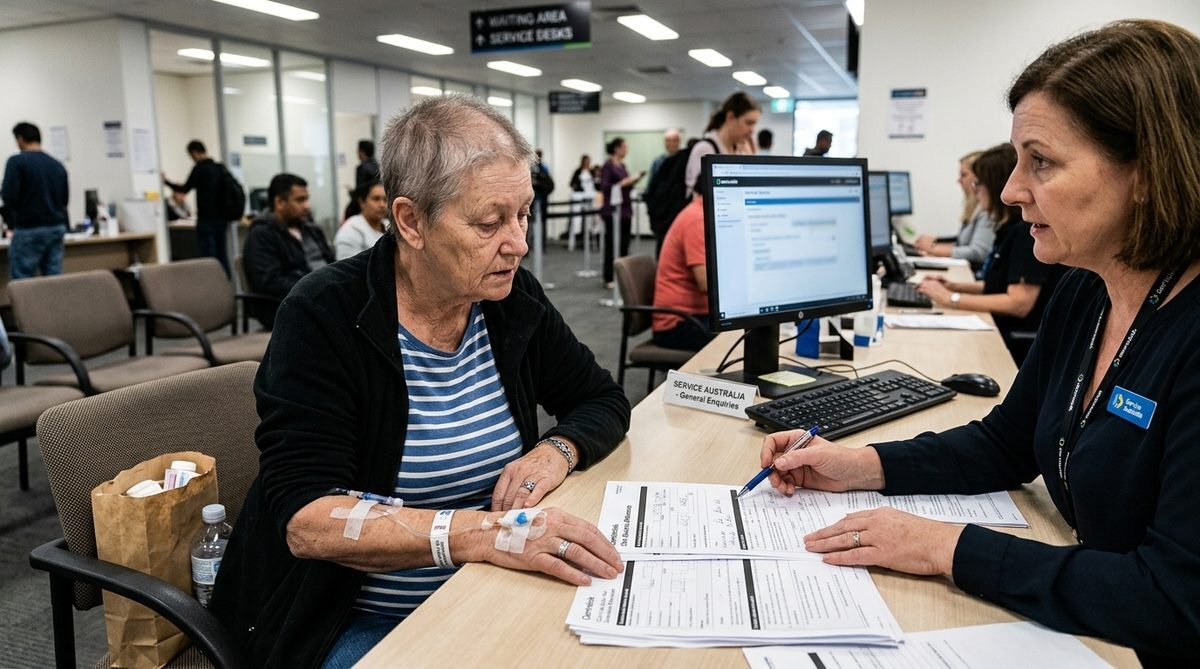
What Can I Claim If I Have Psoriasis? Benefits, Disability & Financial Support Explained

Psoriasis is not just a skin condition. For many people, it drives joint pain, fatigue, and mental health struggles that make working a full week genuinely hard.
Yet most people with psoriasis have no idea what financial support or legal protections they're actually entitled to.
The answer depends on how severely psoriasis affects your life, not just what it looks like on your skin. Here's what you can realistically pursue.
What Benefits Can You Claim for Psoriasis?
In Australia, the benefits available to you depend on whether psoriasis limits your ability to work or perform daily activities. The condition itself doesn't automatically trigger a payment. The functional impact does.
The main options worth knowing about are:
- Disability Support Pension (DSP): Available through Centrelink if your psoriasis, psoriatic arthritis, or related conditions leave you with a permanent impairment that prevents you from working 15 hours or more per week. Moderate-to-severe psoriasis affecting mobility, vision, or mental health can meet the threshold when properly documented.
- JobSeeker with a partial capacity to work: If you can work but not full-time, you may qualify for a reduced mutual obligation arrangement under JobSeeker.
- Carer Payment or Carer Allowance: If a family member provides substantial care because of your psoriasis-related disability, they may be eligible for carer support payments.
- NDIS (National Disability Insurance Scheme): Psoriasis alone rarely qualifies, but psoriatic arthritis causing significant functional limitation, or severe psoriasis affecting daily living activities, can support an NDIS access request. The NDIS funds supports, not income replacement.
- Medicare and PBS concessions: Biologics for severe psoriasis are listed on the Pharmaceutical Benefits Scheme. With a concession card, your out-of-pocket cost drops significantly. The cost difference between full price and concessional pricing for biologics like secukinumab or adalimumab can be thousands of dollars per year.
What I found when researching this area is that most people with psoriasis underestimate their eligibility because they compare themselves to people with more visible physical disabilities.
The DSP assessment doesn't rank conditions. It measures how your specific impairments affect your capacity to function.
Does Psoriasis Qualify You for Disability?
Yes, it can. The honest answer is that it depends on severity and documentation, but moderate-to-severe psoriasis absolutely can meet the criteria for disability classification in Australia.
For the DSP, Services Australia uses the Impairment Tables to assign a rating. Psoriasis can score points across several tables depending on what it affects: skin function, mental health, upper limb function (if hands are severely involved), and lower limb function (if psoriatic arthritis affects mobility).
A total impairment rating of 20 points or more, combined with meeting the work capacity test, qualifies you for the DSP. Severe psoriasis covering large body surface areas, or psoriatic arthritis limiting grip and mobility, regularly meets that threshold when a treating specialist documents it properly.
The mistake most people make is applying without a detailed functional report from their dermatologist or rheumatologist. A report that only lists your diagnosis isn't enough.
The report needs to describe what you can't do, how often flares occur, how long recovery takes, and what treatments have been tried and failed.
If you've been refused before, that's not necessarily the end. Many successful DSP approvals happen on review after better medical evidence is submitted.
What Is the Rule of 9 for Psoriasis?
The Rule of 9 is a clinical tool doctors use to estimate how much of your body surface area (BSA) is affected by psoriasis. It divides the body into sections that each represent roughly 9% of total skin surface.
The breakdown works like this: each arm accounts for 9%, each leg for 18% (split into two 9% sections), the front of the torso for 18%, the back for 18%, the head and neck for 9%, and the groin area for 1%. Added together, these sections total 100% of body surface area.
Why does this matter for claims? Because BSA coverage is one of the core measures used to classify psoriasis severity. Mild is generally under 3% BSA. Moderate sits between 3% and 10%. Severe is above 10%.
Reaching the severe threshold opens up PBS-subsidised biological therapy in Australia. It also strengthens a disability or insurance claim significantly.
If your psoriasis covers more than 10% of your body surface area and your current dermatologist hasn't calculated or documented your BSA score recently, ask them to do it at your next appointment. That number can directly affect what treatments and supports you can access.
In my experience researching how Centrelink and insurers assess psoriasis claims, the BSA score often carries more weight than a written description of severity alone. It's measurable, it's standardised, and it's harder to dispute.
Psoriasis and Income Protection or Total and Permanent Disability Insurance
If you have income protection or TPD insurance, through superannuation or a separate policy, psoriasis or psoriatic arthritis may support a claim if it's stopped you from working.
Income protection typically pays a percentage of your pre-disability income if you can't work due to illness or injury. Psoriatic arthritis causing chronic joint damage, or severe skin psoriasis making physical or desk-based work impossible due to pain and fatigue, can qualify.
TPD insurance pays a lump sum if you're unlikely to ever return to suitable employment. The bar is higher, but severe psoriatic disease that hasn't responded to treatment and has caused permanent functional impairment has supported TPD claims.
The critical issue with insurance claims is the same as DSP: documentation. You need your treating doctors to write detailed reports. Not a letter saying you have psoriasis.
A report that explains what functions are impaired, what your daily limitations are, what treatments have been tried, and why those treatments haven't restored your capacity to work.
Getting professional support from a compensation or insurance lawyer, or a firm experienced in disability insurance claims, makes a measurable difference to outcomes. The insurer's assessors aren't on your side. Having someone who knows how those assessments work is worth it.
Is Psoriasis Linked to Lymphoma?
This question comes up a lot, and it's worth addressing directly because it has implications for life insurance and trauma insurance claims.
Research has found a modestly elevated risk of certain lymphomas, particularly cutaneous T-cell lymphoma (CTCL) and some types of non-Hodgkin lymphoma, in people with psoriasis. The association is stronger in people with severe psoriasis and in those who have received certain systemic treatments over long periods.
The increased risk is real but relatively small in absolute terms. Most people with psoriasis will never develop lymphoma.
However, if you do develop lymphoma and you have a history of psoriasis, the connection is medically recognised and can be relevant to trauma insurance or critical illness claims.
If you've been diagnosed with lymphoma and you have a history of moderate-to-severe psoriasis, speak to a lawyer or financial adviser who specialises in insurance claims before lodging anything. The way a claim is framed and supported medically can significantly affect the outcome.
Work Rights and Reasonable Adjustments
Psoriasis is covered under the Disability Discrimination Act 1992 in Australia. That means your employer can't legally discriminate against you because of your psoriasis, and they're required to make reasonable adjustments to help you perform your role.
Reasonable adjustments in a psoriasis context might include flexible hours to manage fatigue, remote work during flares, access to a cool or low-irritant environment, or modified duties during periods of severe hand or foot involvement.
If you've been passed over for a job, demoted, or dismissed because of your psoriasis, that's potentially unlawful. A complaint can be lodged with the Australian Human Rights Commission or the relevant state anti-discrimination body.
What most people don't realise is that you don't need to prove the discrimination was intentional. If a policy or practice puts you at a disadvantage because of your psoriasis and there's no reasonable justification, that can constitute indirect discrimination.
Costs You Can Claim Through Tax
If you manage psoriasis with treatments that aren't fully covered by Medicare or the PBS, some of those costs may be claimable through the Australian Taxation Office, particularly if your total net medical expenses exceed certain thresholds. The net medical expenses tax offset has been phased out for most people in recent years, but specific situations still apply.
More practically, if you operate a business or work as a sole trader and your psoriasis requires you to use specific equipment, clothing, or workplace adaptations, those costs may be deductible. A registered tax agent who understands medical conditions and work-related expenses is worth consulting if your annual psoriasis-related costs are substantial.
FAQ
Can I get the NDIS for psoriasis?
Psoriasis alone rarely meets the NDIS access criteria, but psoriatic arthritis causing permanent and significant functional impairment can. The NDIS looks at functional impact, not diagnosis.
If your psoriatic disease limits your ability to walk, use your hands, or maintain personal care without assistance, it's worth lodging an access request with detailed supporting evidence from your treating team.
Will psoriasis affect my life insurance?
It can. Insurers may load premiums or exclude psoriasis-related conditions when assessing life insurance or income protection applications. If you already have cover and develop psoriatic complications, what was or wasn't disclosed at application matters.
An insurance broker who understands chronic skin conditions can help you find competitive cover.
Can psoriasis be considered a workplace injury?
If your psoriasis was triggered or significantly worsened by workplace conditions, such as chemical exposure, extreme temperatures, or high psychological stress, there may be grounds for a workers compensation claim.
This requires establishing a causal link between the workplace and the condition or its worsening, which needs medical and legal support.
What if Centrelink rejected my DSP application?
You have the right to request an Authorised Review Officer review, and then appeal to the Administrative Appeals Tribunal if needed. Many successful DSP grants happen at the review or tribunal stage after stronger medical evidence is provided.
A welfare rights advocate or social worker can assist with this process at no cost through community legal centres.
Does the severity of psoriasis affect what I can claim?
Directly, yes. Mild psoriasis that doesn't affect your ability to work or perform daily activities won't support a DSP or TPD claim.
Severe psoriasis covering significant body surface area, causing chronic pain, fatigue, or functional limitation, builds a much stronger case across almost every type of claim or benefit.
What to Do Next
Start with your treating specialist. Ask them to document your condition in functional terms, not just clinical ones. Get your BSA score recorded.
Ask specifically what activities your psoriasis makes difficult or impossible, and have that written down.
Then match that documentation to the specific claim or benefit you're pursuing. DSP, NDIS, insurance, and workers compensation each have different criteria, and generic letters rarely satisfy any of them.
If the financial stakes are meaningful, get professional help. A compensation lawyer, an insurance specialist, or a welfare rights advocate will know exactly what evidence is needed and how to present it.
The upfront investment in good advice almost always results in a better outcome than going through the process alone.
Psoriasis is a serious medical condition. The support systems exist. Most people just don't know how to access them.
Explore related health and wellbeing guides
This article is part of PTNA's consumer health and wellbeing library. Browse the Health & Wellbeing Resources hub to find related guides by topic, including Australian health cover, Medicare, prostate health, mental health, disability support and life insurance.

How Much Does It Cost to Have Your Prostate Removed Privately in Melbourne?
Read article →
Is It Worth Having Your Prostate Removed in Melbourne?
Read article →
Can You Get Anything Free if You Have Cancer in Melbourne?
Read article →
What Are the Negatives of Removing Your Prostate in Melbourne?
Read article →
Is Prostate Cancer Classed as a Disability in Melbourne?
Read article →