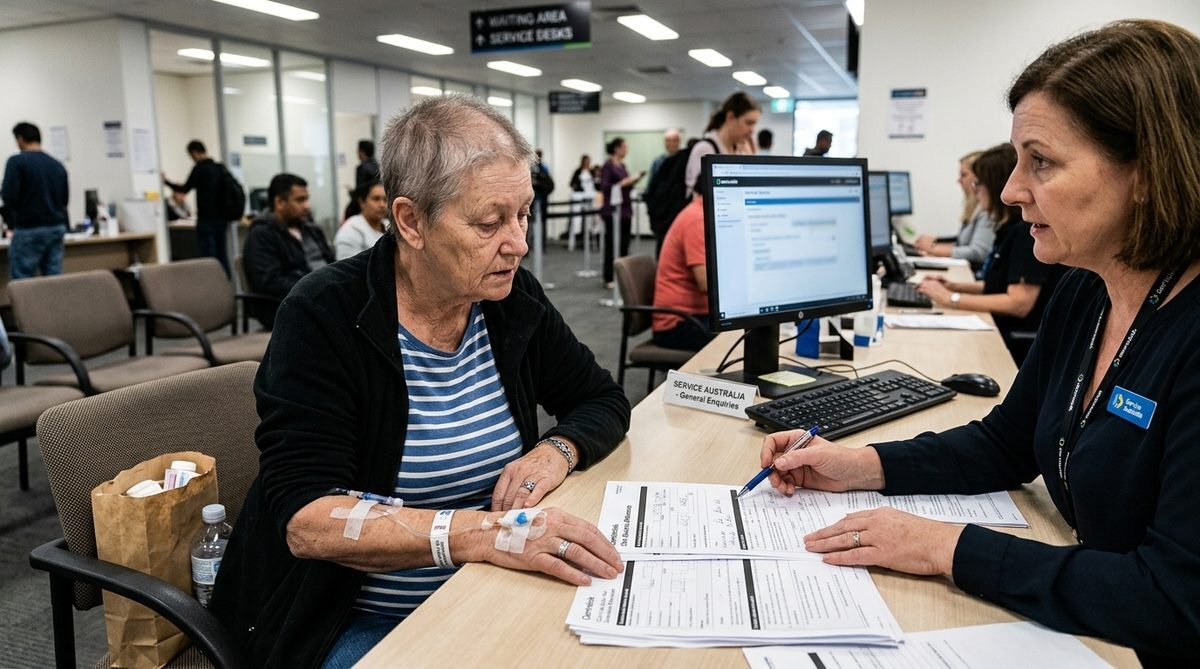
What benefits do migrants get in Australia?

Migrants in Australia may get health care, family aid, settlement help, worker protections and some government payments. But access depends on visa status and waiting periods. Permanent residents usually get the widest access. Temporary visa holders often get fewer benefits and may need private health insurance.
People who arrive on a Travel visa usually have very limited access.
The basic point is simple: Australia does not give every migrant the same package. Each program has its own rules. Citizenship, permanent residence, temporary residence, refugee status, income, family details and time spent in Australia can all change the result.
That is why two people who arrived in the same month may get very different support. A permanent resident with children may qualify for health care and family help. A skilled worker on a temporary visa may have work rights but no access to most payments.
A visitor may have to pay the full cost of treatment unless insurance or an agreement covers it.
Which migrants receive the widest range of support?
Permanent residents, protected Special Category Visa holders from New Zealand, eligible humanitarian entrants and Australian citizens tend to have the strongest access. Temporary residents and visitors have fewer rights.
Permanent residence is often the key dividing line. It can give access to Medicare, public schooling for children under state rules, workplace protection and a path to some payments after the required waiting period. Permanent residents may also use certain settlement and English-language services.
Humanitarian entrants can get extra help because they may arrive with few local contacts, limited English or urgent health needs. Their waiting-period rules can differ from the rules for other new residents.
New Zealand citizens need to check the exact class and date of their Special Category Visa. Protected and non-protected holders do not have the same rights. Never assume that a New Zealand passport answers every eligibility question.
Temporary visa holders usually get rights linked to the purpose of their visa. A sponsored worker may be allowed to work and will have workplace protections. An international student can study and work within their visa conditions.
But those rights do not bring broad access to government payments.
How does visa status control access?
Government agencies check legal status before they approve most benefits. So the visa grant notice is one of the most useful records a migrant can keep. It shows the visa subclass, grant date and conditions.
A practical check starts with four facts:
- The person’s current visa subclass.
- Whether the visa is permanent or temporary.
- The date Australian residence began for that program.
- Whether an exemption or special agreement applies.
Picture a couple where one partner has permanent residence and the other is still on a temporary partner visa. They share an address and income, yet their personal access can differ. The permanent resident may pass a program’s residence test while the temporary visa holder does not.
Status can also change while someone lives in Australia. Moving from a student visa to permanent residence may open new options, but benefits do not always start on their own. The person may need to make a new claim, prove their identity and show when the new status began.
A Travel visa sits at the narrow end of the system. Visitors should expect to pay for medical care, medicines and living costs. Some visitors from countries with a reciprocal health care agreement may get limited medically necessary treatment, but that is not full resident access.
What health support may be available?
Medicare is the public health insurance system. It can help pay for doctor visits, care in public hospitals and some other health services. It does not make every health cost free. Medicare is the public health insurance system public health insurance system
Dental care, ambulance transport, glasses, private hospital fees and many allied health services may still cost money.
Australian citizens and eligible permanent residents can generally enrol. Some temporary residents may also qualify, including certain visa applicants and visitors covered by reciprocal arrangements. The exact rules depend on status and personal circumstances.
Migrants who cannot enrol usually need private health insurance. Some visas require health insurance as a condition. Even when it is optional, insurance can shield a household from a large hospital bill.
Public health access and a person’s daily health needs are two different things. A Medicare card does not book appointments, arrange transport or wipe away every fee. New residents should find a local general practitioner, ask if the clinic bulk bills and learn where the nearest public hospital is before urgent care is needed.
One issue many guides skip is the gap between being eligible and being enrolled. Someone may meet the rules but still get a bill if the application is incomplete. Keep the enrolment confirmation, check the start date and ask the clinic what it will charge before treatment.
What help is available for families and children?
Eligible migrant families may get help with the cost of raising children, child care and parental leave. Residence rules, income tests and waiting periods apply. A child born in Australia does not automatically make the parents eligible for every kind of aid.
School access is usually managed by state and territory governments. Children of permanent residents can generally attend government schools. Fees for temporary residents vary by location and visa type.
Some states waive fees for selected visa groups, while others charge tuition.
Child care support has its own rules. A parent may need to pass residence, activity and income tests. The approved service must record attendance correctly too.
Families should check eligibility before signing a long contract with a child care centre.
Imagine a newly arrived family planning its budget around a payment expected right away. If there is a waiting period, the lost income can hit rent, transport and child care from the first month. It is safer to confirm the start date in writing and make a budget that works before payments begin.
Why do waiting periods matter?
Many new permanent residents face a Newly Arrived Resident’s Waiting Period before they can get certain payments and concession cards. The length is not the same for every program. Government policy can change it too, so old advice from friends may be wrong.
Waiting periods are often mistaken for a ban on all public support. They are more limited than that. Someone may get Medicare and use public schools while still waiting for an income payment.
Each service follows its own law.
Exemptions may apply to humanitarian entrants, some family members, people whose circumstances change after arrival and people covered by an international social security agreement. Any exemption must be checked against the rules for that exact claim.
Time spent in Australia before permanent residence may not count as someone expects. The start date used can vary between programs. Record arrival dates, visa changes and time spent outside Australia so the agency can assess the claim correctly.
What does Australia provide besides direct payments?
Some of the most useful benefits are services, not cash. Eligible migrants may get English lessons, interpreting help, job guidance and settlement support. These services can cut early costs and make health, education and legal systems easier to use.
The Adult Migrant English Program offers English tuition to eligible migrants and humanitarian entrants. Course choices may include classroom, online or distance learning. Child care help may be offered during classes for eligible students.
The Translating and Interpreting Service can help people talk with businesses and government agencies. Free interpreting is offered for some approved services. Migrants should ask if the organisation can arrange an interpreter instead of using a child or relative to discuss private health or money matters.
Settlement services can help eligible newcomers understand housing, education, health care and local services. Humanitarian entrants may get more hands-on help during their first months in Australia.
Here is something many articles miss: a free interpreter or English course may be worth more than a small short-term payment. It can help someone fill in forms correctly, understand a lease and dodge costly mistakes.
What rights do migrant workers have?
Migrant workers have the same basic workplace protections as other workers in Australia. An employer must follow minimum pay rates, leave rules, safety laws and record-keeping duties. A worker’s visa status does not allow an employer to underpay or threaten them.
Workers should keep payslips, rosters, bank records and messages about shifts. Being paid in cash does not mean a job sits outside employment law. A worker can check their pay against the right award and ask the Fair Work Ombudsman for help.
Some migrants do not report underpayment because they fear losing their visa. Employers often use that fear to pressure them. Workers should get independent advice before believing claims about visa cancellation or sponsorship.
Superannuation is another benefit linked to work. Eligible employees get employer contributions under Australian rules. A temporary resident who later leaves Australia may be able to claim a departing Australia superannuation payment, with tax deducted.
Can migrants receive help with study and training?
Education support depends on residence status, the course and the provider. Permanent residents may pay domestic tuition rates, but they do not always get the same loan access as citizens. Temporary residents usually pay international fees unless a special rule applies.
Some migrants can join free or low-cost English and job-readiness programs. States and territories may also fund selected vocational courses for eligible residents. A course advertised as government funded still needs an eligibility check.
Before enrolling, ask the provider to confirm the full fee, funding basis and refund terms in writing. A spoken promise from a sales worker offers little protection if the enrolment contract says something else.
How should a migrant check an entitlement?
Start with Services Australia for federal health and payment programs. The agency runs Medicare and many parts of social security in Australia. Its website, service centres and phone lines can explain which documents a claim needs.
Use this order:
- Find the current visa grant notice and identity records.
- Check the official eligibility page for the exact service.
- Look for residence tests, waiting periods and exemptions.
- Gather proof of income, address, family details and arrival dates.
- Submit the claim and keep the receipt or reference number.
- Read the decision letter and ask for a review if key facts were missed.
Do not trust a social media post, migration forum or another family’s result as your answer. A small change in visa subclass, relationship status or arrival date can alter the outcome.
Migration agents give advice on visas, while government agencies decide benefit claims. Financial counsellors, community legal centres and settlement workers can help with other parts of the process. Pick the service that fits the question.
Which mistakes cause the most trouble?
The first mistake is treating permanent residence and citizenship as the same status. Permanent residents get many services, but some rights stay limited until citizenship.
The next mistake is thinking approval happens on its own after a visa changes. Agencies may not get enough information to start a benefit. A new application or updated proof may be needed.
Another mistake is ignoring time spent outside Australia. Travel can affect residence tests, payment rates or ongoing eligibility. Report overseas trips when the rules say you must.
People also mix up public health cover with full health cover. Medicare has common gaps. Check ambulance rules, medicine costs and private hospital fees in the state where you live.
Some households also spend expected support before a claim is approved. Treat an estimate as unconfirmed until the agency gives you a decision with a start date and payment rate.
What should a new migrant do first?
Create a simple entitlement file. Add visa notices, passports, arrival records, tax file numbers, proof of address, income records and agency letters. Then check health cover, school costs, work rights and waiting periods in that order.
Set reminders for visa changes and the end of each waiting period. Update Services Australia when family, income, address or travel details change. Quick updates can prevent debt and missed support.
Take one action today: use your exact visa subclass to check each service on an official government page, then record the result and start date in your household budget.
Common questions
How much money do immigrants get in Australia?
Immigrants do not receive a set amount of money when they arrive in Australia. Payments depend on their visa, income, family needs, and any waiting period.
Do immigrants get Centrelink in Australia?
Some immigrants can get Centrelink payments if they meet the rules. Many new migrants must wait before they can receive most payments, but some people are exempt.
Do refugees in Australia get free housing?
Refugees do not usually get free housing forever. Some may receive short-term housing help when they first arrive, but they later pay rent like other people.
What welfare do immigrants get in Australia?
Eligible immigrants may receive payments for unemployment, families, disability, or older age. What they can get depends on their visa, time in Australia, income, and personal needs.

How Much Does It Cost to Have Your Prostate Removed Privately in Melbourne?
Read article →
Is It Worth Having Your Prostate Removed in Melbourne?
Read article →
Can You Get Anything Free if You Have Cancer in Melbourne?
Read article →
What Are the Negatives of Removing Your Prostate in Melbourne?
Read article →
Is Prostate Cancer Classed as a Disability in Melbourne?
Read article →