What Benefits Can I Claim If I Have Bipolar? A Plain-Language Guide for Australians

If you have bipolar disorder and you're struggling to work consistently, pay your bills, or manage day-to-day life, there's real financial and practical support available in Australia. The problem is most people don't know what they're entitled to, or they've been knocked back once and assumed that was the end of it.
This guide covers what benefits you can actually access, how bipolar disorder is assessed under Australian systems, and what steps give you the best chance of getting approved.
Is Bipolar a Disability for Centrelink?
Yes. Bipolar disorder is recognised as a psychiatric disability under Australian law and Centrelink policy. That means it can qualify you for disability-related payments and support, provided your condition meets the functional impairment criteria. A diagnosis alone isn't enough.
What Centrelink looks at is how your condition affects your ability to work. It's whether your bipolar disorder limits you to working fewer than 15 hours per week, or prevents you from working at all on a sustainable basis.
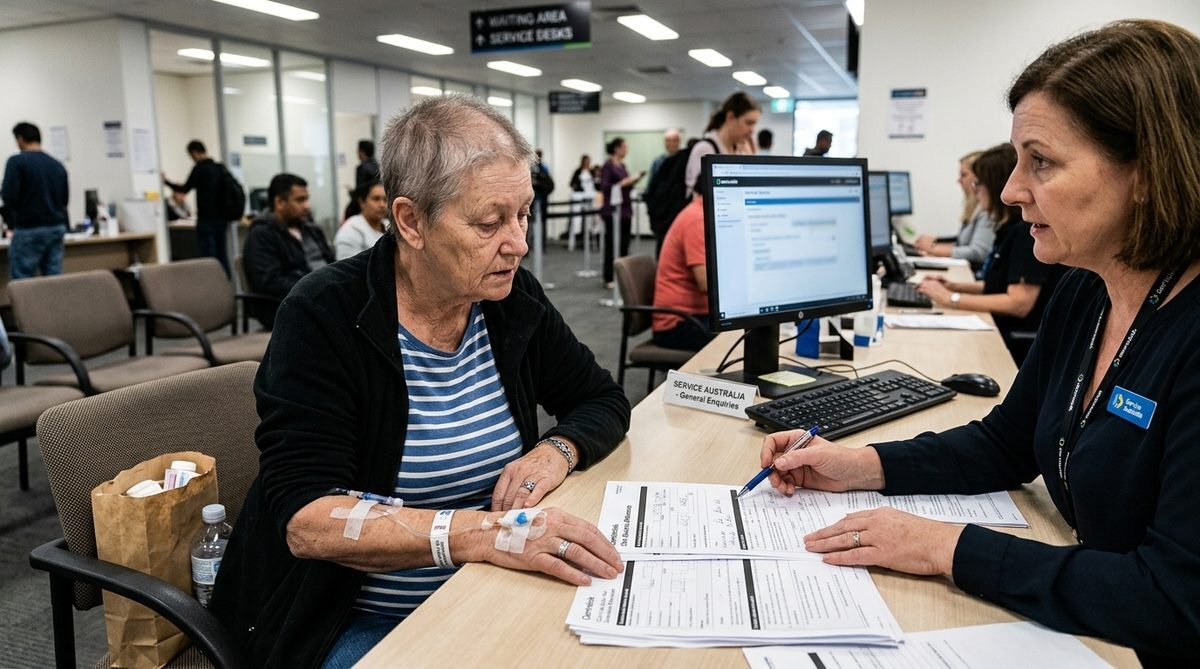
One of my clients had been living with bipolar I for over a decade before she applied for Centrelink support. She'd been managing on casual work, but episodes were getting longer and recovery time between them was stretching out. When she finally applied, she was knocked back the first time because her medical certificate didn't describe the functional impact in enough detail.
Her psychiatrist had written the diagnosis but hadn't explained what it meant for her ability to hold a job. Once we got a more detailed report, her application was approved. The diagnosis hadn't changed. The paperwork had.
What Centrelink Payments Can You Claim?
The main payment for people with a disability or medical condition that limits their work capacity is the Disability Support Pension, commonly called the DSP. This is a fortnightly payment that also gives you access to a Pensioner Concession Card, which reduces costs on medicines, transport, utilities, and some healthcare services.
To qualify for the DSP with bipolar disorder, you generally need to show that your condition is fully diagnosed, treated, and stabilised, and that it still significantly limits your work capacity. The phrase "treated and stabilised" trips a lot of people up. It doesn't mean you have to be symptom-free. It means Centrelink needs evidence that you've engaged with treatment and your condition is as managed as it can reasonably be.
If your bipolar disorder is severe but you're still in a period of active treatment changes, you might not qualify for DSP immediately. JobSeeker with a medical exemption or a partial capacity to work assessment may be more appropriate while your treatment stabilises.
There's also the Carer Payment and Carer Allowance for family members who provide daily care to someone with bipolar disorder. If you have a partner or family member who's reduced or stopped work to support you, they may be entitled to financial help through Centrelink as well.
What Benefits Am I Entitled to With Bipolar Beyond Centrelink?
Centrelink is one piece of the picture. Several other support systems are worth knowing about.
The National Disability Insurance Scheme (NDIS) can fund supports that help you manage daily life, maintain housing, and stay connected to community. Bipolar disorder can qualify for NDIS funding if it causes a permanent or likely permanent impairment that substantially reduces your functional capacity. Not everyone with bipolar will meet the NDIS access criteria, but many people with severe or treatment-resistant bipolar do.
NDIS funding can cover support coordination, help from a support worker during high-risk periods, psychological therapy, and community participation support. I've worked with clients who use their NDIS plan primarily to fund regular psychology sessions and a weekly support worker visit, which helps them monitor early warning signs before a full episode takes hold. That kind of consistent, low-level support often prevents the hospitalisation episodes that derail everything else.
The Medicare system also provides meaningful financial relief. Under a Mental Health Treatment Plan from your GP, you can access up to 20 sessions per calendar year with a psychologist at a rebated rate. If you have a chronic condition like bipolar disorder, your GP may also develop a Chronic Disease Management plan, which can fund allied health visits including occupational therapy, which is often useful for building daily structure and routine.
If you're on a low income or the DSP, the Pharmaceutical Benefits Scheme (PBS) will significantly reduce the cost of your medications. Mood stabilisers, antipsychotics, and antidepressants used in bipolar treatment are generally covered under the PBS, and with a concession card the co-payment is minimal.
State and territory mental health services can also provide community support, case management, and in some areas, subsidised housing support for people with serious mental illness. Availability varies significantly depending on where you live, but it's worth contacting your local community mental health centre to ask what's available in your area.
How Hard Is It to Live With Bipolar?
Genuinely hard. In ways that aren't always visible from the outside. That invisibility is part of what makes navigating the support system so frustrating.
Bipolar disorder isn't just about mood swings. During a manic or hypomanic episode, a person may make decisions that seem fine in the moment but cause serious damage to their finances, relationships, or employment. During a depressive episode, even basic tasks like showering, making a phone call, or opening mail can feel impossible. The gap between what someone looks like on a good day and what they experience during an episode is enormous, and that gap often works against them in benefit assessments.
I remember one client who interviewed for his Centrelink assessment on what happened to be a relatively stable day. He presented well. He was articulate. The assessor had no way of knowing that two weeks earlier he hadn't been able to get out of bed for nine days. His application was initially rejected.
We requested a review, gathered written evidence from his treating psychiatrist, his GP, and a family member who'd witnessed the episode, and the decision was overturned. The lesson from that is to document everything and not rely on how you present on the day.
Living with bipolar also means managing employment relationships carefully. Many people with bipolar can work, but not in every role or every environment. Shift work, high-pressure sales roles, jobs with unpredictable hours, these can destabilise mood for many people with bipolar. Finding work that has consistent hours, reasonable demands, and an employer who's at least somewhat understanding makes a significant difference.
What Is the New Diagnosis for Bipolar Disorder?
The current diagnostic framework used in Australia follows the DSM-5 (Diagnostic and Statistical Manual of Mental Disorders, Fifth Edition) and the ICD-11 (International Classification of Diseases, 11th Edition). These have refined how bipolar disorder is classified and diagnosed compared to earlier versions.
Under current criteria, bipolar disorder is broadly divided into Bipolar I, Bipolar II, and Cyclothymic Disorder. Bipolar I involves at least one full manic episode, which may or may not be accompanied by depressive episodes. Bipolar II involves hypomanic episodes and major depressive episodes, but no full mania. Cyclothymic disorder involves a chronic pattern of hypomanic and depressive symptoms that don't meet the full criteria for either.
The ICD-11, which came into effect globally in 2022 and is being progressively adopted in Australia, introduced some refinements to how mood episodes are coded and described. For most people seeking benefits or support, the practical impact is limited. What matters is that the diagnosis is made by a qualified clinician, documented clearly, and linked to a functional impairment in your supporting evidence.
One thing worth knowing: a diagnosis of bipolar disorder, particularly Bipolar II, is sometimes missed for years. It's frequently misdiagnosed as depression alone, because people tend to seek help during depressive episodes and may not recognise or report hypomanic periods. If you've been diagnosed with recurrent depression and you've also experienced periods of elevated mood, reduced sleep without tiredness, or impulsive behaviour, it's worth discussing bipolar spectrum disorders with your psychiatrist.
What Most Articles Get Wrong About Claiming Benefits With Bipolar
The first thing most articles get wrong is suggesting that getting a diagnosis is the hardest part. It's not. The hardest part is translating a clinical diagnosis into the language of functional impairment that benefit systems actually respond to. A diagnosis of bipolar disorder on a form doesn't explain that you lost your last three jobs, that you have $40,000 in debt from a manic episode, or that you can't reliably predict whether you'll be able to get to an appointment next week. That story has to be told explicitly, in writing, with evidence.
The second thing that gets missed is the appeal process. Many people who should qualify for the DSP or NDIS are rejected on their first application and never appeal. The success rate on reviews and appeals is significant. If you've been rejected, the decision isn't final. You can request a review from Centrelink's internal review officers, and if that fails, you can appeal to the Administrative Appeals Tribunal. Getting help from a disability advocate or a specialist firm substantially improves your chances.
The third thing that's almost never mentioned is that your benefits entitlements aren't just about money. The Pensioner Concession Card, the mental health treatment plan sessions, NDIS capacity building funding, and community mental health services can collectively reduce the practical burden of managing bipolar in ways that are sometimes more valuable than the fortnightly payment. People who access the full picture of support tend to have more stable lives than those who only focus on one part of it.
Frequently Asked Questions
Can I work and still receive the DSP if I have bipolar?
Yes, within limits. The DSP has work rules, and you can generally earn up to a certain threshold before your payment is reduced. If your bipolar allows you to work part-time in some periods but not others, it's worth understanding how Centrelink's income test applies and whether a partial capacity to work assessment might suit you better.
Do I need a psychiatrist or will a GP report be enough?
For a DSP application, a treating specialist report from a psychiatrist carries significantly more weight than a GP report alone. If you don't currently see a psychiatrist, a referral from your GP is the first step. Community mental health services can also provide psychiatric assessment if private psychiatry isn't accessible.
Can bipolar disorder get worse over time?
For some people it does, particularly without consistent treatment. Episode frequency can increase, and recovery between episodes can take longer. Early, consistent treatment is the strongest protective factor. This is part of why building a support structure that includes both clinical care and practical support matters.
What if my bipolar is well-managed with medication?
This is a common concern. If your medication is working well, Centrelink may assess you as having greater work capacity. But the DSP doesn't require that treatment fails. It requires that even with treatment, your condition significantly limits your capacity to work. If your medication manages symptoms but the nature of the illness still means you can't hold consistent employment, that needs to be documented clearly by your treating team.
Is there support for family members?
Yes. Beyond Carer Payment and Carer Allowance, family members can access carer support groups, respite services, and education programs like Family Connections run by NAMI-affiliated organisations. Carers Australia is also a useful starting point.
What to Do Next
Start by getting a detailed report from your psychiatrist or GP that describes not just your diagnosis but what it prevents you from doing. Document your episode history, your work history, and the practical impacts of your condition. If you've already been rejected for the DSP or NDIS, contact a disability advocate or a specialist firm before you give up on that pathway. A disability advocate can guide you through the process.
The support is there. Getting it usually comes down to how well your situation is documented and presented, and whether you have someone in your corner who knows the system.
Explore related health and wellbeing guides
This article is part of PTNA's consumer health and wellbeing library. Browse the Health & Wellbeing Resources hub to find related guides by topic, including Australian health cover, Medicare, prostate health, mental health, disability support and life insurance.
How Much Does It Cost to Have Your Prostate Removed Privately in Melbourne?
Read article →
Is It Worth Having Your Prostate Removed in Melbourne?
Read article →
Can You Get Anything Free if You Have Cancer in Melbourne?
Read article →
What Are the Negatives of Removing Your Prostate in Melbourne?
Read article →
Is Prostate Cancer Classed as a Disability in Melbourne?
Read article →