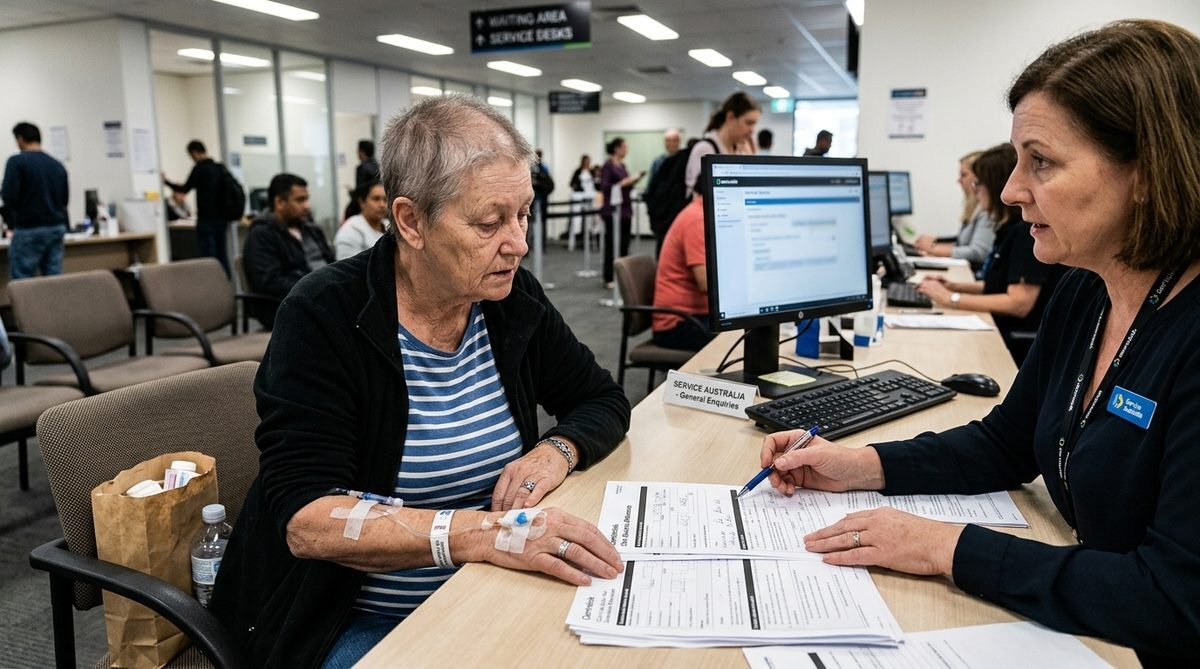
What Benefits Am I Entitled To If I Have Bipolar Disorder

If you have bipolar disorder, you may be entitled to a range of financial payments, health supports, and funded services through the Australian government. What you can access depends on how your condition affects your ability to work and manage daily life, not just the diagnosis itself.
This article covers the main supports available, how to access them, and what the evidence says about getting the right outcome.
Is Bipolar a Disability for Centrelink?
Yes. Centrelink recognises bipolar disorder as a condition that can qualify a person for disability-related payments. The key is demonstrating that your condition affects your capacity to work, not simply that you have the diagnosis.
The two main Centrelink payments relevant to people with bipolar are the Disability Support Pension and JobSeeker Payment with a partial capacity to work assessment.
The Disability Support Pension (DSP) is the higher payment. To qualify, you need to show that your condition is fully diagnosed, treated, and stabilised, and that it results in a functional impairment of 20 points or more under the Impairment Tables. Bipolar disorder is assessed under the Mental Health Function Impairment Table. Conditions like severe mood episodes, psychotic features, cognitive impacts, and inability to maintain consistent work performance all contribute to your impairment rating.
In my experience working through these assessments, the biggest mistake people make is assuming the diagnosis alone is enough. Centrelink wants to see medical evidence that describes how the condition affects your functioning on a day-to-day basis, not just what the condition is.
What Benefits Can I Claim for Bipolar Disorder?
There are several categories of support available. Some are income-based, some are health-based, and some are funded through the National Disability Insurance Scheme.
Centrelink Payments
The Disability Support Pension pays a fortnightly amount to people who cannot work 15 hours or more per week due to a permanent condition. As of 2024, the maximum rate for a single person is around $1,116 per fortnight, though this changes with indexation. You also get access to a Pensioner Concession Card, which reduces costs for medicines, utilities, and public transport in most states.
If your bipolar disorder affects your work capacity but does not meet the DSP threshold, you may qualify for JobSeeker Payment with a reduced mutual obligation requirement. A Job Capacity Assessment can result in a finding that you have a partial capacity to work, which means fewer requirements to look for work and access to additional employment supports.
Medicare and Mental Health Care Plans
Under Medicare, a GP can create a Mental Health Treatment Plan for you. This gives you access to up to 10 individual sessions per calendar year with a psychologist or other eligible mental health professional at a Medicare rebate. For people with bipolar disorder, this is often the first formal support accessed.
If your condition is complex, your GP may refer you to a psychiatrist. Psychiatrist consultations attract a Medicare rebate, though out-of-pocket costs vary significantly depending on the provider.
Pharmaceutical Benefits Scheme
Most medications used to manage bipolar disorder, including lithium, valproate, quetiapine, and lamotrigine, are listed on the Pharmaceutical Benefits Scheme. This means you pay a subsidised price. If you hold a concession card, the cost drops further. In 2024, the general patient co-payment is around $31 per script, and the concession rate is around $7.70.
NDIS
The National Disability Insurance Scheme funds supports for people whose disability has a substantial and permanent impact on their ability to participate in daily activities. Bipolar disorder can qualify, but the NDIS applies a functional assessment, not a diagnostic one.
What I found when looking at NDIS access decisions is that people with bipolar disorder are more likely to be approved when they can show the condition causes consistent functional impairment across multiple life areas, such as self-care, communication, social participation, and learning. Episodic conditions like bipolar can be harder to demonstrate because the impairment fluctuates, but the NDIS does recognise that the impact of a condition between episodes still counts.
If approved, an NDIS plan can fund supports like support coordination, community access, daily living assistance, and therapeutic supports including psychology and occupational therapy.
Does Bipolar Automatically Qualify for Disability?
No. Bipolar disorder does not automatically qualify you for any disability payment or scheme in Australia. Every assessment looks at functional impact, not diagnosis.
This is one of the most common misconceptions people have when they first apply for the DSP or NDIS. A diagnosis of bipolar disorder type 1 with psychotic features and multiple hospitalisations will be assessed very differently from a diagnosis of bipolar disorder type 2 that is well-managed with medication and causes minimal functional impairment.
The evidence you provide matters enormously. A letter from a GP that says "patient has bipolar disorder" is far less useful than a detailed report from a treating psychiatrist that describes how the condition affects your ability to concentrate, maintain a routine, manage relationships, and sustain employment.
If you have been rejected for the DSP or NDIS, that does not mean you do not qualify. It often means the evidence submitted did not adequately describe your functional limitations. Appeals and reviews are common and often successful when better evidence is provided.
What Is the 48 Hour Rule for Bipolar Disorder?
The 48-hour rule is a clinical guideline used in some mental health settings, not a government policy or legal entitlement. It refers to the practice of waiting at least 48 hours before making significant decisions during a mood episode, particularly a hypomanic or manic episode.
The reasoning is straightforward. During elevated mood states, judgment is impaired in ways that feel like clarity. Decisions made during mania, including financial decisions, relationship decisions, and decisions about stopping medication, are frequently regretted once the episode resolves.
Some treating teams formalise this as part of a mental health management plan. If you have a psychiatrist or case manager, ask about building a 48-hour pause into your crisis plan for any major decision. This is not a legal rule and it does not affect your entitlements, but it is a practical tool that reduces harm.
In the context of benefits and applications, the 48-hour rule is sometimes mentioned when people are considering withdrawing from a Centrelink claim or NDIS review during a difficult period. If you are in a depressive or mixed episode, it is worth waiting before making any decision to abandon a claim.
Supports That Most Articles Miss
Three areas tend to get overlooked when people research benefits for bipolar disorder.
The first is carer payments. If someone in your household provides care and support to you because of your bipolar disorder, they may be entitled to Carer Payment or Carer Allowance through Centrelink. This is separate from your own entitlements and is assessed based on the care they provide, not just your diagnosis.
The second is state-based mental health community support programs. Each state and territory funds community mental health services that sit outside the NDIS and Medicare. In Victoria, for example, the Mental Health and Wellbeing Act 2022 created new rights for people receiving mental health services. In New South Wales, the Partners in Recovery program connects people with complex mental health needs to community supports. These vary by location but are worth investigating through your local community mental health team or GP.
The third is superannuation total and permanent disability insurance. Most Australians with superannuation have default life and TPD insurance inside their fund. If bipolar disorder has permanently affected your ability to work in your usual occupation, you may have a valid TPD claim. This is separate from Centrelink and can result in a lump sum payment. Many people with serious mental health conditions do not know this option exists. A financial adviser or lawyer who specialises in superannuation claims can assess whether you have a viable claim.
How to Strengthen Your Claim
Whether you are applying for the DSP, NDIS, or any other support, the quality of your supporting evidence determines the outcome more than almost anything else.
Get a detailed report from your treating psychiatrist that describes your diagnosis, your treatment history, your response to treatment, and specifically how your condition affects your daily functioning. Vague language like "the patient struggles with work" is less useful than specific language like "the patient is unable to maintain consistent attendance, has difficulty with concentration tasks lasting more than 20 minutes, and experiences significant interpersonal conflict during mood episodes that has resulted in job loss on three occasions."
Keep records of hospitalisations, emergency department visits, and periods where you were unable to work or care for yourself. These form a factual history that supports your claim.
If you are applying for the DSP, consider getting help from a social worker, disability advocate, or organisation like the Mental Health Legal Centre or your state's community legal centre. They can review your application before you submit it and identify gaps in your evidence. get help from a social worker, disability advocate, or organisation like the Mental Health Legal Centre
Frequently Asked Questions
Can I work and still receive the Disability Support Pension?
Yes, within limits. DSP recipients can work up to 30 hours per week without losing the payment, though earnings above a certain threshold will reduce the amount you receive. Centrelink has a work bonus and income test that determines the exact impact.
How long does a DSP application take?
Processing times vary but typically range from 3 to 6 months. Complex cases or those requiring additional medical evidence take longer. You can claim JobSeeker while your DSP application is being assessed.
What if my bipolar disorder is episodic and I function well between episodes?
This is a common challenge. For the DSP, Centrelink assesses your condition as it is when fully treated and stabilised. If you function well when stable but have severe episodes that prevent sustained work, the frequency and severity of those episodes still contribute to your impairment rating. For the NDIS, the functional impact between episodes also counts if the condition creates ongoing limitations.
Can I get the NDIS and the DSP at the same time?
Yes. These are separate schemes and one does not exclude the other. The DSP provides income support. The NDIS funds disability-related supports and services. Many people receive both.
What if Centrelink rejects my DSP application?
You can request an Authorised Review Officer review within 13 weeks of the decision. If that is unsuccessful, you can appeal to the Administrative Appeals Tribunal. Getting better medical evidence and legal or advocacy support significantly improves outcomes at review.
Does bipolar disorder qualify for a Health Care Card?
A Health Care Card is income-tested, not condition-tested. If you receive JobSeeker or certain other Centrelink payments, you will receive a Health Care Card automatically. If you are on the DSP, you receive the more valuable Pensioner Concession Card instead.
One Actionable Step
Book an appointment with your GP this week and ask them to write a detailed functional report, not just a diagnosis letter, that describes how what benefits am I entitled to if I have bipolar applies to your specific situation. That report is the foundation of every claim you make, and getting it right from the start saves months of delays.
Explore related health and wellbeing guides
This article is part of PTNA's consumer health and wellbeing library. Browse the Health & Wellbeing Resources hub to find related guides by topic, including Australian health cover, Medicare, prostate health, mental health, disability support and life insurance.
How Much Does It Cost to Have Your Prostate Removed Privately in Melbourne?
Read article →
Is It Worth Having Your Prostate Removed in Melbourne?
Read article →
Can You Get Anything Free if You Have Cancer in Melbourne?
Read article →
What Are the Negatives of Removing Your Prostate in Melbourne?
Read article →
Is Prostate Cancer Classed as a Disability in Melbourne?
Read article →