What Are the Negatives of Removing Your Prostate in Melbourne?
The main negatives are loss of bladder control, weaker or absent erections, infertility, and a long recovery that can affect daily life. These problems can follow a radical prostatectomy, which removes the whole prostate and usually the seminal vesicles. Some effects improve with time and treatment.
Others are permanent. The outcome depends on nerve damage, age, health before surgery, cancer spread, and skilled surgeon. skilled surgeon
For men in Melbourne, the key question isn't whether side effects exist. They do. What matters is how likely each problem is in your case, how severe it could be, and what support will be ready before surgery.
A clear plan for continence, erections, movement, and mental health can make recovery feel less uncertain.
Why does prostate removal cause so many changes?
The prostate sits below the bladder and wraps around the urethra. This tube carries urine from the bladder through the penis. During a prostatectomy, the surgeon separates the prostate from the bladder and urethra, removes it, and then joins the bladder to the urethra again.
This small space also holds nerves, blood vessels, muscles, and tissue tied to bladder control and sexual function. Even careful surgery can disturb them. The body then needs time to heal and relearn how to control urine.
Erections may also become weaker because the nerves beside the prostate were stretched, heated, bruised, or removed.
If the cancer may have spread, the surgeon might remove one nearby lymph node or several nodes for testing. This can improve cancer staging, but it creates another area that must heal. It may also raise the risk of fluid pooling in the pelvis or swelling in a leg.
How much bladder leakage can occur?
Urinary incontinence is one of the most common early problems. Most men leak urine when the catheter first comes out. Leaks may happen while standing, coughing, lifting, walking fast, or climbing out of a car.
Some men need one light pad. Others use several each day.
The main issue is less support around the urethra. Before surgery, the prostate helps form part of the outlet below the bladder. Once it's gone, the outer urinary sphincter has to do more work.
Swelling and weak muscle control can make that job much harder at first.
Control often improves over the next few months. Still, improvement isn't guaranteed. A smaller group of men continues to leak long term, mainly during effort or exercise.
Severe leakage can affect sleep, work, travel, clothing choices, and confidence in public.
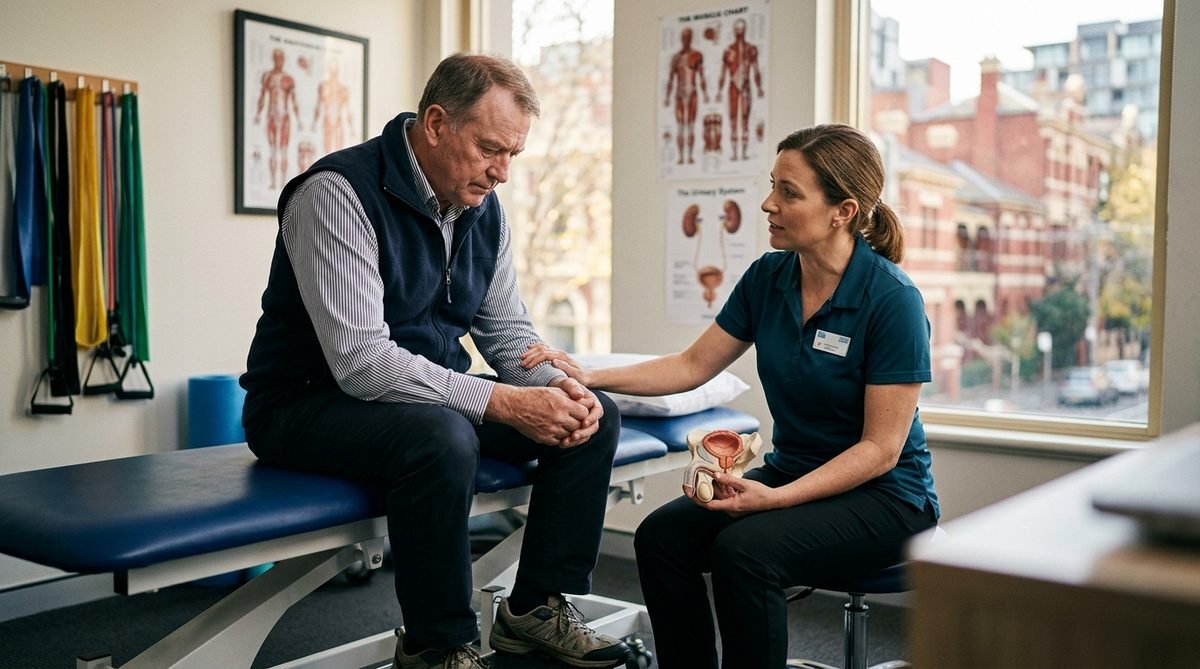
A common mistake is waiting until after surgery to learn a pelvic floor contraction. A better option is to see a pelvic health physiotherapist beforehand. The aim is to find the right muscles without squeezing the buttocks, holding your breath, or pushing down. A qualified pelvic health physiotherapist at a Melbourne urology clinic can guide you through proper technique.
Doing hundreds of poor contractions can simply tire the area without improving control.
Consider a typical recovery example. A man returns to desk work and barely leaks while sitting. Then he walks from a Melbourne train station to his office and soaks a pad.
Those extra leaks don't mean the operation failed. Walking, stairs, coughing, and a full bladder put more strain on the healing sphincter. Tracking which tasks trigger leakage helps the physiotherapist adjust his training.
What can happen to erections?
Erectile dysfunction can occur even when the surgeon uses a nerve-sparing method. The erection nerves run extremely close to the prostate. They may stay in place but stop working well for months because of swelling or short-term injury.
An erection also needs good blood flow, working nerves, sexual stimulation, and confidence. Pain, fear of leakage, poor sleep, and worry about cancer can all reduce arousal during recovery. So an erection problem may have several causes, not just one.
Nerve-sparing isn't always safe. If cancer sits close to a nerve bundle, keeping that tissue may risk leaving cancer behind. Cancer control comes first.
A surgeon can sometimes spare the nerves on one side, although erection strength may still fall.
Men who had firm erections before treatment tend to have a better chance of recovery than those who already needed medicine. Younger age and healthy blood vessels also help. Recovery can take many months and may continue past the first year.
Early penile rehabilitation may involve prescribed tablets, a vacuum erection device, injections, or a mix of these treatments. The goal is to support blood flow and protect tissue while the nerves recover. None of these options guarantees natural erections.
They can still help a couple return to sexual contact and learn what works after treatment.
How will sex feel different?
Removing the prostate changes ejaculation for good. The prostate and seminal vesicles make most of the fluid released during orgasm. Once they're removed, orgasm is dry.
Sexual pleasure may remain, but no semen comes out.
Some men notice weaker orgasms, pain during orgasm, urine leakage during sex, or less interest in sex. A small change in penis length may also occur, mainly early in recovery. Scar tissue, weaker erections, and changes where the bladder joins the urethra may all play a part.
These changes can strain a relationship when both people avoid talking about them. One partner may be scared of causing pain. The other may mistake that distance for rejection.
A frank talk with a Melbourne urologist, sexual health doctor, or counsellor can separate true medical limits from fear and guesswork.
One point many articles miss is that sexual function means more than penetration. Touch, arousal, orgasm, closeness, and confidence can all be rebuilt. That doesn't erase the loss of natural erections or ejaculation, but it gives couples more than one route back to intimacy.
Why does the operation cause infertility?
Infertility after radical prostate removal is permanent in practical terms. The testicles may still produce sperm, but the sperm can no longer leave the body in semen. Natural conception through sex is therefore no longer possible.
Men who might want children should discuss sperm storage before treatment. That includes men who aren't yet sure about their plans. Once the prostate and seminal vesicles are gone, this simple option has passed.
Fertility care may still be possible through sperm retrieval and assisted reproduction, but the process is more involved.
This issue is easy to overlook when cancer treatment feels urgent. Yet it should be raised before consent. A short delay for fertility advice may be safe in some cases, but only the treating cancer team can judge the timing.
Which surgical problems need prompt care?
Every operation carries risks. Possible early problems include bleeding, infection, blood clots, urine infection, poor wound healing, and a leak where the bladder joins the urethra. Problems caused by the anaesthetic can happen too.
Removing pelvic lymph nodes can cause a lymphocele, which is a pocket of lymph fluid. It may lead to pelvic pressure, pain, leg swelling, or infection. Some fluid pockets settle without treatment, while others need drainage.
Later on, scar tissue may narrow the bladder outlet or urethra. Warning signs include a weak urine stream, straining, slow emptying, or being unable to pass urine. Treatment may involve a procedure to open the narrowed area.
Seek urgent medical help for chest pain, trouble breathing, heavy bleeding, a hot swollen leg, fever, worsening wound redness, severe pelvic pain, or a catheter that stops draining. Men recovering in Melbourne should keep the hospital ward number and after-hours instructions somewhere easy to find. Their support person should know where they are too.
What does recovery demand day to day?
The catheter often causes more distress than men expect. It can tug while walking, irritate the bladder, and set off sudden spasms. Sleep may be broken by discomfort or worry about the drainage bag.
Constipation can add more pressure and pain.
Tiredness can last far longer than the skin wounds suggest. Small cuts don't mean the inside has healed. A man might feel fine during a short walk and then need a long rest.
Driving, lifting, paid work, and gym training must stay within the surgical team's limits.
Planning makes a real difference. Before surgery, arrange transport, simple meals, loose clothes, catheter supplies, and help with shopping. Put everyday items where you can reach them without bending or lifting.
Ask the Melbourne hospital team who to call about catheter trouble, new pain, or wound concerns.
Return to exercise in stages. Walking is usually the first step. Heavy lifting and hard abdominal work come later, after the surgeon gives clearance.
Holding your breath under load raises pressure on the healing pelvic floor and can make leakage worse.
Can the emotional effects be as hard as the physical ones?
Yes. Men may feel relieved that the cancer has been treated while also grieving changes in erections, fertility, and bladder control. Both feelings can exist at the same time.
Leakage can make a man avoid work meetings, social events, and long journeys across Melbourne. Changes in erections may affect his sense of identity, even when sex isn't frequent. Some men stop talking about the problem because they feel ashamed.
Silence often makes the fear grow.
A useful first step is to name the exact problem. “I am scared the pad will leak during my commute” gives the care team something practical to work on. “I feel broken” is real, but it needs to be unpacked into sleep, mood, sex, pain, continence, or fear of recurrence.
Ongoing low mood, panic, loss of interest, or relationship strain deserves care. A GP can connect the man and his partner with a psychologist, counsellor, continence service, or sexual health clinician in Melbourne. Mental health care is part of cancer recovery, not proof that someone is coping badly.
Which risks are permanent and which may improve?
Dry orgasm and loss of natural fertility are permanent after full prostate removal. The prostate doesn't grow back, and semen production doesn't return.
Urinary incontinence and erectile dysfunction may improve. The pace is different for everyone. Early progress can be patchy, with good days followed by worse ones after fatigue, alcohol, coughing, or extra activity.
Judge change by weeks rather than by each day.
Some long-term problems need further treatment. Ongoing urine leakage may improve with a male sling or an artificial urinary sphincter. Lasting erection problems may be managed with tablets, injections, a vacuum device, or a penile implant.
Each treatment can have an adverse effect, so the choice should suit the man's health and goals.
Function is a more useful measure than pride. If leakage still limits normal life, or erections remain a concern, ask for a review. Staying silent won't improve the odds.
How can a Melbourne patient judge personal risk before consenting?
Ask for figures that match both the surgeon's own patients and your starting health. Broad online rates mix younger men with older men, nerve-sparing operations with non-nerve-sparing ones, and mild leakage with severe leakage.
Useful questions include how the team defines continence, when they measure it, and how many patients still need pads at that stage. Ask whether nerve-sparing is planned on both sides, one side, or neither side. Find out what could change that plan during surgery.
Also ask who will manage rehabilitation. A full plan should cover catheter care, pelvic floor treatment, erection support, return to activity, pathology review, and PSA follow-up. Check which parts the hospital provides and which need separate appointments in Melbourne.
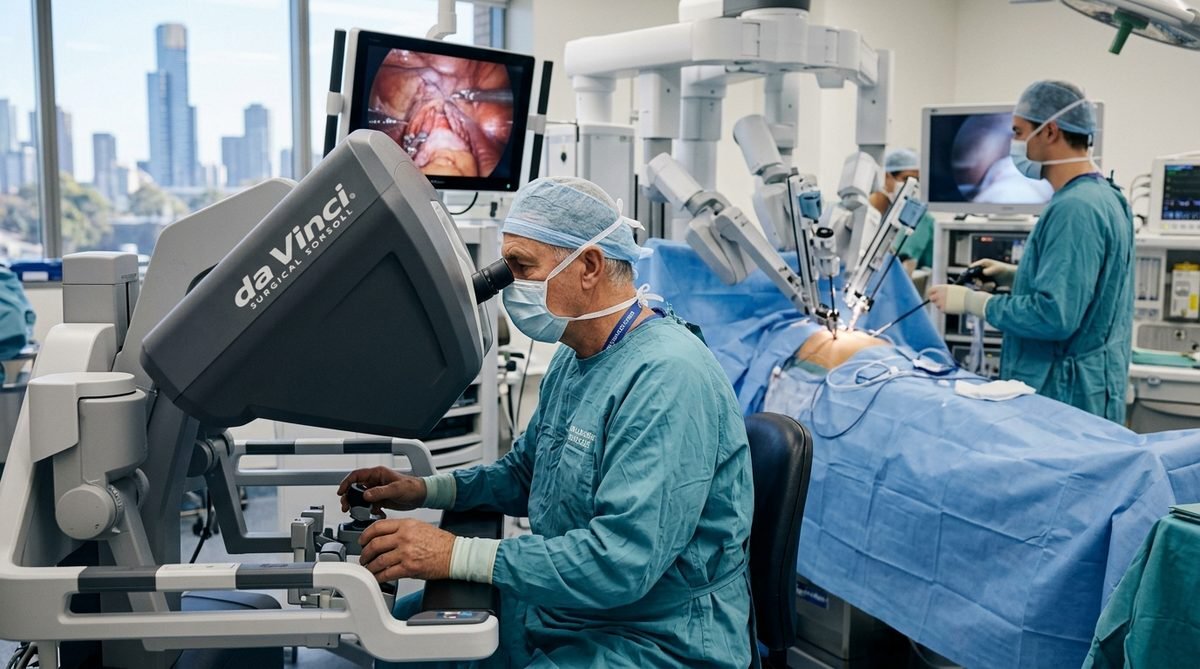
Don't treat robotic surgery as a promise of zero side effects. Robotic tools can help the surgeon work through small cuts with a close view. But the same vital nerves and urinary structures are still at risk.
The surgeon's experience, the cancer's position, and your health matter more than the word “robotic.”
Weigh the negatives against the reason for treatment. Prostate removal can provide strong cancer control for selected men, while another treatment or active surveillance may suit some cases. A fair comparison uses your biopsy, scans, PSA, age, other illnesses, and personal goals.
What should you do before making the decision?
Write down the outcomes you most want to protect, then take the list to your Melbourne urologist. Ask about your own chance of lasting leakage, erection loss, infertility, further treatment, and surgical complications.
- Request a clear explanation of whether nerve-sparing is safe in your case.
- Book a pre-operative continence and pelvic floor assessment.
- Discuss sperm storage before treatment if future parenthood matters.
- Ask when erection rehabilitation will start and who will manage it.
- Get written instructions for catheter problems and urgent symptoms.
- Arrange practical help for the first stage of recovery.
Take one action now: bring a written risk checklist to your next Melbourne urology appointment and ask for answers based on your own cancer, health, and treatment plan.
Prostate removal can cause urinary incontinence, erectile dysfunction, infertility, and changes in orgasm, while the Human penis may appear shorter because of surgical changes and reduced erectile function.
How Much Does It Cost to Have Your Prostate Removed Privately in Melbourne?
Read article →
Is It Worth Having Your Prostate Removed in Melbourne?
Read article →
Can You Get Anything Free if You Have Cancer in Melbourne?
Read article →
Is Prostate Cancer Classed as a Disability in Melbourne?
Read article →
Can I Get Centrelink if I Have Cancer in Melbourne?
Read article →