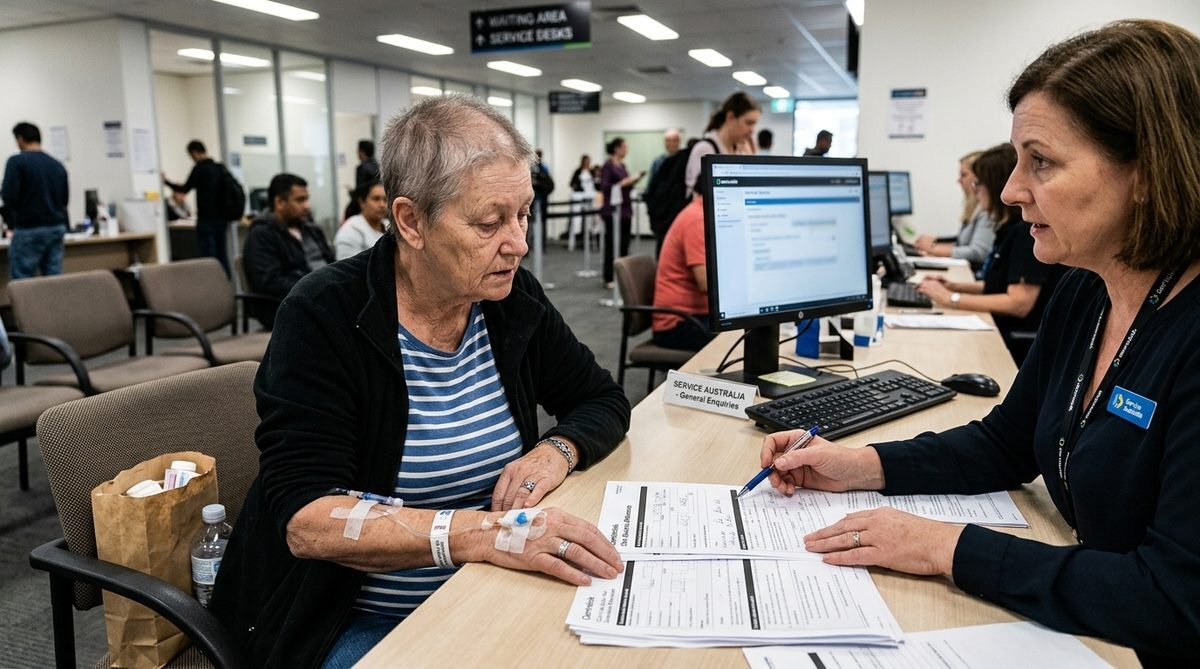
Is psoriasis covered under insurance?

Yes, comprehensive health insurance usually covers medically needed psoriasis diagnosis and some treatment. But biologics, newer oral drugs, phototherapy, and home equipment often need prior approval or proof that cheaper treatments failed. Before care starts, ask the insurer and dermatology office to confirm the exact treatment, network rules, approval steps, and expected out-of-pocket cost.
A covered service isn't always an approved service. You may still face a deductible, co-payment, yearly limit, restricted provider list, or set treatment order. If the insurer denies a request, your dermatologist may appeal using records that show medical need.
Published reimbursement material from a psoriasis centre shows that clinicians have long used supporting letters for this process.
Why can psoriasis coverage be so hard to understand?
Insurance doesn't make one decision about psoriasis as a whole. Instead, it decides on each appointment, test, drug, device, and therapy. A dermatology visit may be covered while the prescribed biopharmaceutical is restricted.
Clinic phototherapy may qualify while a home light unit does not.
The main issue is the difference between four terms:
- Covered: The policy includes that type of care.
- Medically necessary: The insurer agrees that the care is needed for your condition.
- Approved: Any required review or prior authorization is complete.
- Payable: The claim meets network, billing, deductible, and limit rules.
A treatment can pass the first test, then fail another. So, a phone agent saying psoriasis treatment is covered doesn't guarantee the claim will be paid.
Psoriasis is an immune-mediated disease linked to inflammation and changed immune activity. People often call it an autoimmune disease, though its biology involves a complex mix of immune pathways. That medical status may support the need for care, but it doesn't remove the policy's approval rules.
Which part of the policy controls the decision?
Start with the benefit category that fits the service. Specialist visits, prescription drugs, hospital care, outpatient therapy, and medical equipment may fall under different parts of one policy. Each can have its own exclusions and claim limits.
For a medicine, ask for the drug formulary or covered medicines list. Search for the exact generic name, strength, and delivery method. A plan may handle a cream differently from an injection.
Even two drugs used for the same level of psoriasis can sit on different cost tiers.
For phototherapy, ask if the benefit covers treatment in a clinic, at home, or both. A review found that home narrowband UVB phototherapy can offer safety, effectiveness, and value similar to office treatment, yet limited insurance coverage can block access. Many guides miss this.
A cheaper care setting doesn't automatically make equipment easier to claim.
Read the policy wording instead of trusting a general benefits page. Look for terms such as prior authorization, step therapy, formulary, network, medical equipment, exclusions, and annual maximum. Note the policy section and page number that cover the proposed care.
What makes an insurer approve one psoriasis treatment and restrict another?
Treatment choice can depend on disease severity, patient preference, insurance rules, and whether the person can follow the treatment plan. Insurers also compare the requested option with cheaper therapies used for similar patients.
Mild psoriasis may be treated with moisturisers, a topical steroid, another corticosteroid product, or a non-steroid topical medicine. Disease that covers more skin or is harder to control may lead to phototherapy, oral systemic therapy, or biologic treatment. Coverage rules often tighten as the price rises.
An insurer may ask for evidence that:
- The diagnosis has been confirmed.
- The affected area or symptoms meet its severity rule.
- Earlier treatment caused side effects, failed, or was unsafe.
- The requested dose follows the approved use.
- The prescriber has supplied current clinical records.
This is often called step therapy. It means someone must try a preferred treatment before the insurer will consider the requested one. It's an approval order, not a medical claim that the cheaper option is best for everyone.
A dermatologist may have a sound medical reason to skip a step. An earlier option might clash with another health condition, for example. That reason must be included in the approval request.
A prescription alone may not give the reviewer enough detail.
How can you find the real price before treatment starts?
Ask for an estimate tied to the exact service. The useful question isn't, "Do you cover psoriasis?" Ask, "What will I pay for this treatment from this provider on this date, assuming approval is granted?"
Confirm the treatment code or exact medicine with the clinic. Then ask the insurer about the deductible, co-payment, coinsurance, network status, annual limit, and remaining benefit. Get the answer in writing or ask for a call reference number.
Check with the dermatology office too. The clinic can confirm whether it's in the insurer's network and whether the doctor, treatment site, pharmacy, and equipment supplier bill separately. One appointment can produce several claims.
Changing treatment can shift the cost as well. In US claims data, 11,993 patients started oral systemic treatment and 9,753 started biologics. Within one year, 32% of oral-treatment patients and 15% of biologic patients stopped all systemic treatment.
Another 28% and 23% switched, respectively.
In that study, average monthly total healthcare costs were $2,594 for oral-treatment nonswitchers and $3,956 for switchers. The figures were $5,035 for biologic nonswitchers and $5,833 for switchers. These are US healthcare totals from one claims study, not a personal price quote.
Still, they show why approval, follow-up care, and possible switching should be discussed before treatment starts.
What records make an approval request stronger?
The insurer needs a clear trail from diagnosis to the requested care. Ask the dermatology office to include the diagnosis, symptoms, severity measure, affected body sites, earlier therapies, and the result of each one. Side effects and medical reasons for avoiding an option should be recorded too.
Photos may help show visible disease when the insurer accepts them. Records should also explain problems that a skin-area score can miss. Psoriasis on the hands, feet, scalp, face, or genitals may disrupt daily life even when the total area seems small.
Keep your own treatment timeline. Write down the medicine name, dates used, response, and why it stopped. Save copies of approval notices, denial letters, bills, and call reference numbers.
This can prevent delays when the clinic needs an old detail for a new request.
Don't assume the insurer and clinic have shared every document. Ask whether the request is pending, approved, denied, or waiting for more information. If something is missing, get the document's exact name and the deadline for sending it.
What should you do after a denial?
Read the denial reason before changing treatment or paying full price. A denial may come from missing records, an out-of-network provider, an unmet step rule, or a policy exclusion. Each problem needs a different fix.
If information is missing, ask the clinic to send it and confirm it arrived. If the insurer says the treatment isn't medically necessary, ask for the clinical criteria used to decide. Your dermatologist can answer those points in an appeal and explain why the requested therapy fits your case.
Sample reimbursement letters for psoriasis care reflect this medical-necessity approach.
If an earlier treatment is required, the record should show whether you completed it, couldn't tolerate it, or had a medical reason to avoid it. If network status is the problem, ask whether an in-network choice exists or a network exception is available.
Meet every deadline in the denial notice. Send the appeal through the stated channel and keep proof of delivery. Ask how long the review should take and whether urgent review is available when delay could cause serious harm.
A clinician should decide if the case is medically urgent.
Here's another detail many articles miss: an appeal can't rewrite the policy. Strong records can reverse a medical-necessity denial or fix an administrative error. They may not beat a clear exclusion for a service the plan never covers.
Does a pre-existing condition rule change the answer?
Psoriasis may count as a pre-existing condition if it began, caused symptoms, or needed care before the policy started. The effect depends on the insurance system and contract. It may cause a waiting period, an exclusion, extra review, or no change at all.
Don't assume one insurer's rule applies to another product. Health insurance, travel insurance, income protection, and disability cover look at different risks. A health policy focuses on eligible medical care.
Travel insurance may focus on unexpected problems during a trip. Disability cover usually asks whether illness stops someone from meeting the policy's work definition.
Psoriasis alone doesn't guarantee a disability payment. Severe skin disease, joint symptoms, treatment effects, or related health problems may affect work, but the claim depends on the policy definition and medical proof. Ask the insurer how it defines incapacity and which records it needs.
Answer application questions fully and honestly. If the wording isn't clear, ask for a written explanation before sending the application. Keep the application and the insurer's response with your policy records.
Why do coverage results differ between people and countries?
insurance status and income are tied to gaps in access to psoriasis care and its quality. So, two people with similar symptoms may follow different treatment paths because their plans, provider access, and ability to pay out-of-pocket costs aren't the same.
Research also shows that access varies across health systems. A multicentre study reported differences in access to psoriasis treatment in Brazil and Chile. Claims research has examined biologic use and healthcare resource patterns in Japan.
German statutory insurance data has also shown real-world treatment patterns involving biologics and apremilast.
These studies don't prove what one reader's insurer will pay. They support a tighter point: the diagnosis alone can't tell you what's covered. Country rules, the exact plan, the chosen treatment, and its approval status all count.
People may also change jobs, insurers, or policy tiers while treatment continues. A medicine approved under an old plan may need a new review under the next one. When possible, check the new formulary and network before the change date.
Ask the treating clinic about continuity-of-care steps if treatment can't safely pause.
How do you check coverage without wasting weeks?
First, get the proposed treatment name from the prescriber. Without that detail, the insurer can only give a broad answer. Then contact the insurer and dermatology office on the same day.
- Confirm the exact drug, procedure, device, or therapy.
- Check whether the prescriber and treatment location are in network.
- Ask whether prior authorization or step therapy applies.
- Request an estimate that includes the deductible and other patient charges.
- Get the approval reference, effective dates, and renewal rules in writing.
Ask what happens if the dose changes. Some approvals cover only a set dose or time period. Biologics may also need renewal records that show response or an ongoing medical need.
Don't start an expensive treatment based only on someone saying it "should be covered." Approval may still be limited by dates, provider status, or pharmacy rules. Written confirmation lets the clinic spot a mismatch before care starts.
What should you do now?
Call your insurer with the exact proposed psoriasis treatment. Before the first appointment or dose, ask for written confirmation of coverage, prior authorization, network status, renewal rules, and your estimated cost.
Common questions
Does insurance cover psoriasis treatment?
Many health insurance plans cover psoriasis treatment, such as doctor visits and prescription medicine. Your coverage and costs depend on your plan, so check with your insurer.
What can I claim if I have psoriasis?
You may be able to claim doctor visits, tests, medicine, and some light treatments. What you can claim depends on your policy and whether your provider is approved.
Is psoriasis 100% curable?
No, psoriasis does not have a complete cure at this time. Treatment can reduce symptoms and keep the skin clear for long periods.
Which insurance covers psoriasis?
Many private and public health insurance plans cover some psoriasis care. Compare plans for skin doctor visits, medicine, light treatment, costs, and waiting periods.Sources

How Much Does It Cost to Have Your Prostate Removed Privately in Melbourne?
Read article →
Is It Worth Having Your Prostate Removed in Melbourne?
Read article →
Can You Get Anything Free if You Have Cancer in Melbourne?
Read article →
What Are the Negatives of Removing Your Prostate in Melbourne?
Read article →
Is Prostate Cancer Classed as a Disability in Melbourne?
Read article →