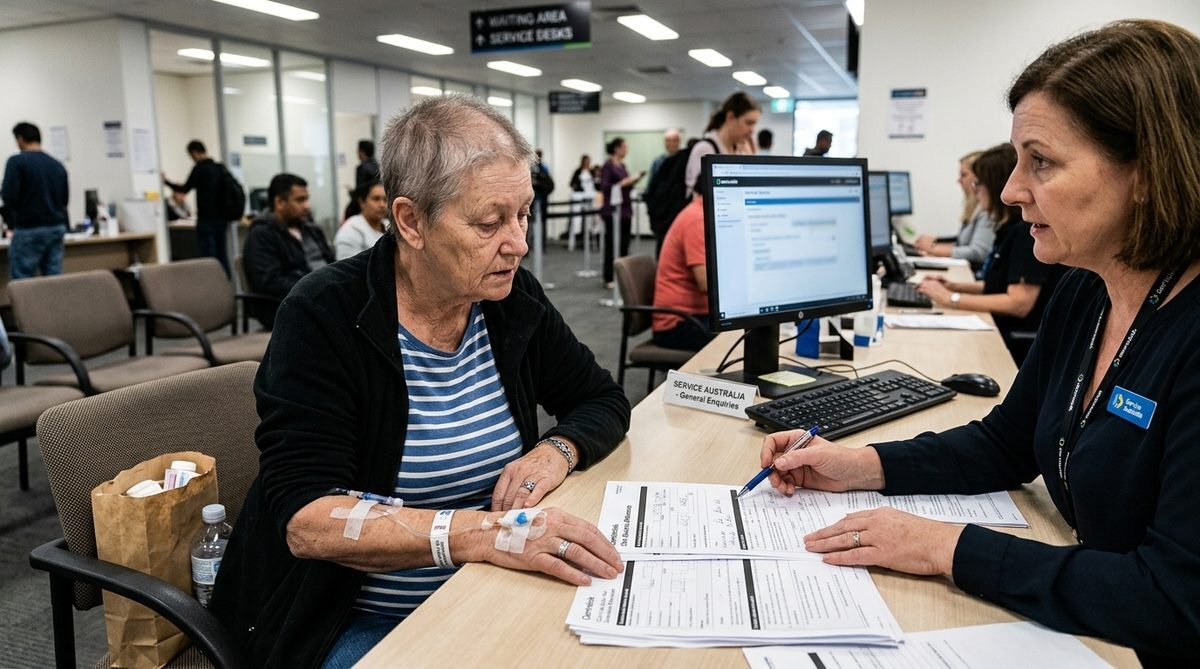
Is Prostate Surgery Covered by Medicare in Australia? What You Need to Know

Yes, prostate surgery is covered by Medicare in Australia, but not in full. Medicare pays a rebate toward the surgeon's fee and hospital costs if you're treated in a public hospital. What you actually pay out of pocket depends on whether you go public or private, which surgeon you choose, and what private health insurance you hold.
Most men get a partial answer to this question and assume they're covered. Then the bills arrive. This article gives you the full picture so you can plan ahead.
What Does Medicare Actually Cover for Prostate Surgery?
Medicare covers prostate surgery under the Medicare Benefits Schedule. The MBS assigns a fee to each procedure. Medicare pays 75% of that scheduled fee when you're admitted to a private hospital, and 100% when you're treated as a public patient in a public hospital.
The problem is that most surgeons charge more than the MBS fee. The gap between what your surgeon charges and what Medicare pays comes out of your pocket. This is called the out-of-pocket or gap payment.
For a radical prostatectomy (removal of the prostate), the MBS scheduled fee sits around $1,500 to $2,000 for the surgical component alone. Surgeons in private practice routinely charge two to four times that amount. Without private health insurance, you absorb the entire difference.
Medicare also covers the anaesthetist's fee at 75% of the MBS rate, and diagnostic tests like biopsies, PSA blood tests, and MRI scans each have their own MBS item numbers with corresponding rebates.
How Much Does a Prostate Operation Cost in Australia?
The total cost depends heavily on the type of surgery and whether you go public or private.
In a public hospital as a public patient, your out-of-pocket cost is effectively zero for the surgery itself. Medicare and the public system cover it. The trade-off is waiting lists, which can stretch from weeks to several months depending on your state and the urgency of your case.
In a private hospital, the costs stack up quickly:
- Surgeon's fee: $3,000 to $8,000 or more, depending on the surgeon and procedure type
- Anaesthetist's fee: $800 to $2,000
- Hospital facility fee: $5,000 to $15,000 for the admission, theatre, and overnight stays
- Pathology and imaging: $200 to $800
Without private health insurance, a privately performed radical prostatectomy can cost $15,000 to $25,000 in total. With hospital cover and a known-gap or no-gap surgeon, your out-of-pocket can drop to a few hundred dollars or nothing at all.
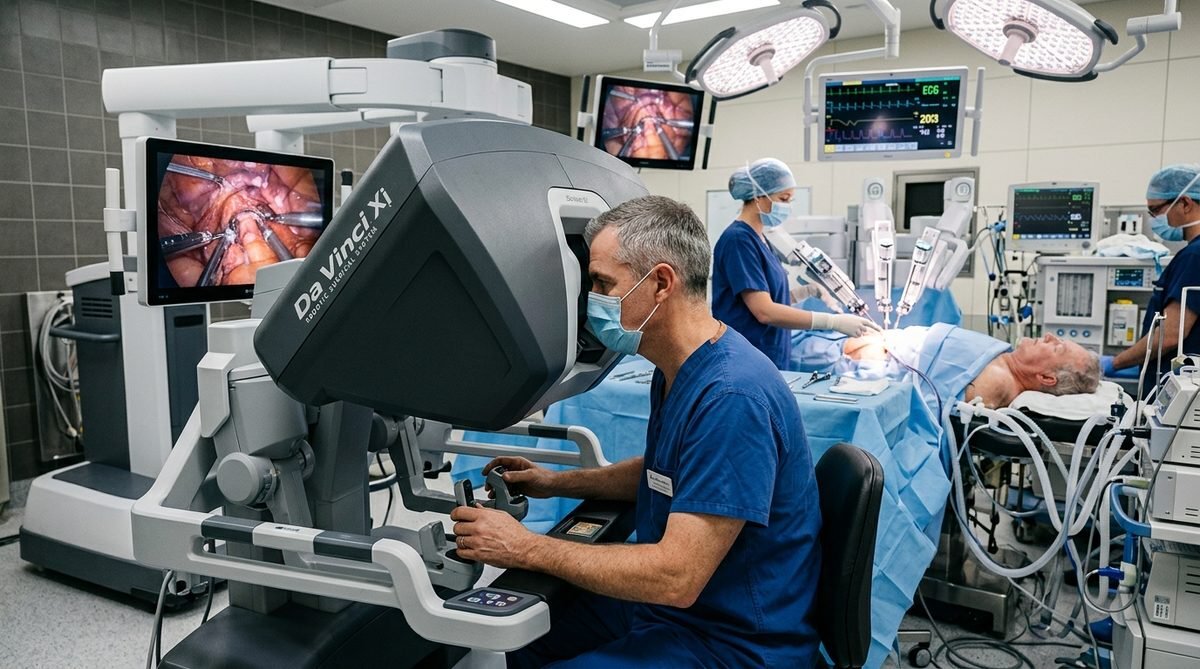
Robotic-assisted prostatectomy (da Vinci surgery) costs more. The hospital charges a premium for theatre time and equipment. Some private hospitals charge a facility gap of $2,000 to $5,000 even when you have private health insurance, simply because the robotic system is expensive to run. Always ask your hospital directly whether a gap applies before you book.
Will Medicare Pay for My Prostate Surgery If I Go Private?
Medicare pays its 75% rebate on the MBS fee regardless of whether you're in a public or private hospital. What changes is who covers the rest.
If you have private hospital cover, your insurer covers the hospital bed, theatre fees, and nursing care up to your policy's benefit level. The surgeon and anaesthetist fees are separate. Some surgeons participate in no-gap or known-gap schemes with insurers, which caps or eliminates your out-of-pocket on their fees. Others don't, and you pay the full gap.
Before surgery, ask your surgeon three questions:
- What is your total fee for this procedure?
- Do you participate in a no-gap or known-gap arrangement with my insurer?
- What will my out-of-pocket be after Medicare and my insurer pay their share?
Surgeons are legally required to give you a written cost estimate before elective surgery. If yours doesn't offer one, ask for it. This is your right under Australian law.
How Much Does a Prostate Operation Cost Privately?
In my experience researching this for patients navigating the system, the number that shocks people most is the hospital facility gap. Even with gold-tier private health insurance, some private hospitals charge a separate facility fee for robotic surgery that your insurer won't cover.
Here's a realistic breakdown for a privately insured patient having a robotic radical prostatectomy:
- Surgeon gap (after Medicare + insurer): $0 to $3,500 depending on surgeon
- Anaesthetist gap: $0 to $600
- Hospital facility gap (robotic theatre): $0 to $5,000
- Pathology: Usually bulk-billed or minimal gap
Best case with a no-gap surgeon and a cooperative hospital: under $500 total. Worst case with a high-gap surgeon and a robotic facility surcharge: $8,000 to $9,000 out of pocket even with insurance.
What I found was that calling your insurer before you commit to a surgeon or hospital saves a lot of grief. Give them the MBS item numbers for your procedure (your surgeon's rooms can provide these) and ask exactly what your policy covers at that specific hospital.
What Most Articles Get Wrong About Medicare and Prostate Surgery
Three things come up repeatedly that most coverage misses or gets backwards.
1. The MBS fee is not the surgeon's fee. Most people assume Medicare covers the surgeon's fee. It covers a percentage of a government-set schedule fee that often bears little resemblance to what surgeons actually charge. The gap is real and can be large.
2. Private health insurance doesn't automatically mean no out-of-pocket. Hospital cover and extras cover are different products. Hospital cover handles the admission. It does not cap what your surgeon charges. A surgeon outside a no-gap scheme can charge whatever they like, and you pay the difference above the Medicare rebate.
3. The Medicare Safety Net can help more than people realise. Once your out-of-pocket costs for out-of-hospital Medicare services reach a threshold in a calendar year (around $770 for most people, less for concession card holders), Medicare starts paying 80% of any further gaps. This matters for the diagnostic phase before surgery, where PSA tests, biopsies, and MRI scans accumulate costs. Track your Safety Net balance through your Medicare online account.
Does the Type of Prostate Surgery Change What Medicare Covers?
Yes. Different procedures have different MBS item numbers and different scheduled fees.
Common prostate procedures covered by Medicare include:
- Radical prostatectomy (open or laparoscopic): Removal of the prostate for cancer. Covered under MBS.
- Robotic-assisted radical prostatectomy: Same MBS item number as laparoscopic prostatectomy. The robotic component is not separately funded by Medicare, which is why hospitals charge a facility gap.
- TURP (transurethral resection of the prostate): For benign prostatic hyperplasia (BPH). Covered under MBS.
- Brachytherapy and radiation: Separate MBS items. Covered with applicable rebates.
- HIFU and focal therapy: Some newer focal treatments have limited or no MBS coverage. Check with your surgeon and insurer before proceeding.
When I tried to find clear information on HIFU coverage, what I found was significant variation. Some procedures marketed as minimally invasive alternatives to surgery sit outside the MBS entirely, meaning Medicare pays nothing and you carry the full cost.
How Long After Prostate Surgery Are You Considered Cancer Free?
The standard marker is PSA (prostate-specific antigen) level. After a radical prostatectomy, your PSA should drop to undetectable levels, typically below 0.1 ng/mL, within a few weeks. Surgeons monitor this with regular blood tests.
Most urologists use the term "biochemical recurrence-free" rather than "cancer free." If your PSA stays undetectable for five years post-surgery, the risk of recurrence drops substantially. At ten years with an undetectable PSA, most clinicians consider the cancer effectively cured, though monitoring continues.
The timeline varies by cancer grade and stage at diagnosis. A low-grade, organ-confined cancer caught early has a ten-year recurrence-free survival rate above 90% with surgery. Higher-grade or locally advanced cancers carry more uncertainty.
Your surgeon will set a specific PSA threshold and monitoring schedule based on your pathology results. Follow that schedule. PSA testing after prostatectomy is bulk-billed under Medicare, so cost is not a reason to skip it.
Frequently Asked Questions
Does Medicare cover the full cost of prostate surgery in a public hospital?
As a public patient in a public hospital, yes. You pay nothing for the surgery, anaesthesia, or hospital stay. You may have small gaps for some diagnostic tests depending on how they're billed.
Can I claim Medicare if I choose a private surgeon?
Yes. Medicare pays its rebate (75% of the MBS fee for private hospital admissions) regardless of which surgeon you choose. The gap between the MBS fee and your surgeon's actual charge is your responsibility unless your insurer covers it.
Is robotic prostate surgery covered by Medicare?
The surgical procedure is covered under the same MBS item number as laparoscopic prostatectomy. The robotic equipment surcharge that some hospitals add is not covered by Medicare. Ask your hospital whether a facility gap applies.
What if I don't have private health insurance?
You can still access prostate surgery through the public system at no cost. If you want private care without insurance, you pay the full hospital and surgeon fees minus the Medicare rebate, which typically means $15,000 to $25,000 out of pocket for a radical prostatectomy.
Are follow-up PSA tests after surgery covered by Medicare?
Yes. PSA blood tests are covered under the MBS and are typically bulk-billed. Regular monitoring after prostatectomy is fully accessible through Medicare.
Does the Medicare Safety Net apply to prostate surgery costs?
The Safety Net applies to out-of-hospital Medicare services like pathology and imaging. In-hospital costs are handled differently. Your insurer's gap cover is the main protection for in-hospital out-of-pocket costs.
What to Do Now
Before you book anything, take these steps:
- Get the MBS item numbers for your specific procedure from your urologist's rooms.
- Call your private health insurer with those item numbers and the name of the hospital. Ask exactly what your policy covers and whether any gaps apply.
- Ask your surgeon directly whether they participate in a no-gap or known-gap arrangement with your insurer, and request a written cost estimate.
- Check your Medicare Safety Net balance through your Medicare online account or the Express Plus Medicare app.
- If cost is a barrier, ask your GP for a referral through the public system. Waiting times vary, but the care is the same quality.
The system is navigable once you know the right questions to ask. The cost of prostate surgery in Australia ranges from nothing to tens of thousands of dollars, and the difference almost always comes down to preparation, not luck.
Explore related health and wellbeing guides
This article is part of PTNA's consumer health and wellbeing library. Browse the Health & Wellbeing Resources hub to find related guides by topic, including Australian health cover, Medicare, prostate health, mental health, disability support and life insurance.
How Much Does It Cost to Have Your Prostate Removed Privately in Melbourne?
Read article →
Is It Worth Having Your Prostate Removed in Melbourne?
Read article →
Can You Get Anything Free if You Have Cancer in Melbourne?
Read article →
What Are the Negatives of Removing Your Prostate in Melbourne?
Read article →
Is Prostate Cancer Classed as a Disability in Melbourne?
Read article →