Is Parkinson's Covered by Life Insurance? What Australians Need to Know

Yes, Parkinson's disease can be covered by life insurance in Australia. But the answer depends on when you were diagnosed, what type of policy you hold, and how your insurer handles neurological conditions.
Getting the right answer for your situation takes more than a quick Google search. Here's what I've seen work, what tends to go wrong, and what you're actually entitled to claim.
Does Life Insurance Pay Out if You Have Parkinson's?
It can. In many cases it does. Whether a payout happens depends on the type of cover you have and the circumstances of the claim.
If you already had a life insurance policy before your Parkinson's diagnosis, your death benefit is almost certainly unaffected. Life insurance pays out on death, and a pre-existing neurological condition doesn't void that unless you failed to disclose something material when you applied.
Where it gets complicated is with trauma insurance and total and permanent disability (TPD) cover. These policies pay a lump sum while you're still alive. Parkinson's disease is a progressive neurological disorder, it affects movement, balance, speech, and sometimes cognition. Insurers know this. They price it accordingly.
One of my clients was diagnosed at 61 and had held a trauma policy for over a decade. He'd disclosed a family history of neurological conditions when he first applied. The insurer had noted it but didn't exclude him. When he claimed, the insurer paid out in full. The lesson was simple: full disclosure at application time made the difference. Had he hidden that family history, the claim would have been disputed.
How Does a Parkinson's Diagnosis Affect Life Insurance?
If you're diagnosed after your policy is already in place, your existing cover generally stays intact. Insurers can't retroactively change your terms because your health has changed.
The problem emerges when you apply for new cover after a diagnosis. That's where underwriting becomes the obstacle.
Medical underwriting is how insurers assess risk before offering you a policy. They look at your age, medical history, current health, and the likely path of any condition you have. Parkinson's disease, a progressive nervous system disorder, raises a flag. Depending on your age at diagnosis, how far the condition has progressed, and what medications you're taking, an insurer might offer cover with a loading (higher premium), exclude claims related to Parkinson's, or decline to cover you altogether.
That's not the end of the road. specialist adviser who work with high-risk or complex medical cases know which insurers are more open to neurological conditions. The standard online comparison tools are nearly useless in this situation. You need someone who can go to market on your behalf and negotiate terms.
What Type of Cover Is Most Relevant for Parkinson's?
There are four types of personal insurance worth understanding here.
Life insurance pays a lump sum to your beneficiaries when you die. A Parkinson's diagnosis doesn't disqualify you from holding this cover. If your policy was in place before diagnosis, it will pay out on death regardless of how the disease progressed.
TPD insurance pays a lump sum if you become totally and permanently disabled and can't work. As Parkinson's advances, this becomes increasingly relevant. The definition of TPD varies by policy. Some use an "any occupation" test, which is harder to meet. Others use an "own occupation" test, which asks whether you can do your specific job. A surgeon with early-stage Parkinson's affecting hand tremor, for example, might qualify under own occupation well before they'd qualify under any occupation.
Trauma insurance pays on the diagnosis of a specified medical condition. Not all policies include Parkinson's disease on their list of covered conditions. Some do. Before assuming you're not covered, check your product disclosure statement or have an adviser check it for you.
Income protection insurance replaces a portion of your income if you can't work due to illness or injury. If Parkinson's symptoms are stopping you from doing your job, this is often the first policy that becomes relevant. The waiting period and benefit period in your policy will determine how quickly payments start and how long they last.
What Benefits Can You Claim if You Have Parkinson's in Australia?
Outside of private insurance, there are government and community support options available to Australians living with Parkinson's.
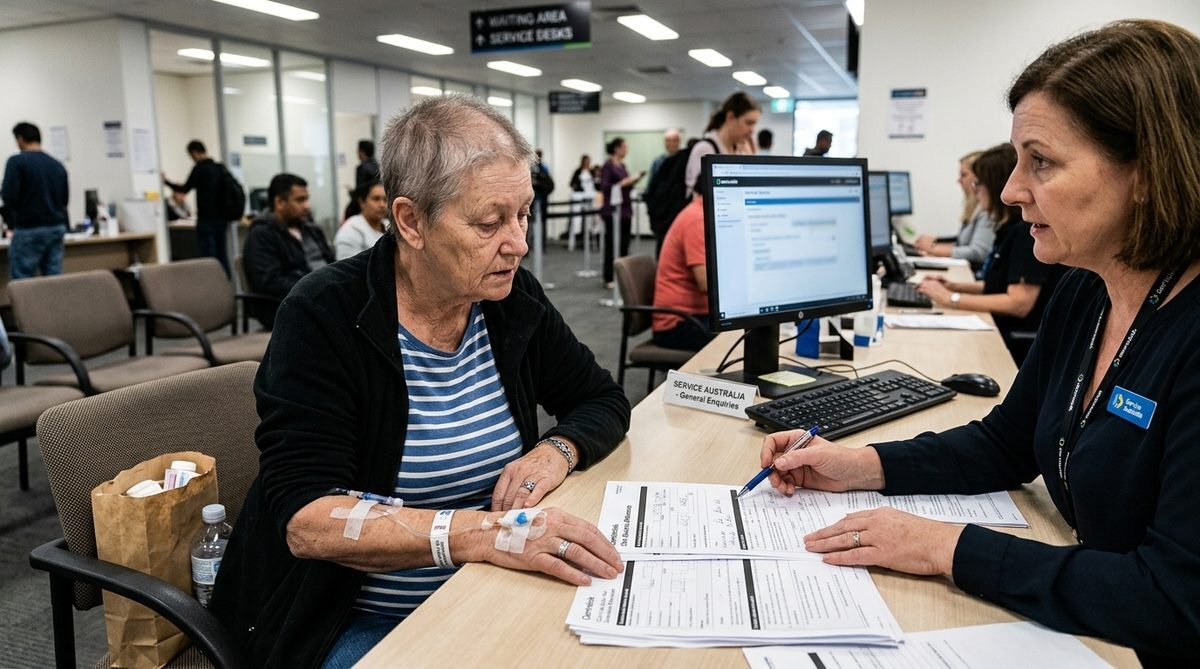
The National Disability Insurance Scheme is the most significant. NDIS funding can cover supports like physiotherapy, occupational therapy, speech therapy, assistive technology, and help at home. Parkinson's isn't automatically included, but many people with Parkinson's meet the eligibility criteria because the condition is permanent and has a substantial impact on daily functioning. The earlier you apply, the better. Building a support plan while you still have capacity to direct your own goals is much easier than entering the system in crisis.
Centrelink also has several payments that may apply. The Disability Support Pension is available to people under Age Pension age whose condition stops them from working or significantly limits their ability to work. The Carer Payment and Carer Allowance may be available to family members who provide substantial care. For older Australians, the Age Pension itself may become relevant depending on age and assets.
Many people don't realise that superannuation funds also hold default insurance cover, including TPD and income protection. If you have super, check what insurance is bundled inside it. I've seen clients completely miss a TPD claim simply because they didn't know their super fund had cover attached. That's money sitting unclaimed.
What Most Articles Get Wrong About Parkinson's and Insurance
The first thing most articles get wrong is treating a diagnosis as a door closing. In my experience, the bigger risk is inaction. People assume they're uninsurable, stop paying premiums on policies they already hold, or never check what they're entitled to claim. That's where real financial harm happens.
The second thing that gets missed is the timing of a TPD claim. TPD isn't only for people in late-stage disease. If Parkinson's symptoms have progressed to the point where you genuinely can't perform the duties of your occupation, you may already qualify. You don't need to wait until you're bedridden. I've worked with clients who waited years longer than they needed to, all because they assumed the bar was higher than it actually was.
The third thing that almost never gets discussed is the interaction between a TPD payout and the NDIS. A lump sum insurance payment can affect your asset position, which may have implications for means-tested Centrelink payments. It doesn't disqualify you from the NDIS, but getting financial advice before you receive a large payout is worth the time. The sequencing of claims and how funds are structured can make a real difference to long-term financial security.
Can You Get New Life Insurance After a Parkinson's Diagnosis?
It's harder, but not always impossible. The factors that matter most are age at diagnosis, current stage of the condition, and what medications or treatments you're on. Early-onset Parkinson's in a younger person is assessed differently by underwriters than a diagnosis at 75.
Some insurers will offer a life insurance policy with a specific exclusion for any claim related to Parkinson's disease or neurological conditions. That might still be worth having for other causes of death. Other insurers will apply a premium loading, meaning you pay more to reflect the elevated risk. A small number may decline outright.
The key is working with an adviser who specialises in impaired risk underwriting and knows the Australian market well. Applying directly to an insurer without advice in this situation almost always produces a worse outcome than going through someone who can present your case properly and approach multiple insurers at once.
Frequently Asked Questions
Does Parkinson's count as a terminal illness for insurance purposes?
Not automatically. Parkinson's disease is progressive but isn't classified as a terminal illness in the same way certain cancers are. Some policies have a terminal illness benefit that pays out early if a doctor certifies you have less than 12 or 24 months to live. This is a specific trigger and Parkinson's alone generally doesn't meet it, though complications in advanced stages might. Check the specific wording in your policy.
Will my superannuation insurance pay out for Parkinson's?
It may, if your Parkinson's symptoms prevent you from working and your fund holds TPD cover. Check your most recent super statement, log into your fund's portal, or call them directly to confirm what cover is attached and what the claims process involves. Don't assume there's nothing there.
What happens to my life insurance premiums if I am diagnosed?
If you already have a policy, your premiums shouldn't change as a result of a new diagnosis. Insurers set your terms at the time you apply. The exception is if you're on a stepped premium structure, where costs increase with age regardless of health. Your diagnosis itself doesn't trigger a premium increase on an existing policy.
Does Parkinson's affect my income protection claim?
Yes, if the symptoms are directly stopping you from doing your job. You need to satisfy the waiting period in your policy, which is typically 30, 60, or 90 days of continuous disability. After that, if your treating doctor supports your inability to work, the insurer should begin paying the monthly benefit up to the benefit period limit in your policy.
Is there a difference between Parkinson's and Parkinson's-like conditions for insurance purposes?
Yes. Conditions like multiple system atrophy or progressive supranuclear palsy are sometimes grouped loosely with Parkinson's but are distinct diagnoses. Trauma insurance policies that list Parkinson's disease as a covered condition are referring to idiopathic Parkinson's disease specifically. If your diagnosis is a Parkinson's-plus syndrome, you need to read the policy definition carefully or have an adviser review it. The name alone won't tell you whether you qualify.
What You Should Do Now
If you or someone you care for has received a Parkinson's diagnosis, the first step is to get a full picture of what cover already exists. Check every life insurance policy, income protection policy, trauma policy, and the insurance inside every superannuation account. Do this before making any decisions about cancelling policies or applying for new ones.
If you have policies in place, find out whether a claim is already warranted. TPD and income protection claims are often delayed not because the person doesn't qualify, but because nobody has sat down and mapped the current symptoms against the policy definitions.
Then get advice from a specialist who understands both impaired risk insurance and the Australian disability support system. The interaction between private insurance, the NDIS, and Centrelink is complex enough that the order in which you do things genuinely matters.
The team at PTNA works with Australians navigating exactly this kind of situation. If you want to understand what you're entitled to and what your options are, that's the conversation worth having.
Explore related health and wellbeing guides
This article is part of PTNA's consumer health and wellbeing library. Browse the Health & Wellbeing Resources hub to find related guides by topic, including Australian health cover, Medicare, prostate health, mental health, disability support and life insurance.

How Much Does It Cost to Have Your Prostate Removed Privately in Melbourne?
Read article →
Is It Worth Having Your Prostate Removed in Melbourne?
Read article →
Can You Get Anything Free if You Have Cancer in Melbourne?
Read article →
What Are the Negatives of Removing Your Prostate in Melbourne?
Read article →
Is Prostate Cancer Classed as a Disability in Melbourne?
Read article →