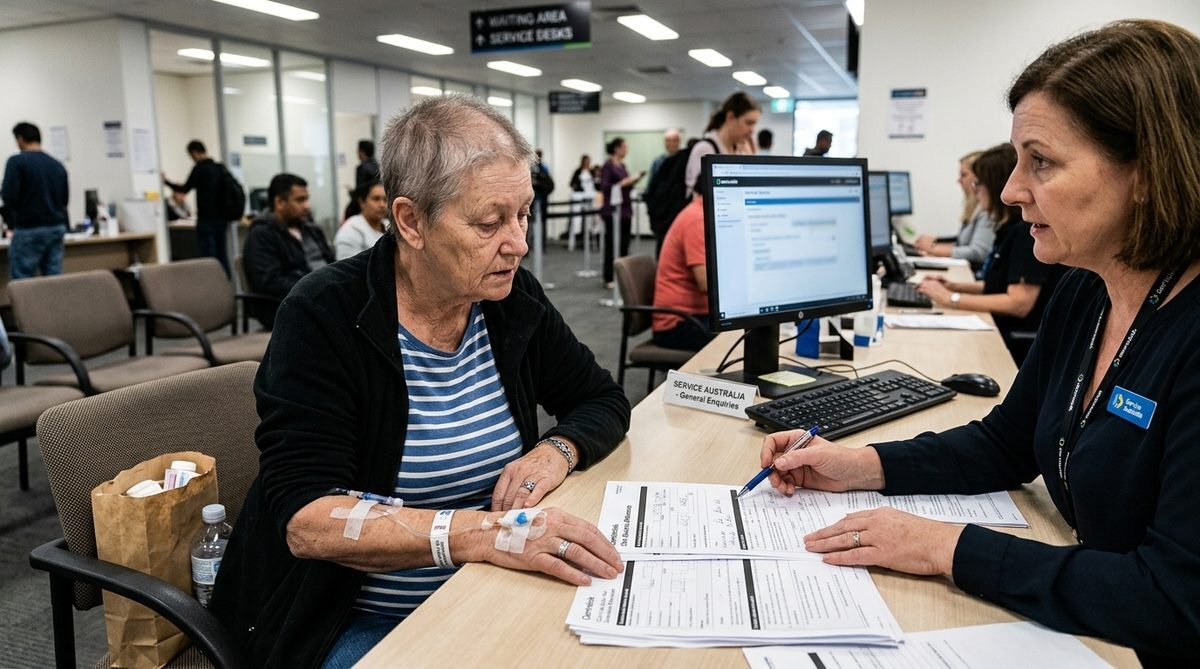
Is Bipolar a Disability for Centrelink in Australia? What You Need to Know

Yes, bipolar disorder can qualify as a disability for Centrelink purposes in Australia. Whether it does in your specific case depends on how the condition affects your ability to work, not on the diagnosis alone. Centrelink does not approve or reject claims based on a label. It assesses functional impairment.
This distinction matters because two people with the same diagnosis can have very different outcomes. One person may manage their condition well with medication and hold down full-time work. Another may experience frequent episodes, hospitalisation, and an inability to maintain consistent employment. Centrelink is interested in the second question, not the first.
What Does Centrelink Actually Assess?
The main payment for people with a disability or chronic health condition is the Disability Support Pension, commonly called the DSP. To qualify, you need to meet both a medical and a work capacity threshold.
On the medical side, your condition must be fully diagnosed, treated, and stabilised. This means Centrelink wants to see that you have engaged with treatment and that your current level of impairment reflects your baseline, not a temporary episode. For bipolar disorder, this typically means a confirmed diagnosis from a psychiatrist, evidence of ongoing treatment such as medication and therapy, and documentation of how the condition affects your day-to-day functioning.
On the work capacity side, you must have a Program of Support on record and be assessed as having a permanent impairment of 20 points or more under the Impairment Tables. The tables relevant to bipolar disorder fall under the mental health and psychiatric category. Assessors look at things like your ability to understand and remember instructions, maintain concentration, manage social interactions, and cope with the demands of a workplace.
If you do not meet the 20-point threshold for the DSP, you may still qualify for JobSeeker with a partial capacity to work, which reduces your mutual obligation requirements and can provide ongoing income support while you look for suitable work or manage your condition.
How Hard Is It to Get Disability Payments for Bipolar?
Harder than most people expect, and the main reason is documentation. In my experience working through these processes, the applications that fail are almost never rejected because bipolar disorder is not serious enough. They fail because the evidence submitted does not clearly connect the diagnosis to functional limitations.
Centrelink assessors are not psychiatrists. They read reports and apply a framework. If your treating doctor writes that you have bipolar disorder and finds it difficult to work, that is not enough. What the assessor needs to see is specific, functional language. How often do episodes occur? How long do they last? What happens to your ability to concentrate, follow through on tasks, or interact with colleagues during those periods? Has hospitalisation been required? What does your daily routine look like between episodes?
The more concrete and specific your supporting documentation, the stronger your application. A detailed report from a psychiatrist who has treated you over time carries significantly more weight than a letter from a GP who has known you for six months.
It is also worth knowing that the DSP has a high rejection rate at first application. Many people who are ultimately approved are rejected initially and succeed on review or appeal. If your first application is rejected, that is not the end of the road.
What Benefits Are You Entitled to With Bipolar in Australia?
The answer depends on your work capacity and personal circumstances, but there are several pathways worth understanding.
The Disability Support Pension is the primary payment for people whose condition permanently prevents them from working 15 hours or more per week at or above the minimum wage. As of 2024, the maximum fortnightly rate for a single person is around $1,116, though the exact amount depends on your income, assets, and living situation. DSP recipients also get access to a Pensioner Concession Card, which provides discounts on medicines, utilities, and public transport in most states.
If you do not qualify for the DSP but your bipolar disorder limits your capacity to work, JobSeeker with a partial capacity to work assessment may apply. This reduces the number of hours you are required to look for or engage in work, and it can be a more realistic option for people whose condition is managed but still affects their reliability and stamina in a work context.
Carer Payment and Carer Allowance are available to someone who provides substantial care to a person with bipolar disorder, so if a family member is your primary support, they may be entitled to payments as well.
Beyond Centrelink, the National Disability Insurance Scheme is a separate system that funds supports and services rather than income. NDIS eligibility for bipolar disorder is assessed differently, focusing on whether the condition is permanent and substantially affects daily activities. Some people with bipolar disorder qualify for the NDIS, particularly those with a history of severe episodes, significant functional impairment, or co-occurring conditions.
Is Mental Health a Disability for Centrelink?
Yes. Mental health conditions are explicitly recognised under Centrelink's Impairment Tables. The tables include a dedicated category for mental health and psychiatric conditions, covering disorders that affect mood, cognition, behaviour, and social functioning.
Bipolar disorder, schizophrenia, major depressive disorder, PTSD, and severe anxiety disorders are among the conditions that can generate impairment points under this category. The condition does not need to be physical to qualify. What matters is whether it causes a measurable, permanent reduction in your functional capacity.
One thing that surprises many people is that mental health conditions are among the most common bases for DSP approval in Australia. Data from the Department of Social Services consistently shows that psychological and psychiatric conditions account for a large share of the DSP caseload. So while the process can be difficult, it is not unusual for mental health conditions to form the basis of a successful claim.
What Is the Most Approved Mental Illness for Disability in Australia?
Schizophrenia and related psychotic disorders have historically had high approval rates for the DSP, largely because the functional impairment is often severe and well-documented through psychiatric records. However, mood disorders including bipolar disorder and major depression collectively represent a larger share of the total DSP caseload simply because they are more prevalent in the population.
The approval rate for any condition is less about the diagnosis and more about the quality of evidence and the severity of functional impairment. A person with well-documented, treatment-resistant bipolar disorder with a history of hospitalisation and an inability to maintain employment is likely to be approved. A person with a recent diagnosis who is stable on medication and working part-time is unlikely to meet the threshold, regardless of how real their condition is.
What I found when looking at this more closely is that the conditions with the highest approval rates tend to share one thing in common. They have long treatment histories, multiple treating practitioners, and detailed records that make the functional impact easy to assess. Building that paper trail over time is one of the most practical things a person with bipolar disorder can do if they think they may need to apply for support in the future.
What Evidence Strengthens a Bipolar DSP Application?
A psychiatrist's report is the most important document. It should cover the diagnosis, the treatment history, the frequency and severity of episodes, the functional impact on daily life and work capacity, and a clear statement about whether the condition is permanent and stabilised.
Hospital records from any admissions related to bipolar episodes add significant weight. They provide objective evidence of severity that is harder to dispute than a clinical opinion alone.
A report from a psychologist who has provided therapy can support the psychiatrist's account and add detail about cognitive and behavioural functioning.
If you have an employment history that shows a pattern of job loss, reduced hours, or inability to maintain work due to your condition, that history is relevant and should be documented. Statutory declarations from employers or colleagues are not required but can help in some cases.
A GP's supporting letter is useful but should not be the primary evidence. GPs are often the first point of contact but rarely have the depth of psychiatric knowledge that assessors are looking for in a mental health claim.
Can You Work and Still Receive Centrelink Support?
Yes, within limits. The DSP has income and assets tests, and recipients can work up to 30 hours per week without automatically losing the payment, though earnings above a certain threshold will reduce the amount received. The rules around working while on the DSP changed in recent years, so it is worth checking the current thresholds on the Services Australia website or speaking with a financial information service officer.
For people on JobSeeker with a partial capacity to work, the mutual obligation requirements are reduced to reflect your assessed capacity. You may be required to look for work within your capacity, attend appointments, or participate in approved activities, but the requirements are lower than for a standard JobSeeker recipient.
The key point is that receiving Centrelink support does not mean you can never work. The system is designed to support people whose condition limits their capacity, not to penalise them for any engagement with employment.
Getting Help With Your Application
Navigating a DSP application for a mental health condition is genuinely complex. The Impairment Tables, the medical evidence requirements, and the review process all have specific rules that are easy to misunderstand.
Community legal centres and disability advocacy organisations can provide free assistance with applications and appeals. The National Disability Insurance Agency has information officers who can help with NDIS queries. Services Australia has social workers who can assist with Centrelink applications, though their capacity varies.
If your application is rejected, you have the right to request an explanation, ask for an internal review, and ultimately appeal to the Administrative Appeals Tribunal. Many successful DSP recipients went through at least one of these steps before being approved.
Professional support from a disability support coordinator, a social worker, or a legal advocate who understands the DSP process can make a significant difference to the outcome, particularly if your condition is complex or your work history is complicated.
For people in Australia seeking support with navigating disability and mental health services, PTNA provides guidance on accessing the right supports for your situation.
FAQ
Does bipolar disorder automatically qualify for the DSP?
No. The diagnosis alone does not qualify you. Centrelink assesses functional impairment and work capacity. You need to show that your condition permanently limits your ability to work 15 or more hours per week.
What if my bipolar disorder is managed with medication?
Being stable on medication does not disqualify you, but it does affect the assessment. Centrelink wants to see your condition as it is when treated. If you are stable but still have significant functional limitations, those limitations are what the assessment focuses on.
Can I get the NDIS and the DSP at the same time?
Yes. The DSP and the NDIS are separate systems. The DSP provides income support. The NDIS funds supports and services. You can receive both if you meet the eligibility criteria for each.
How long does a DSP application take?
Processing times vary but commonly take several months. Complex cases or those requiring additional medical evidence can take longer. Applying with complete documentation from the start reduces delays.
What happens if my condition improves?
Centrelink can review your DSP eligibility if your circumstances change. If your work capacity increases significantly, your payment may be affected. Recipients are required to notify Centrelink of changes to their condition or work situation.
One Actionable Step
Before you apply, ask your psychiatrist to write a report that uses functional language, not just diagnostic language. The difference between "patient has bipolar disorder" and "patient experiences episodes four to six times per year lasting two to four weeks, during which they are unable to maintain concentration for more than 20 minutes, cannot reliably attend scheduled commitments, and require assistance with basic daily tasks" is the difference between a weak application and a strong one. That report is the foundation everything else rests on.
Explore related health and wellbeing guides
This article is part of PTNA's consumer health and wellbeing library. Browse the Health & Wellbeing Resources hub to find related guides by topic, including Australian health cover, Medicare, prostate health, mental health, disability support and life insurance.
How Much Does It Cost to Have Your Prostate Removed Privately in Melbourne?
Read article →
Is It Worth Having Your Prostate Removed in Melbourne?
Read article →
Can You Get Anything Free if You Have Cancer in Melbourne?
Read article →
What Are the Negatives of Removing Your Prostate in Melbourne?
Read article →
Is Prostate Cancer Classed as a Disability in Melbourne?
Read article →