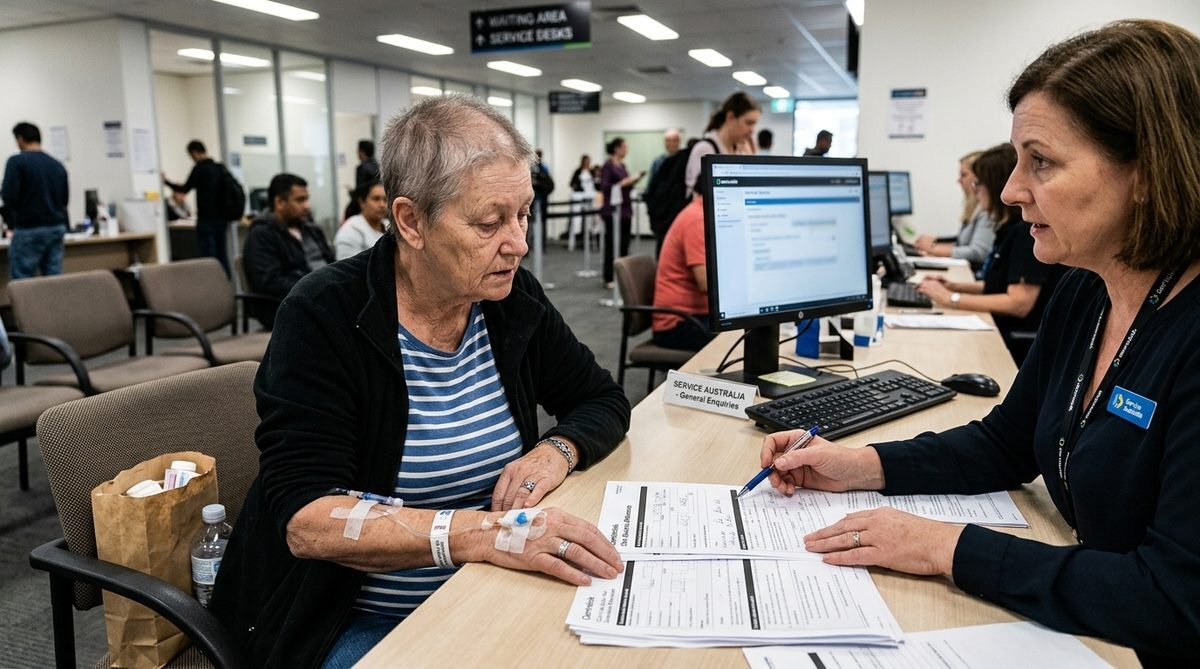
Is Bipolar a Disability for Centrelink? What You Actually Need to Know

Bipolar disorder can qualify as a disability for Centrelink purposes. But whether it does depends on how it affects your ability to work, not just whether you have the diagnosis.
That distinction matters a lot when you're trying to figure out what support you can access.
This article walks through what Centrelink looks for, what payments are available, and what actually increases your chances of being approved. A lot of people get knocked back not because their condition isn't serious, but because the paperwork doesn't reflect what their life actually looks like.
Can You Get Centrelink if You Have Bipolar?
Yes. Bipolar disorder is a recognised mental health condition that can support a claim for the Disability Support Pension (DSP), which is the main Centrelink payment for people whose disability prevents them from working. Understanding your insurance coverage alongside Centrelink eligibility is also important.
The key thing Centrelink assesses is functional impairment. That means how much your condition limits your capacity to work in any job, not just the job you've had before. A diagnosis alone won't get you approved. What matters is evidence showing how bipolar disorder affects your daily functioning, your reliability, your ability to manage a workplace, and your ability to sustain work over time.
One of my clients had been living with bipolar I for over a decade. She tried going back to work several times, always in lower-stress roles. Each attempt ended with a hospitalisation within a few months. When she first applied for DSP, she was knocked back because her application only listed her diagnosis and medications. There was no detailed picture of the pattern of her episodes, the recovery time between them, or the way the condition made consistent employment impossible.
Once we built a file that reflected what her life actually looked like, the outcome was different.
What Is the Disability Support Pension and How Does Bipolar Fit In?
The DSP is a fortnightly payment from Centrelink for people aged 16 to Age Pension age who have a permanent physical, intellectual, or psychiatric condition that stops them from working 15 hours or more per week at minimum wage, now or in the next two years.
Bipolar disorder is a mood disorder that involves episodes of mania or hypomania alternating with episodes of depression. Between those episodes, some people function well. Others live with persistent symptoms, cognitive difficulties, medication side effects, and the unpredictability that makes holding a job genuinely hard.
It's that unpredictability that Centrelink's assessment process can miss if you don't document it clearly.
Under DSP rules, your condition needs to be fully diagnosed, treated, and stabilised. That phrase trips people up. It doesn't mean your bipolar has to be under control. It means Centrelink needs to see that you've engaged with appropriate treatment so they can assess your condition at its baseline, not during an acute episode. If your condition is still being treated and your capacity is still changing significantly, you may be assessed as not yet meeting the permanence requirement.
How Hard Is It to Get Disability for Bipolar?
Harder than it should be, in practice. The DSP has one of the highest rejection rates of any Centrelink payment. Mental health conditions get knocked back more often than physical ones. This is partly because the impairment is less visible and partly because the assessment tools used don't always capture the episodic nature of bipolar disorder well.
The Impairment Tables are what Centrelink uses to score how much your condition limits you. To qualify for DSP, you need to score at least 20 points across the tables, with at least 20 points coming from a single condition. For mental health conditions, points are assigned based on things like how well you can understand and remember information, manage your own behaviour, interact with others, and maintain concentration.
The problem is straightforward. Someone with bipolar disorder might score low on those measures during a stable phase and score very high during a depressive or manic episode. The assessment is meant to reflect your typical functioning. But if the person doing the assessment catches you on a good day, or if your file only shows your stable periods, the score won't reflect reality.
I've seen this happen. One of my clients was articulate and composed at his assessment interview. He also hadn't slept properly in three weeks, was on his fifth medication combination in two years, and had lost two jobs in the previous 18 months. None of that was obvious in the room.
What made the difference was a detailed letter from his psychiatrist that outlined the trajectory of his condition over time, not just a snapshot.
Can You Claim Disability Allowance for Bipolar Even If You're Not Approved for DSP?
Yes. DSP is not the only payment available. If you have bipolar disorder but don't meet the threshold for DSP, you may still be eligible for JobSeeker Payment with a partial capacity to work assessment. This reduces your mutual obligation requirements based on your functional limitations.
A Centrelink Job Capacity Assessment (JCA) or Employment Services Assessment (ESAt) can determine that you have a partial capacity to work. For example, that you can work between 8 and 14 hours per week rather than full time. This reduces what Centrelink expects from you and can connect you with more appropriate employment services like Disability Employment Services (DES), which offers specialist support for people with mental health conditions.
There's also the Mobility Allowance for people with disabilities who need help with transport costs to get to work or approved activities. And the Carer Payment and Carer Allowance if someone in your life has a severe enough condition that another person is providing substantial care.
What Benefits Can You Get if You Have Bipolar?
The main payments and supports available through Centrelink include the DSP, JobSeeker with a partial capacity determination, the Carer Payment if applicable, and Rent Assistance if you're receiving a qualifying payment and renting privately. The Health Care Card comes automatically with DSP and gives you access to cheaper prescriptions and some bulk-billed medical services.
Outside Centrelink, the National Disability Insurance Scheme (NDIS) is a separate system that funds supports and services for people with permanent and significant disability. Bipolar disorder can qualify for NDIS if it meets the functional criteria.
NDIS and DSP are independent of each other. You can receive both, or either one, or neither. They assess different things. DSP is about whether you can work. NDIS is about what supports you need to participate in daily life.
State-based mental health services, community mental health teams, and organisations like SANE Australia and beyondblue also offer support that doesn't go through Centrelink at all.
What Most Articles Get Wrong About This Process
A few things come up again and again that are worth addressing directly.
The first is that people assume a psychiatrist letter is enough. It helps, but a single letter that says "this person has bipolar disorder and cannot work" is not the same as a detailed clinical history. You need documentation that shows episode frequency, hospitalisation history, medication trials, functional capacity across different life areas, and the clinician's opinion on permanence. The more specific the evidence, the stronger the claim.
The second is the assumption that if you've worked recently, you won't qualify. That's not how it works. Centrelink looks at whether your condition is expected to prevent you from working for the next two years. Someone who has made repeated attempts to return to work and repeatedly relapsed may actually have stronger evidence than someone who has never tried. The pattern of attempts and failures shows the real impact of the condition.
The third thing most articles miss is the review and appeal process. If you're knocked back for DSP, you have the right to request an Authorised Review Officer (ARO) review. Then you can appeal to the Administrative Appeals Tribunal (AAT) if needed. A lot of people accept the first decision as final. It isn't.
A significant number of DSP decisions are overturned or changed on review when the application is properly supported. Getting help from a social worker, disability advocate, or a service like a disability support organisation before you apply, or before you appeal, makes a real difference. Seeking professional guidance from experienced advocates can significantly improve your outcome.
What Actually Helps Your Application
Evidence is everything. Centrelink decisions are made on the paper file, so what you submit determines the outcome.
A detailed letter from your treating psychiatrist is the most valuable piece of evidence. It should cover your diagnosis, how long you've had it, the treatment you've received, the impact on your daily functioning and your ability to work, and their opinion on whether the condition is permanent. The more specific, the better. "Significant impairment in executive functioning during depressive phases" is more useful than "this patient has difficulty at work."
GP records, hospitalisation history, and letters from psychologists or other treating clinicians all add weight. If you've been seeing a mental health social worker or community mental health team, a letter from them about your day-to-day functioning is valuable too.
A personal statement from you describing what a typical week actually looks like helps fill in what clinical records often leave out. Include your worst days, not just your average ones.
If someone close to you can write a statement about what they observe in your functioning, that adds another angle. Centrelink calls this a third-party statement and it's an underused piece of evidence.
Frequently Asked Questions
Does bipolar automatically qualify for DSP?
No. Having a bipolar diagnosis is a starting point, not a guaranteed outcome. What qualifies you is evidence that the condition causes enough functional impairment to prevent you from working 15 or more hours per week at minimum wage, now and for the next two years.
What if my bipolar is episodic and I function well between episodes?
This is one of the harder parts of the DSP process for bipolar disorder. The assessment is meant to reflect typical functioning. But episodic conditions are often underscored because the assessment catches a stable period.
Detailed clinical evidence that documents the frequency, severity, and duration of episodes, and the cumulative impact on work capacity over time, is how you address this.
Can I work part-time and still receive Centrelink support?
Yes. If you have a partial capacity to work, you may be able to do some work and still receive JobSeeker or in some cases DSP, subject to income tests. A partial capacity assessment will set out what Centrelink considers your work capacity, and your obligations are adjusted accordingly.
How long does a DSP application take?
It varies. Some applications are processed in a few months, others take longer, particularly if Centrelink needs to request medical records or conduct a Job Capacity Assessment. Having complete, well-organised evidence when you apply reduces delays.
What if I was already rejected for DSP?
You can request a review. Start with an Authorised Review Officer review, which is free and internal to Centrelink. If that doesn't change the decision, you can appeal to the Administrative Appeals Tribunal. Getting advocacy support before going through that process is worth doing.
Is NDIS the same as Centrelink DSP?
No. They are separate systems with different criteria and different purposes. DSP provides income support. NDIS funds supports and services. You can access both if you qualify for both.
What to Do Next
If you have bipolar disorder and are trying to work out whether you qualify for Centrelink support, start by gathering your clinical evidence before you apply. Contact your psychiatrist and GP and ask them to write detailed letters that address your functional capacity and the history of your condition. Don't settle for standard letters.
If you've already been rejected, don't treat that as the end. Request an ARO review and get support from a disability advocate or social worker who knows the DSP process.
If you're not sure where to start, speaking to a disability support service or mental health organisation in your state can help you understand your options before you put in a claim. Getting the application right the first time saves months of waiting and the emotional toll of going through a rejection.
Explore related health and wellbeing guides
This article is part of PTNA's consumer health and wellbeing library. Browse the Health & Wellbeing Resources hub to find related guides by topic, including Australian health cover, Medicare, prostate health, mental health, disability support and life insurance.
How Much Does It Cost to Have Your Prostate Removed Privately in Melbourne?
Read article →
Is It Worth Having Your Prostate Removed in Melbourne?
Read article →
Can You Get Anything Free if You Have Cancer in Melbourne?
Read article →
What Are the Negatives of Removing Your Prostate in Melbourne?
Read article →
Is Prostate Cancer Classed as a Disability in Melbourne?
Read article →