How Hard Is It to Get Disability for Bipolar? What You Actually Need to Know

Getting disability support for bipolar disorder in Australia is possible, but most people get knocked back the first time because they don't know what the system is actually looking for. The process isn't designed to be easy, and the way bipolar disorder affects people doesn't always fit neatly into the boxes assessors use.
The short version: bipolar disorder can qualify for both Centrelink disability payments and NDIS funding, but functional impact is what drives every decision. A diagnosis alone gets you nothing. What matters is how your condition limits what you can do day to day.
How Does Bipolar Qualify for Disability?
Bipolar disorder is classified as a mental disorder under the same diagnostic frameworks that Centrelink and the NDIS use to assess eligibility. The diagnosis itself, whether bipolar I, bipolar II, or cyclothymia, is the starting point. But the system doesn't pay for diagnoses. It pays for impairment.
What assessors are looking for is evidence that your condition significantly limits your ability to function. That means things like holding employment, managing daily tasks, maintaining relationships, or living independently. If you have well-managed bipolar with minimal disruption to your daily life, the system will likely assess you as not meeting the threshold, even if your diagnosis is serious.
I know this because one of my clients had been living with bipolar I for over a decade. She had a treating psychiatrist, a formal diagnosis, and a history of multiple hospitalisations. She assumed that history would be enough. Her first Centrelink application was rejected because the functional impact hadn't been documented consistently across her medical records. The hospitalisations were there, but the day-to-day limitations between episodes weren't captured anywhere in writing.
What changed her outcome was going back to her psychiatrist and getting a detailed letter that described exactly how her condition affected her capacity to work and function, not just during acute episodes, but in the weeks before and after them. That letter made the difference.
Is Bipolar a Disability for Centrelink?
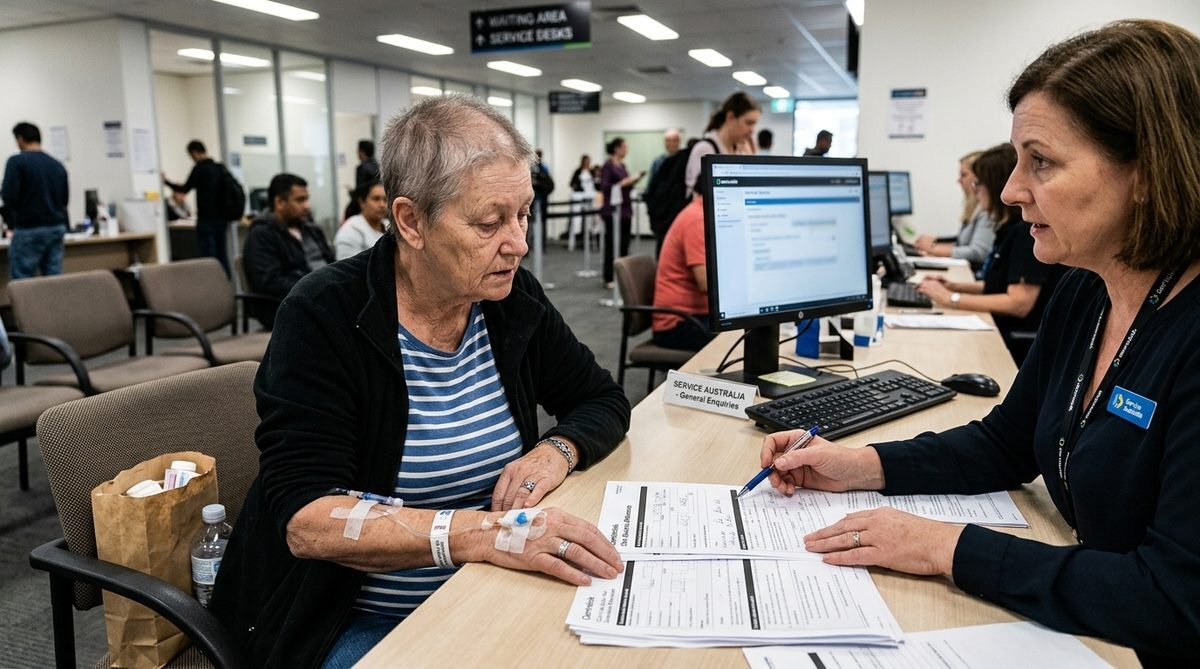
Yes. Centrelink recognises bipolar disorder as a condition that can qualify a person for the Disability Support Pension, usually called the DSP. To qualify, you need to meet the impairment tables threshold, which means scoring at least 20 points across the tables, with at least 20 points from a single condition.
The impairment tables Centrelink uses include a table specifically for mental health conditions. Bipolar disorder is assessed based on how much it limits your ability to work, learn new tasks, interact with others, and manage daily life. The ratings go from 0 to 20 for a single condition, and reaching 20 points from bipolar alone means the functional impact needs to be significant and consistently documented.
There's also a work capacity test. Even if you meet the impairment threshold, Centrelink will assess whether you have any capacity to work within the next two years. If they believe you can work 15 or more hours per week with assistance, you may be directed to other payments like JobSeeker with a partial capacity to work rating instead.
This is where people get tripped up. Bipolar disorder fluctuates. You might function reasonably well for months, then crash. Centrelink's snapshot assessment doesn't always capture that cycle unless your records make it very clear. In my experience, people who document the pattern of their condition over time, not just the acute episodes, have stronger applications.
Can Someone with Bipolar Claim Disability?
Yes, and many people do. But the success rate depends heavily on preparation and documentation, not on the severity of the condition alone.
The common mistake is treating the application as a form-filling exercise. It's not. It's a case-building exercise. Every claim needs to tell a coherent story about how bipolar disorder has persistently affected your ability to function, backed by records from treating professionals who know you well.
What works is having a psychiatrist who understands the assessment criteria and can write reports that speak directly to functional limitations. What doesn't work is submitting a diagnosis letter and assuming the assessor will connect the dots.
One of my clients tried this the hard way. He had bipolar II and had been managing reasonably well with medication for about three years. He applied for the DSP and was rejected. When we looked at his application, the problem was clear: his GP had written a letter confirming the diagnosis, and his psychiatrist had submitted clinical notes. But nothing explicitly described what he couldn't do. The assessor read his file and saw a managed condition, not a disabling one, even though the reality of his life was far more limited than the paperwork suggested.
Getting it right often requires working with someone who understands how these systems are structured, whether that's a disability advocate, a support coordinator, or a mental health social worker who has experience with Centrelink claims.
Can I Get NDIS for Bipolar?
This is where things get more complicated, and where a lot of people with bipolar disorder end up frustrated.
The NDIS is built around the concept of permanent and significant disability. The challenge with bipolar disorder is that it's episodic. Between episodes, many people with bipolar function at a high level. The NDIS tends to view episodic conditions as harder to fund because the disability isn't consistently present in the way a physical or intellectual disability might be.
That said, people with bipolar disorder do get NDIS funding. The key is demonstrating that the functional impact is permanent, even if the severity fluctuates. If bipolar disorder has permanently affected your ability to participate in daily life, social interaction, employment, or self-care, that can meet the NDIS criteria.
The NDIS uses what they call the Early Intervention and Access criteria. Under the psychosocial disability pathway, which is the most relevant one for bipolar disorder, you need to show that your condition is likely to be permanent and that it substantially reduces your functional capacity across one or more of the following: communication, social interaction, learning, mobility, self-care, or self-management.
When I've seen this work, it's been because the person's treating team built a very detailed functional report. Not a clinical summary. A functional assessment that described exactly which tasks the person struggles with, why, and how consistently. That specificity is what NDIS planners need to say yes.
When I've seen it fail, it's usually because the application leaned on the diagnosis and the person's worst episodes without connecting those to ongoing, permanent functional limitations. The NDIS won't fund someone to manage a condition. They fund people who have reduced functional capacity as a result of a condition.
What Most Articles Get Wrong About This Process
Most content written on this topic tells you what the eligibility criteria say. That's useful but it skips the part that actually determines outcomes.
The first thing people miss is that the burden of proof is entirely on you. The assessor isn't your advocate. They're assessing a paper file. If your file doesn't make your limitations obvious, the decision won't go your way, regardless of how hard your life actually is.
The second thing people miss is that psychiatric reports written for clinical purposes are almost never written in a way that serves a disability application. Clinical notes describe symptoms, diagnoses, and treatments. They aren't written to document functional limitations in the language the impairment tables use. This isn't the psychiatrist's fault. It's just a different job. Getting a report that actually helps your application usually means briefing your psychiatrist on what the assessment is looking for, or having a support person help facilitate that.
The third thing, and this one is almost never mentioned, is that mood stability at the time of assessment can work against you. If you're in a stable phase when Centrelink or an NDIS assessor evaluates you, they may rate your current functioning without adequately accounting for how often and how severely that stability breaks down. This is why longitudinal documentation matters so much. Your records need to show the full cycle, not just where you happen to be on a given day.
Frequently Asked Questions
Does bipolar disorder automatically qualify for the DSP?
No. Having a bipolar diagnosis doesn't guarantee DSP approval. You need to meet the impairment tables threshold and demonstrate that your condition has a significant, persistent impact on your ability to work and function. Many people with bipolar do qualify, but the documentation needs to support it.
What evidence do I need to apply for Centrelink disability with bipolar?
You need reports from treating professionals, ideally a psychiatrist, that describe your functional limitations in detail. Diagnosis letters alone aren't enough. Medical records showing treatment history, hospitalisations, and the pattern of your condition over time all strengthen an application.
Can I get both the DSP and NDIS for bipolar disorder?
Yes, you can receive both. They serve different purposes. The DSP provides income support. The NDIS funds supports and services that help you participate in daily life. Having one doesn't disqualify you from the other, and many people with significant psychosocial disability access both.
What if my application gets rejected?
You can request a review. For Centrelink, you can ask for an Authorised Review Officer to look at the decision, and if that doesn't resolve it, you can appeal to the Administrative Appeals Tribunal. For the NDIS, you can request an internal review and then escalate to the AAT if needed. Many successful outcomes come from persistence and better documentation at the review stage.
Is bipolar disorder considered a psychosocial disability?
Yes. Psychosocial disability refers to disability that arises from a mental health condition. Bipolar disorder falls under this category. The NDIS has a specific psychosocial disability pathway, and many people with bipolar access supports through it.
Does treatment affect my eligibility?
Being on treatment doesn't disqualify you. In fact, evidence that you've engaged with treatment and still experience significant limitations can strengthen a claim. What matters is your current functional capacity, not whether you've tried to get better.
What to Do Next
If you're considering a disability application for bipolar disorder, start with your treating psychiatrist and have a direct conversation about what a functional impact report needs to include. Ask them to describe your limitations in terms of daily activities and work capacity, not just symptoms and diagnoses.
Get support from a disability advocate or mental health social worker who has experience with Centrelink and NDIS applications. The difference between a well-supported application and a solo one is significant, and the stakes are too high to guess.
Document consistently. Keep records of episodes, hospitalisations, changes to medication, and the impact on your ability to work and manage daily life. The more clearly the pattern is documented over time, the harder it is for an assessor to see your condition as something that doesn't significantly affect your functioning.
If you want help understanding how to approach this for your specific situation, the team at PTNA works with people navigating exactly this process.
Explore related health and wellbeing guides
This article is part of PTNA's consumer health and wellbeing library. Browse the Health & Wellbeing Resources hub to find related guides by topic, including Australian health cover, Medicare, prostate health, mental health, disability support and life insurance.
How Much Does It Cost to Have Your Prostate Removed Privately in Melbourne?
Read article →
Is It Worth Having Your Prostate Removed in Melbourne?
Read article →
Can You Get Anything Free if You Have Cancer in Melbourne?
Read article →
What Are the Negatives of Removing Your Prostate in Melbourne?
Read article →
Is Prostate Cancer Classed as a Disability in Melbourne?
Read article →