Does Life Insurance Cover Parkinson's Disease? What You Need to Know

Yes, life insurance can cover Parkinson's disease. But timing matters more than almost anything else.
Whether you already have a policy or you're applying after a diagnosis, the outcome depends heavily on when things happened and how the policy was structured.
This article breaks down exactly how life insurance interacts with a Parkinson's diagnosis, what benefits may apply, and what most people get wrong when they search for answers.
Is Parkinson's Covered by Life Insurance?
If you had a life insurance policy before your diagnosis, Parkinson's is almost certainly covered. Standard life insurance pays a lump sum on death, and death from Parkinson's-related complications qualifies under most policies.
Where it gets complicated is when you apply for new cover after a diagnosis. Insurers treat Parkinson's as a pre-existing condition. Some will still offer cover with exclusions or higher premiums. Others will decline.
The type of policy matters here too. Life cover (death benefit) is more likely to be offered than total and permanent disability (TPD) cover, simply because the risk profile is different.
What I found working through these cases is that people often assume a diagnosis means the door is shut. It's not. It just means the terms change.
What Happens to Your Existing Policy After a Parkinson's Diagnosis?
Your existing policy stays in force. A diagnosis made after the policy started does not void your cover. You don't need to disclose new health conditions to keep a policy running, only when you apply for new or additional cover.
This is the single most important thing to understand. People sometimes cancel or let lapse policies they think are no longer relevant. That's almost always the wrong move.
There are a few scenarios worth knowing:
Life cover (death benefit): Pays out when you die, regardless of cause, as long as the policy is active and premiums are paid. Parkinson's doesn't exclude this.
TPD cover: Pays if you become totally and permanently disabled and can no longer work. Progressive Parkinson's can qualify here, though you'll need to meet the specific definition in your policy. Some policies define TPD as inability to ever work again in any occupation. Others use your own occupation. The difference can mean tens of thousands of dollars.
Trauma or critical illness cover: Parkinson's is explicitly listed as a covered condition in many Australian trauma policies. If you have this type of cover, check your product disclosure statement. Many people with Parkinson's are entitled to a lump sum payout they don't know about.
Income protection: If Parkinson's prevents you from working, income protection pays a monthly benefit, typically 70 to 75 percent of your pre-disability income. This is often the most immediately useful cover for someone in the early to mid stages of the disease.
What Death Is Not Covered by Life Insurance?
Life insurance has exclusions. Parkinson's patients should know them. The most common reasons a claim gets denied have nothing to do with the disease itself.
Suicide within the policy's exclusion period (usually 13 months from the policy start date) is the most commonly cited exclusion. After that period, most policies do cover suicide, though the exact terms vary by insurer.
Death resulting from an activity that was excluded at underwriting, such as a high-risk occupation or extreme sport, may not be covered if that exclusion was written into the policy.
Non-disclosure is a serious one. If you failed to disclose a material fact when you applied, such as an earlier neurological symptom you were aware of, the insurer can void the policy or reduce the payout. This applies even if the non-disclosure seems unrelated to the cause of death.
Beyond those, most natural causes of death, including complications from Parkinson's like pneumonia, falls, or swallowing difficulties, are covered under a standard life insurance policy.
What Is the 5-2-1 Rule for Parkinson's Disease?
The 5-2-1 rule is a clinical guideline used by neurologists and movement disorder specialists, not an insurance rule. It refers to how often you should see a specialist as Parkinson's progresses.
The rule suggests five visits per year in early stages, reducing to twice a year as the condition stabilises, then at least once a year for long-term management. Some clinicians apply it differently depending on how fast the condition is progressing and symptom complexity.
It matters in an insurance context for one reason: claim assessors look at treatment history. If you're applying for a TPD or trauma claim, having documented specialist care that matches your condition's severity strengthens your case. Gaps in treatment can raise questions about the functional impact of the disease.
In my experience, people who keep detailed records of specialist visits, medication changes, and functional assessments have a much smoother claims process than those who don't.
What Are Parkinson's Sufferers Entitled To?
The entitlements available in Australia fall into a few categories. Most people only know about one or two.
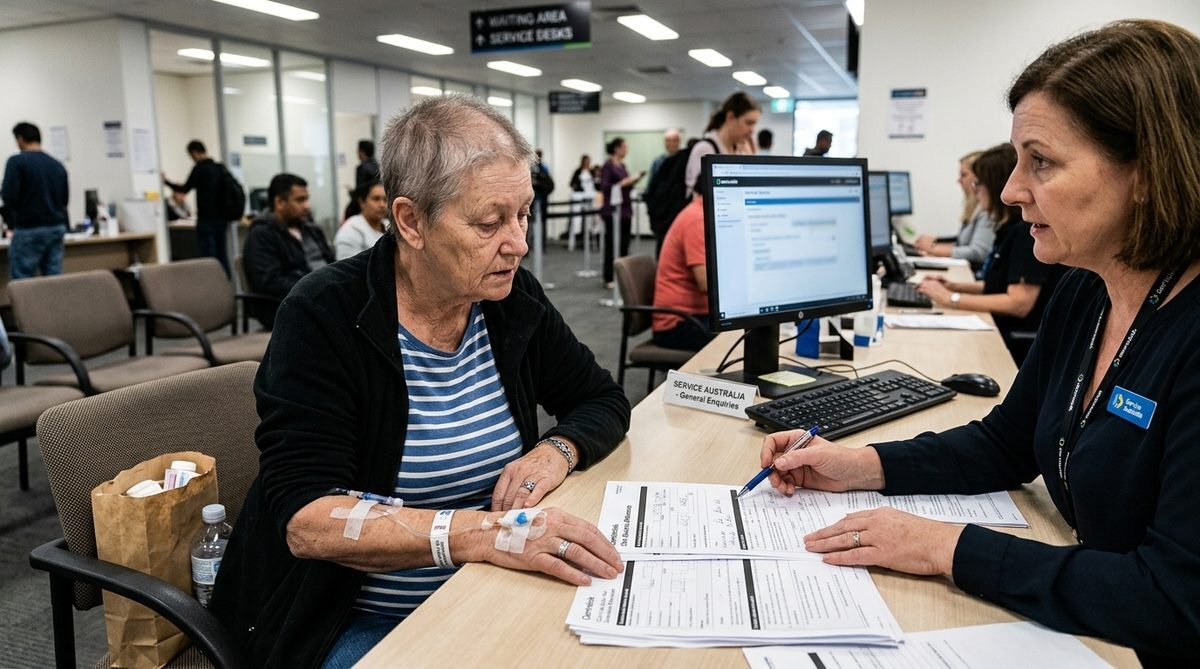
Through the NDIS, people with Parkinson's under 65 may be eligible for funding to support daily activities, in-home care, assistive technology, and therapy. Eligibility depends on the functional impact of the disease, not the diagnosis alone.
Through Centrelink, a Disability Support Pension may be available if Parkinson's prevents you from working 15 or more hours per week. The Carer Payment and Carer Allowance are also available for family members who provide substantial care.
Through superannuation, most Australians have TPD insurance attached to their super fund. This is separate from any retail life insurance policy you may hold. Many people have never checked what's in their super. A Parkinson's diagnosis can trigger a legitimate TPD claim through that channel.
Through private insurance, trauma cover, income protection, and life cover as described above.
The combination of these entitlements can be significant. A person with Parkinson's in their 50s, for example, might be entitled to a trauma lump sum from their retail policy, a TPD payout from their super fund, an income protection benefit, and NDIS support, all running simultaneously. Very few people know to look at all of these at once.
Applying for Life Insurance After a Parkinson's Diagnosis
It's harder, but not impossible. Insurers will ask detailed questions about the type of Parkinson's (idiopathic, drug-induced, or a Parkinson's-plus syndrome), the date of diagnosis, current medications, progression rate, and functional capacity.
Some insurers will offer life cover with a higher premium. Others will offer it with a specific exclusion, meaning they'll pay on death from most causes but not directly from Parkinson's complications. A few will decline. The spread of outcomes is wide, which is why going through a specialist broker rather than applying directly tends to produce better results. Brokers know which insurers are more flexible on neurological conditions.
One angle most articles miss: group insurance through an employer or industry super fund sometimes has no medical underwriting at all, up to a certain benefit level. If you're still employed and haven't checked your group cover, do it now. You may be able to increase cover within the default limits without a health assessment.
What Most People Get Wrong About Life Insurance and Parkinson's
Three things come up repeatedly that most articles don't address clearly.
First, people wait too long to make a claim. Trauma cover has a survival period requirement, usually 14 days after diagnosis. Beyond that, you can claim at any point while the policy is active. There's no rule that says you must claim immediately, but waiting years while the condition worsens doesn't increase the payout. It just delays money you're already entitled to.
Second, people conflate the type of Parkinson's. Drug-induced parkinsonism is different from idiopathic Parkinson's disease. Insurers and trauma policy definitions often specify the latter. If your diagnosis was initially unclear or later revised, that distinction can affect a claim. A specialist adviser can help navigate this.
Third, people assume TPD is only for people who can never do anything. Most modern TPD definitions are more nuanced than that. If Parkinson's prevents you from performing the key duties of your specific occupation, that may satisfy the claim definition even if you could theoretically work in a different role. Read your policy definition carefully, or have someone read it for you.
Frequently Asked Questions
Can I get life insurance if I already have Parkinson's?
Yes, some insurers will offer life cover after a Parkinson's diagnosis, though it typically comes with higher premiums or modified terms. The further along the disease has progressed, the fewer options are available. An adviser who specialises in impaired risk cases will give you the most accurate picture of what's possible.
Does Parkinson's qualify for TPD insurance?
It can. Whether your condition meets the TPD definition in your specific policy depends on the definition used (own occupation vs. any occupation) and the functional limitations caused by your Parkinson's. Specialist advice and thorough medical documentation are essential.
Will my insurer cancel my policy if I'm diagnosed with Parkinson's?
No. A diagnosis after the policy starts doesn't give the insurer grounds to cancel. As long as you keep paying premiums, the policy remains in force on its original terms.
Does Parkinson's count as a critical illness?
In most Australian trauma insurance policies, yes. Parkinson's disease is listed as a covered trauma condition by the majority of major insurers. Check your product disclosure statement for the exact definition and any conditions that apply.
What if I never told my insurer about early symptoms before my diagnosis?
This depends on what you knew, when you knew it, and what questions the application asked. If you experienced symptoms but hadn't been assessed by a doctor and the application asked only about diagnosed conditions, you're likely fine. If you were referred to a neurologist before applying and didn't disclose that, there may be a non-disclosure issue. Get advice before a claim is submitted rather than after it's disputed.
Is Parkinson's covered under NDIS?
People under 65 with Parkinson's can apply for NDIS funding if the disease causes permanent and significant functional impairment. The NDIS doesn't cover everyone with a Parkinson's diagnosis automatically. The functional impact, not the diagnosis, determines eligibility.
What to Do Now
Pull out every insurance policy you hold, including anything inside your superannuation, and look at what types of cover are included. Check the trauma and TPD definitions. If Parkinson's is listed as a covered condition or you can no longer perform your occupation's key duties, you may have a claim sitting unused.
Then call a specialist adviser before you do anything else. The decisions you make in the first 12 months after a diagnosis, whether to claim, whether to cancel, whether to apply for more cover, have long-term consequences. Getting the sequence right matters more than acting fast.
The team at PTNA works with Australians navigating life insurance through serious health conditions. If you want a clear picture of what you're entitled to, that's a good place to start.
Explore related health and wellbeing guides
This article is part of PTNA's consumer health and wellbeing library. Browse the Health & Wellbeing Resources hub to find related guides by topic, including Australian health cover, Medicare, prostate health, mental health, disability support and life insurance.
How Much Does It Cost to Have Your Prostate Removed Privately in Melbourne?
Read article →
Is It Worth Having Your Prostate Removed in Melbourne?
Read article →
Can You Get Anything Free if You Have Cancer in Melbourne?
Read article →
What Are the Negatives of Removing Your Prostate in Melbourne?
Read article →
Is Prostate Cancer Classed as a Disability in Melbourne?
Read article →