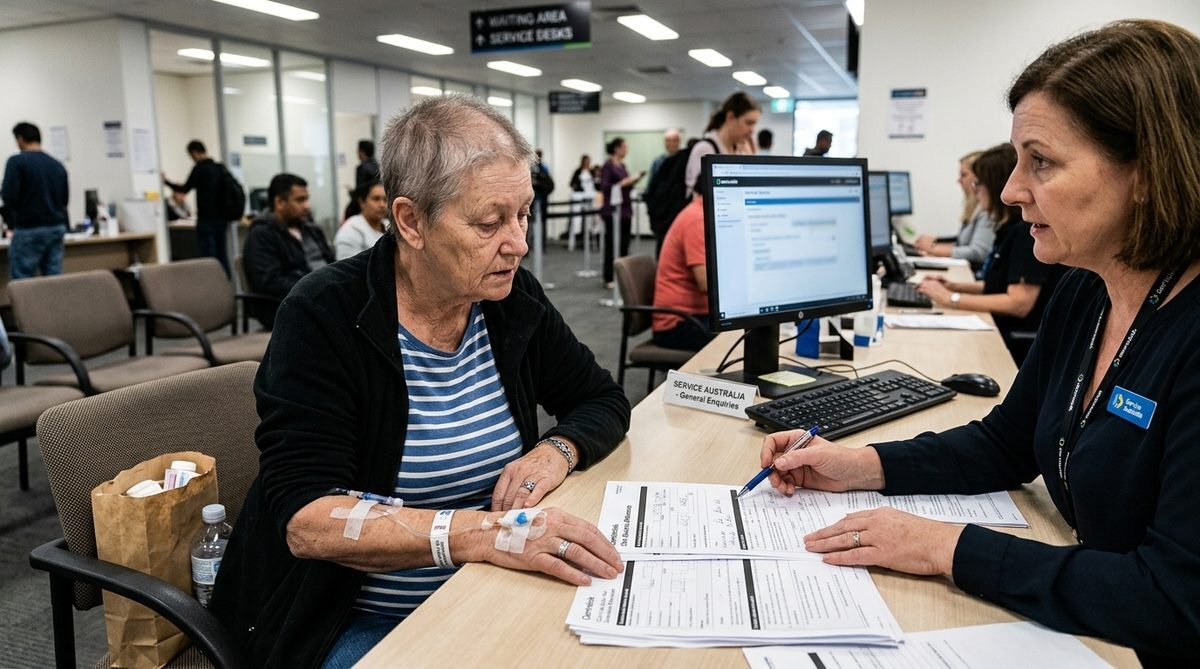
Does Bipolar Automatically Qualify for Disability? What You Actually Need to Know

No, bipolar disorder does not automatically qualify you for disability support in Australia. But there's more to it. Plenty of people with bipolar do qualify.
The difference comes down to three things: how your condition is documented, how it affects your ability to work, and how well your application shows that impact.
This article walks through what Centrelink actually looks at, why claims get rejected even when symptoms are severe, and what gives an application the best shot.
What Does Centrelink Actually Assess?
Disability Support Pension is not diagnosis-based. Centrelink doesn't have a checklist of conditions that automatically qualify.
What they assess is functional impairment. Specifically: can your condition stop you from working 15 or more hours per week at or above minimum wage? And will that stay true for at least two years?
Bipolar disorder can absolutely meet that bar. The catch is that a diagnosis alone doesn't prove it. Centrelink uses a points system called the Impairment Tables. Your treating doctor or a government assessor rates how much your condition limits specific functions like concentration, social interaction, and getting things done.
I had a client with well-documented bipolar I who was rejected on the first attempt. Her GP's letter described her diagnosis and medication but said almost nothing about how her symptoms affected daily life. mood swings
Once we gathered records showing her hospitalisation history, the frequency of her mood swings, and a detailed report from her psychiatrist about what she actually couldn't do, everything changed. She was approved.
How Difficult Is It to Get Disability for Bipolar?
Harder than it should be. The process is bureaucratic and the evidence bar is real. But it's not impossible.
For people with moderate to severe bipolar, it's achievable with solid preparation.
Most claims fail not because the impairment isn't real. They fail because:
- Medical evidence focuses on diagnosis rather than function
- The treating doctor hasn't seen the person during a severe episode and underestimates the impact
- The person presents well on assessment day, hiding how they actually function day to day
- The application misses the episodic nature of bipolar, where someone looks stable between episodes
That last point gets missed in most articles. Bipolar is episodic. On a good week, someone with bipolar II might look fine. Centrelink assessments can accidentally catch the stable phase and miss the full picture.
A strong application shows the pattern across time. Not just a snapshot.
Is Bipolar a Disability for Centrelink?
Yes, bipolar disorder is recognised as a medical condition that can qualify for the DSP. It's grouped with psychiatric and psychological conditions.
The question is never whether bipolar counts as a disability in principle. The real question is whether your specific situation, properly documented, meets the functional impairment bar.
Centrelink also has JobSeeker with a Partial Capacity to Work assessment. This applies when someone can work some hours but not full-time. For people with bipolar who can manage part-time work in the right conditions, this can be an easier pathway while pursuing DSP or stabilising treatment.
Then there's the NDIS, which operates separately from Centrelink. Bipolar disorder can qualify for NDIS funding if it causes permanent, significant disability that affects daily life. NDIS doesn't replace income. It funds supports and services. Some people access both DSP and NDIS, depending on their situation.
What Symptoms Actually Drive a Disability Claim?
For bipolar I, the defining feature is the manic episode. Full mania can involve psychosis, hospitalisation, impulsive decisions with serious consequences, and complete inability to work. When that history is documented, the functional impairment case is straightforward.
For bipolar II, it's more complicated. Bipolar II involves hypomanic episodes instead of full mania. Hypomania is less severe than mania but still disrupts sleep, judgment, and behaviour. The depressive episodes in bipolar II tend to be longer and more disabling than in bipolar I.
People with bipolar II often have a harder time getting their impairment recognised. Hypomania can look like high energy rather than illness, and the depression gets blamed on other causes.
Centrelink's impairment ratings respond most directly to persistent cognitive problems like poor concentration, memory issues, and trouble following through on tasks. They also respond to significant interpersonal dysfunction, inability to keep a consistent routine, frequent episodes needing medication adjustment or hospitalisation, and co-occurring conditions like anxiety, which are extremely common in bipolar.
The Angle Most People Miss: Cumulative and Invisible Impairment
Here's something that almost never comes up in standard advice about bipolar and disability. The most disabling aspects of bipolar are often invisible and cumulative. Not just the dramatic episodes.
One of my clients described it this way: even in her "stable" periods, she carried a constant mental load that healthy people don't experience. She monitored her mood hourly, managed her sleep, avoided triggers, dealt with medication side effects, and planned her schedule around what she might be capable of tomorrow. That's a full-time job. It left her with almost nothing for actual work.
Most psychiatric reports don't capture this. Doctors are trained to note whether symptoms are present or absent, not the hidden cost of managing a chronic condition. When building your disability case, ask your psychiatrist to address this directly.
Another overlooked issue is medication side effects. Many mood stabilisers and antipsychotics cause cognitive slowing, weight gain, fatigue, and tremor. These aren't bipolar symptoms. They're consequences of treatment. And they can independently impair your ability to work. Centrelink assessments can include these as part of the overall functional picture.
What Are the Positive Traits of a Bipolar Person?
This question comes up often, and I want to answer it honestly.
Some people with bipolar, particularly during hypomanic phases, experience heightened creativity, increased productivity, less need for sleep without feeling tired, and a sharper sense of connection to their work. Research does suggest elevated creativity and entrepreneurial thinking in people with bipolar, and many high-functioning individuals with the condition have built significant careers and creative work.
The traits are real but context-dependent. A person in mild hypomania may be genuinely more productive and engaging. The same person in full mania or deep depression is not. The condition is not uniformly disabling or uniformly gifted. It's variable, and that variability is itself the challenge.
For disability assessment, positive traits during stable or hypomanic phases don't disqualify you. The assessment looks at the full pattern, including your lowest functioning during depression or severe phases.
How to Build a Strong DSP Application for Bipolar
Practical steps matter. A strong DSP application with bipolar needs a few things working together.
Your psychiatrist's report is the most important document. Go beyond diagnosis and medication. Describe the frequency and severity of episodes over the past two years, what functional limitations stick around even between episodes, what activities you can't reliably do, and their clinical opinion on your capacity for sustained work.
Hospital records are powerful evidence if you have them. Each admission is a documented moment of severe impairment. Multiple hospitalisations tell a story that a single assessment can't capture.
A psychologist's report can add detail by documenting cognitive testing results and day-to-day functional impacts in finer detail.
Your own statement matters too. Centrelink lets you provide a personal statement about how your condition affects your life. Be specific. Don't describe how you feel in general. Describe what happened on a specific bad day, what you couldn't do, what the consequences were. Specificity is credible. Generality is easy to dismiss.
If your first application is rejected, that's not the end. The Administrative Review Tribunal exists for exactly this, and many decisions are overturned when evidence is presented properly.
What If You Can Work Sometimes But Not Consistently?
This is the reality for many people with bipolar. They can work when stable. They can't when unwell. And the unpredictability itself is the problem.
Employers need consistent attendance and performance. Bipolar doesn't always allow that. One of my clients worked in marketing and was excellent at it during stable periods. But she had two severe depressive episodes in eighteen months, each requiring six to eight weeks off. Her employer couldn't hold her role indefinitely, and she was eventually let go.
Her impairment was real even though her capacity existed in patches.
For DSP assessment, the question is about sustained capacity. Centrelink looks at whether you can work consistently over time, not just on good days. If your history shows you can't maintain employment despite trying, that pattern is relevant evidence.
Frequently Asked Questions
Does a bipolar diagnosis automatically qualify me for the DSP?
No. The DSP is based on functional impairment, not diagnosis. Your condition needs to be documented as significantly limiting your ability to work 15 or more hours per week for at least two years.
Can I get DSP for bipolar II specifically?
Yes, bipolar II can qualify. The depressive episodes in bipolar II are often severely disabling. The key is ensuring your treating doctor documents the full severity and frequency of your episodes, not just the hypomanic phases.
What if Centrelink says my bipolar is manageable with medication?
Medication compliance doesn't mean full functional recovery. Many people with well-medicated bipolar still experience significant impairment from residual symptoms, side effects, and the ongoing demands of illness management. Your application should address this directly.
How long does a DSP application take?
Processing times vary but typically run between three and six months. Complex cases or those requiring additional assessments take longer. Having complete documentation ready at the time of lodgement reduces back-and-forth delays.
Can I get help with my DSP application?
Yes. Disability advocacy services, social workers, and organisations that specialise in mental health and disability claims can help you gather evidence and frame your application effectively. Professional support increases the likelihood of a successful outcome.
What to Do Now
If you have bipolar disorder and you're wondering whether you qualify for disability support, start by booking an extended appointment with your psychiatrist specifically to discuss your functional limitations and ask them to write a detailed report. That report is the foundation of everything else.
Gather your medical history, including any hospitalisations, medication changes, and periods of inability to work. Write down specific examples of how your condition has affected your ability to maintain employment or daily functioning. Then contact a disability support service or organisation like PTNA to get guidance on whether DSP or another support pathway is the right fit for your situation.
The system isn't set up to make this easy. But the pathway exists, and with the right documentation, a genuine claim for bipolar-related disability can succeed.
Explore related health and wellbeing guides
This article is part of PTNA's consumer health and wellbeing library. Browse the Health & Wellbeing Resources hub to find related guides by topic, including Australian health cover, Medicare, prostate health, mental health, disability support and life insurance.
How Much Does It Cost to Have Your Prostate Removed Privately in Melbourne?
Read article →
Is It Worth Having Your Prostate Removed in Melbourne?
Read article →
Can You Get Anything Free if You Have Cancer in Melbourne?
Read article →
What Are the Negatives of Removing Your Prostate in Melbourne?
Read article →
Is Prostate Cancer Classed as a Disability in Melbourne?
Read article →