Do Immigrants Have Access to Medicare in Australia? What You Actually Need to Know

Your Medicare access in Australia depends almost entirely on your visa. Not your income. Not how long you've lived here.
Your visa type determines whether you walk into a GP and pay nothing, or walk out with a bill that surprises you.
Most articles on this topic either oversimplify it or bury the answer in government language. This one won't. Here's what migrants actually need to know about Medicare in Australia, based on the rules as they stand.
Do Migrants in Australia Get Medicare?
Some do. Many don't. The honest answer is that Medicare eligibility for migrants runs on a two-track system: Reciprocal Health Care Agreements (RHCAs) and permanent residency status.
If you are a permanent resident or have applied for permanent residency and hold a bridging visa, you are generally eligible to enroll in Medicare. You can get a Medicare card, bulk-billed appointments apply to you, and you access the same public hospital system as Australian citizens.
If you are on a temporary visa and your home country does not have a Reciprocal Health Care Agreement with Australia, you are not eligible for Medicare. Full stop. You will need private health insurance or you pay out of pocket.
The countries that have RHCAs with Australia include the United Kingdom, New Zealand, Italy, Belgium, Malta, the Netherlands, Sweden, Slovenia, Norway, Finland and the Republic of Ireland. If you hold a passport from one of these countries and you're visiting or living here on a temporary basis, you can access some Medicare services, though the coverage varies by country and is often limited to medically necessary treatment rather than the full Medicare scope.
Is Healthcare Free for Immigrants in Australia?
Free is a strong word. Medicare covers a large chunk of costs for those who are eligible, but it has never covered everything.
For eligible migrants, Medicare covers GP visits when the doctor bulk bills, public hospital treatment as a public patient, and a portion of specialist fees. The Medicare Benefits Schedule sets what the government contributes. When a doctor charges above that rate, you pay the gap.
What Medicare does not cover, even for permanent residents: dental, most physiotherapy, optical, ambulance services in most states, and prescription medications above the Pharmaceutical Benefits Scheme co-payment. These gaps catch a lot of new arrivals off guard because in their home countries, these services may be included in a universal healthcare system.
In my experience working with migrants navigating the Australian health system, the biggest shock is usually the ambulance bill. Victoria and Queensland have different schemes, but in many states, a single ambulance call-out can run $1,200 or more if you're not covered. That's not a Medicare expense. That's yours.
For migrants who are not Medicare eligible, healthcare is not free at all. A standard GP visit without Medicare runs between $80 and $150 depending on the practice.
An emergency department visit as a private patient in a public hospital can result in a significant invoice. This is why the visa question matters so much before you arrive, not after.
Can Non-Australian Citizens Get a Medicare Card?
Yes, non-citizens can get a Medicare card. Citizenship is not the requirement. Residency status and visa class are what matter.
The following groups can enroll in Medicare regardless of citizenship status:
- Permanent visa holders (including permanent residents who are not yet citizens)
- New Zealand citizens living in Australia
- People who have applied for a permanent visa and hold an eligible bridging visa while that application is processed
- Temporary residents from RHCA countries, for covered services
- Some temporary visa holders under specific visa subclasses, such as certain partner visas in their temporary phase
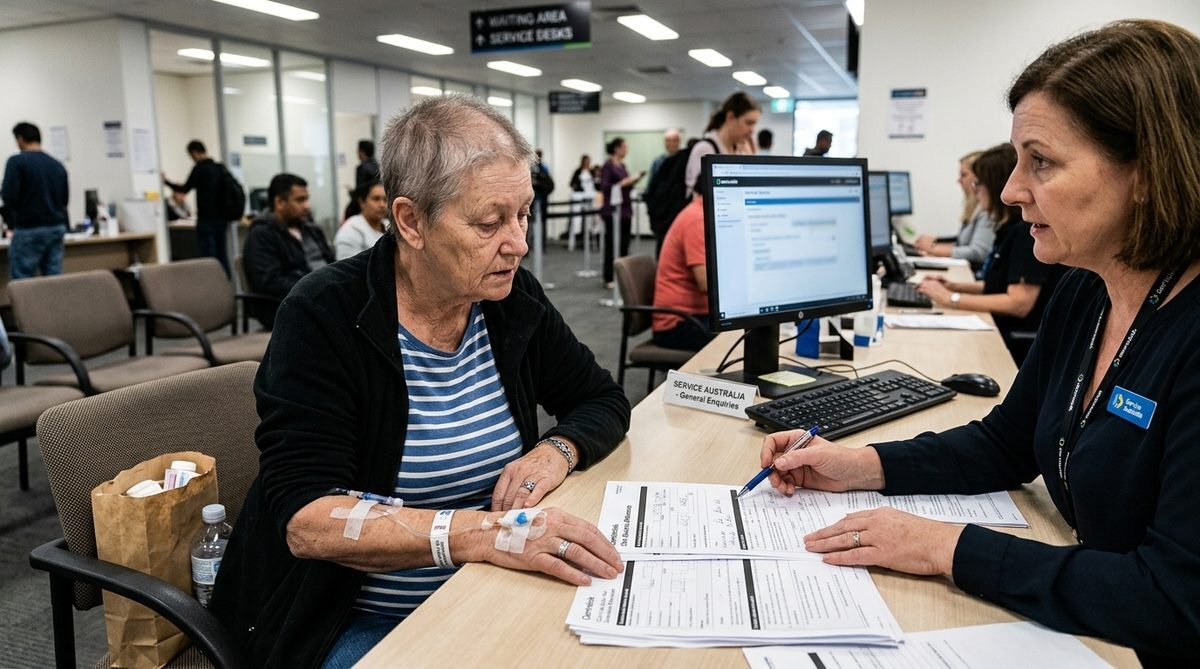
To enroll, you go to a Services Australia Medicare service centre with your passport, visa documentation, and proof of address. If your visa is eligible, enrollment is straightforward. Services Australia checks your visa status electronically in most cases.
One thing most articles get wrong here: holding a bridging visa does not automatically mean you qualify. The bridging visa has to be linked to an application for a permanent visa.
A bridging visa that's keeping you lawful while you're waiting on a further temporary visa application often does not qualify. The specific bridging visa subclass matters.
What Benefits Do Migrants Get When They Come to Australia?
This question often gets mixed up with Medicare specifically, but the answer is much broader than health coverage.
For permanent residents, access opens up in stages. Medicare enrollment is available from the day your permanent visa is granted.
The Age Pension, Disability Support Pension, and most Centrelink payments have waiting periods, typically two years for most income support payments before you can access them. Family Tax Benefit and some other payments may be available sooner depending on circumstances.
Work rights come with most permanent visas and many temporary ones. The right to study at domestic student fee rates applies to permanent residents. Pathways to citizenship open after meeting residency requirements.
For temporary visa holders, the picture is much leaner. Most temporary visa holders have no access to Centrelink payments, no Medicare eligibility (unless RHCA applies), and limited access to subsidised services.
Employer-sponsored temporary workers may have obligations on both sides through the visa conditions, but social security is generally not part of that arrangement.
What I found when looking at how migrants plan their move is that a large number underestimate the cost gap between their home country's healthcare system and what they'll face in Australia on a temporary visa. A family of four on a 457 or TSS visa with no private health cover is carrying significant financial risk if anyone gets sick.
The Coverage Gap Nobody Talks About
Here's something most immigration and health articles miss entirely: the period between arriving in Australia and enrolling in Medicare is a gap period where you are not covered, even if you are eligible.
Medicare does not activate the moment your plane lands. You have to enroll. Until you do, you are not covered.
Services Australia will often backdate your enrollment to the date your visa was granted or the date you arrived, whichever is applicable, but this only works if you haven't already received treatment. If you attend a GP before enrolling and pay out of pocket, you generally cannot claim that back retrospectively through Medicare.
Enroll as early as possible after arrival. It takes about 30 minutes at a service centre and saves a lot of confusion later.
The second gap that gets missed: the Medicare Safety Net. Once an individual or family spends a certain amount in out-of-pocket Medicare gap costs in a calendar year, the government covers a higher percentage of further costs.
Most new arrivals don't know this exists, and don't register their family as a Medicare Safety Net family, which means they miss the benefit even when they're eligible for it.
Private Health Insurance and Migrants: When It's Worth It
For Medicare-eligible migrants, private health insurance is optional but worth thinking through carefully. For non-eligible migrants, it's essential.
Australia's private health insurance market splits into hospital cover and extras cover. Hospital cover gives you access to private hospitals and your choice of doctor. Extras cover handles dental, optical, physiotherapy and similar services that Medicare doesn't touch.
There's a financial incentive built into the system called the Lifetime Health Cover loading. If you don't take out hospital cover by the 1st of July following your 31st birthday, you pay a 2% loading on top of your premiums for every year you were without cover after that age.
For migrants arriving in their 30s or older, this can add up quickly. The loading applies from when you become Medicare eligible in Australia, not from your 31st birthday globally, but the rules are specific enough that checking with an insurance adviser is worth the time.
When I tried to map out the cost comparison for a temporary visa holder, the numbers made the case for private health insurance pretty clearly. A mid-range hospital and extras policy for a couple runs around $3,000 to $4,500 per year. A single emergency admission as a private patient without cover can exceed that in one event.
Specific Visa Types and Medicare Eligibility at a Glance
Rather than a vague overview, here's how common visa categories map to Medicare access:
Permanent Resident visas (subclass 100, 103, 143, 186, 189, 190, 191, 801, 820 granted, 887, 888 and others): Medicare eligible from the date the visa is granted.
Temporary Skill Shortage visa (subclass 482): Not eligible for Medicare unless you're from an RHCA country. Private health insurance is a visa condition for most streams.
Student visa (subclass 500): Not eligible for Medicare. Overseas Student Health Cover (OSHC) is a mandatory visa condition.
Partner visa (subclass 820, temporary stage): Medicare eligible. This is one of the more notable temporary visas where coverage applies because the pathway to permanent residency is built into the visa structure.
Working Holiday visa (subclass 417 and 462): Not eligible for Medicare unless from an RHCA country. Even then, RHCA coverage is limited.
New Zealand citizen Special Category visa (subclass 444): Medicare eligible. New Zealand citizens are treated similarly to permanent residents for most health purposes.
Bridging visas (A, B, C): Eligible if bridging a permanent visa application. Not eligible if bridging a temporary visa application.
Frequently Asked Questions
Can I use Medicare if I'm waiting for my permanent visa to be decided?
Usually yes, if you're on a bridging visa linked to a permanent visa application. Bridging Visa A holders waiting on a permanent resident visa application are generally Medicare eligible. Bring your visa grant notice and bridging visa documentation to a Services Australia centre to confirm.
Does Medicare cover mental health for migrants?
For Medicare-eligible migrants, yes. The Better Access to Mental Health Care initiative allows up to 10 subsidised psychology sessions per calendar year through a GP Mental Health Treatment Plan. Psychiatrist visits are also covered by Medicare to the scheduled fee.
For non-eligible migrants, these services are full private cost unless covered by private health insurance.
What if I'm not eligible for Medicare and I have a medical emergency?
Public hospitals in Australia cannot turn away a genuine emergency regardless of Medicare status. However, you will receive a bill as a private patient. Depending on the treatment, this can be substantial.
Travel insurance or international health cover is the appropriate protection if you are on a temporary visa without Medicare eligibility.
Can my children get Medicare if I'm a permanent resident?
Yes. Dependent children listed on a permanent resident visa are eligible for Medicare enrollment the same as the visa holder. They are added to the family Medicare card or given their own once they reach a suitable age.
Does Medicare cover dental for migrants?
Medicare does not cover general dental for anyone, migrants or citizens. There is a Child Dental Benefits Schedule that provides limited dental cover for children aged 0 to 17 in families receiving certain government payments.
For adults, dental is either paid privately or covered through an extras health insurance policy.
I arrived on a tourist visa. Can I get Medicare?
Not unless your home country has an RHCA with Australia and you're seeking medically necessary treatment. Tourist visa holders are not eligible to enroll in Medicare.
If you intend to remain in Australia and apply for another visa, your Medicare eligibility will be determined by that new visa class.
What to Do Before You Arrive or Right After
If you're a permanent resident or eligible temporary visa holder, enroll in Medicare within the first week of arriving. Take your passport, visa documentation and proof of Australian address to a Services Australia centre.
If your situation is complex, a registered migration agent or a healthcare navigation service can help you confirm what you're entitled to before you need to use it.
If you're on a temporary visa without Medicare eligibility, sort private health insurance before your flight lands. Don't wait until you're already in Australia. Some policies have waiting periods for certain benefits, so earlier is always better.
Check whether your home country has an RHCA with Australia. If it does, understand what that agreement actually covers rather than assuming it mirrors full Medicare. Some agreements are limited to emergency and urgent care only.
The single most useful action you can take right now: look up your specific visa subclass on the Services Australia website and confirm your Medicare eligibility status before any health event forces the question.
Explore related health and wellbeing guides
This article is part of PTNA's consumer health and wellbeing library. Browse the Health & Wellbeing Resources hub to find related guides by topic, including Australian health cover, Medicare, prostate health, mental health, disability support and life insurance.

How Much Does It Cost to Have Your Prostate Removed Privately in Melbourne?
Read article →
Is It Worth Having Your Prostate Removed in Melbourne?
Read article →
Can You Get Anything Free if You Have Cancer in Melbourne?
Read article →
What Are the Negatives of Removing Your Prostate in Melbourne?
Read article →
Is Prostate Cancer Classed as a Disability in Melbourne?
Read article →