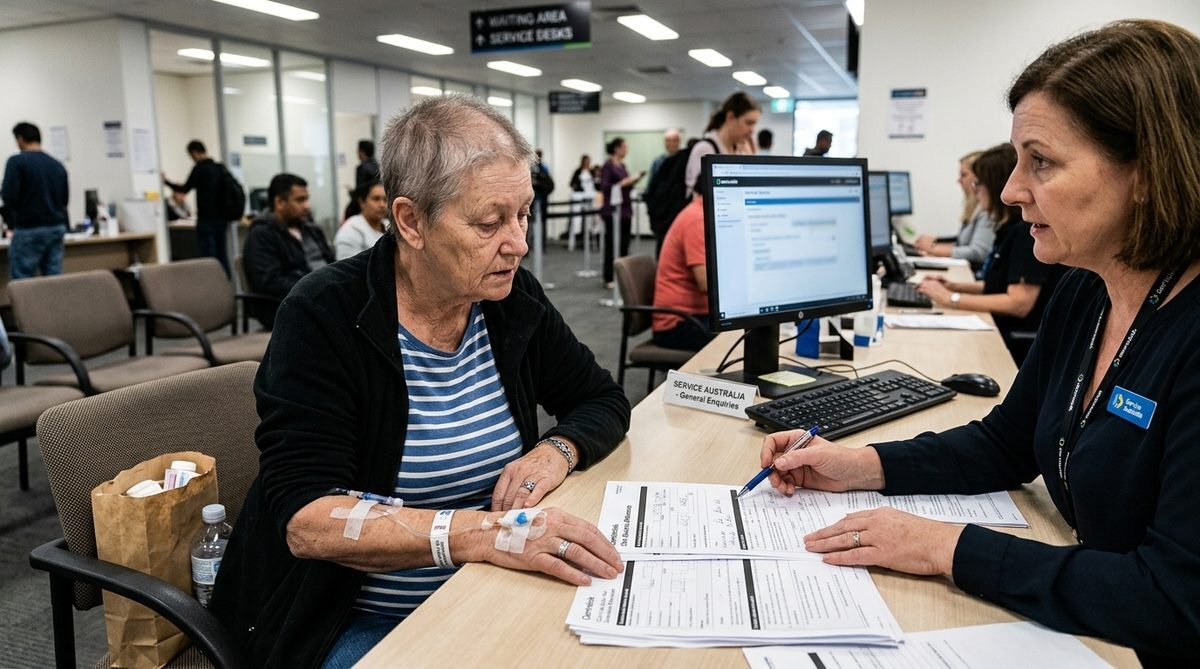
Do I Pay Excess for Day Surgery? Costs and Claims Explained

You must pay your hospital excess for day surgery if you are formally admitted as an inpatient and your private health insurance policy includes an excess for same-day admissions. Many people think they only pay an excess if they stay overnight. That's not how it works.
Your insurer treats same-day and overnight admission the same way when applying your excess.
I know this because my client Marcus went to a private facility for a colonoscopy. He arrived at 8:00 AM and left by 11:00 AM. He didn't sleep in a ward or eat a hospital meal. He assumed he wouldn't pay his $500 policy excess.
The reception desk asked for the $500 payment before they'd admit him. Marcus had to pay on the spot to get his procedure done.
Does day surgery count as hospitalisation?
Yes. Day surgery counts as hospitalisation if you're formally admitted to a hospital or registered day surgery clinic. Admission status determines how your insurer and Medicare view the event.
If your doctor books you for a procedure that needs a sterile operating theatre, recovery room monitoring, and specialist nursing care, the facility will process you as an admitted day patient.
I remember when my client Sarah assumed she was just attending a regular doctor appointment for a minor skin procedure. Because the doctor performed it in a registered day hospital, the facility formally admitted her. She occupied a recovery bed for two hours after local anaesthetic. This formal admission meant her health fund classified it as a hospitalisation.
Her policy carried a same-day excess, which she had to pay to the hospital.
Your admission paperwork defines your status. If you sign an admission form, you're officially hospitalised for that day. This triggers the terms of your private health insurance policy, including any excess payments you agreed to.
Can I claim day surgery on Medicare?
You can claim the medical component of your day surgery on Medicare. You cannot claim the hospital accommodation or theatre fees on Medicare.
Medicare pays for services provided by doctors, surgeons, and anaesthetists. It doesn't pay for private hospital beds, nurses, or operating rooms.
When you have day surgery as a private patient, Medicare pays 75 percent of the Medicare Benefits Schedule fee for your doctor. Your private health insurance covers the remaining 25 percent. The hospital itself charges a separate fee for using their operating room and recovery ward.
private health insurance covers this hospital fee. But only after you pay your agreed excess. If you don't have private health insurance, you pay the entire hospital fee yourself. Medicare won't contribute to the hospital bill.
This means your claim has two parts. The medical claim goes to Medicare and your health fund to cover the doctor. The hospital claim goes to your health fund to cover the room and theatre. Your excess applies to the hospital claim.
Do you have to pay excess for day surgery with Bupa?
You must pay your excess for day surgery with Bupa if your specific policy includes a same-day excess and you haven't met your calendar-year excess cap. Bupa offers different types of policies to suit different budgets. Some apply the excess to all admissions. Others waive it for same-day procedures.
When I reviewed a policy with my client Linda, she wanted to know why her Bupa bill was so high. We looked at her policy summary. Her cover had a $250 excess that applied to all hospital admissions.
But Bupa policies often feature a calendar-year cap. Linda had already paid a $250 excess for a different procedure in January. Because she reached her annual cap, Bupa waived the excess for her day surgery in September. If she hadn't reached that cap, she would have paid the $250 directly to the day surgery clinic.
You should also know that Bupa has agreements with specific private hospitals and day clinics. If you use a Bupa member-first or network hospital, your out-of-pocket costs for other hospital fees might be lower. But your policy excess still applies unless your specific cover excludes same-day excess.
What is the difference between day surgery and an outpatient procedure?
You don't pay a hospital excess for outpatient procedures because you aren't admitted to a hospital. Outpatient procedures happen in a doctor's private rooms, a community clinic, or a hospital emergency department where you aren't admitted to a ward.
Since there's no hospital admission, private health insurance doesn't cover these services, and your excess isn't triggered.
One of my clients, Arthur, had a small lesion removed by his skin specialist. The doctor performed the removal in the specialist's clinic room. Arthur sat in a normal chair, got local anaesthetic, and walked out ten minutes later.
The doctor billed Arthur directly. Arthur claimed a portion of the doctor fee back from Medicare. He didn't pay a hospital excess because he was never admitted to a hospital facility. His private health insurance didn't pay anything toward the procedure. Health funds are legally banned from paying for out-of-hospital medical services.
If the same doctor had scheduled Arthur for the same lesion removal in a registered day surgery hospital, everything would change. Arthur would be admitted as an inpatient, his health fund would pay for the theatre room, and Arthur would pay his policy excess.
How do you check if your policy requires a day surgery excess?
You can check if your policy requires a day surgery excess by finding your policy summary sheet and looking for the specific rules on same-day admissions. Many people don't know how to find this information.
When you open your policy document, follow these steps:
- Locate the section labeled hospital excess.
- Search for the term same-day excess or day surgery excess.
- Check if the document says excess applies to overnight stays only.
- Look for an annual excess cap, which limits how many times you pay the excess each year.
In my experience, call center staff sometimes make mistakes when explaining policy terms. I always tell my clients to ask for the product sheet in writing. Having the written document lets you verify the exact wording.
If the document states that the excess applies to all hospital admissions, you'll pay the excess for your day surgery.
What other costs will you pay for a day procedure?
You may face other costs for a day procedure even after you pay your hospital excess. The excess only covers your admission to the facility. It doesn't guarantee that every doctor and service is fully covered.
Prepare for these common additional costs:
- The gap fee: This is the difference between what the surgeon charges and what Medicare and your health fund pay.
- Anaesthetist fees: The specialist who puts you to sleep often charges a separate fee, which may include a gap.
- Pathology and radiology: If the doctor sends tissue samples to a lab or orders scans on the day, the lab will bill you separately.
- Take-home medicines: The hospital pharmacy will charge you for pain relief or antibiotics you take home.
I worked with a client who paid his $500 excess for a knee arthroscopy. He thought that was his only expense. He later received a bill from the anaesthetist for $400 and a bill from the pathology lab for $150.
You must ask each specialist for a written quote before your surgery to avoid these surprises.
Frequently Asked Questions
Is day surgery claimable?
Yes, day surgery is claimable through your private health insurance if your policy covers the specific clinical category for your procedure. You must check that the treatment isn't listed as an exclusion on your policy. If your policy covers the treatment, the insurer will pay for the hospital theatre and ward fees, minus your excess.
Does the excess apply if I go to a public hospital as a private patient?
Yes. If you choose to be admitted as a private patient in a public hospital, you must pay your policy excess. The public hospital will bill your health fund for your stay, and your fund will apply the excess just as they would in a private hospital.
Can I pay a higher premium to remove the excess?
Yes. You can switch to a policy with a nil excess. This will increase your regular premium payments, but you'll pay nothing at the hospital door when you have day surgery. You must make this change before your admission, and you may need to serve waiting periods if you're upgrading your level of cover.
What happens if I have multiple day surgeries in one year?
Most health insurance policies have an annual excess limit. For singles, this limit is usually $500 or $750 per calendar year. Once you pay this amount, you won't pay an excess for any other day surgeries or overnight stays for the rest of that calendar year.
Actionable Takeaway
Call your surgeon's office to get the specific Medicare item numbers for your day surgery. Then call your private health fund and ask them to confirm if your policy excess applies to those specific numbers and if you've already met your annual excess cap.
Explore related health and wellbeing guides
This article is part of PTNA's consumer health and wellbeing library. Browse the Health & Wellbeing Resources hub to find related guides by topic, including Australian health cover, Medicare, prostate health, mental health, disability support and life insurance.
How Much Does It Cost to Have Your Prostate Removed Privately in Melbourne?
Read article →
Is It Worth Having Your Prostate Removed in Melbourne?
Read article →
Can You Get Anything Free if You Have Cancer in Melbourne?
Read article →
What Are the Negatives of Removing Your Prostate in Melbourne?
Read article →
Is Prostate Cancer Classed as a Disability in Melbourne?
Read article →