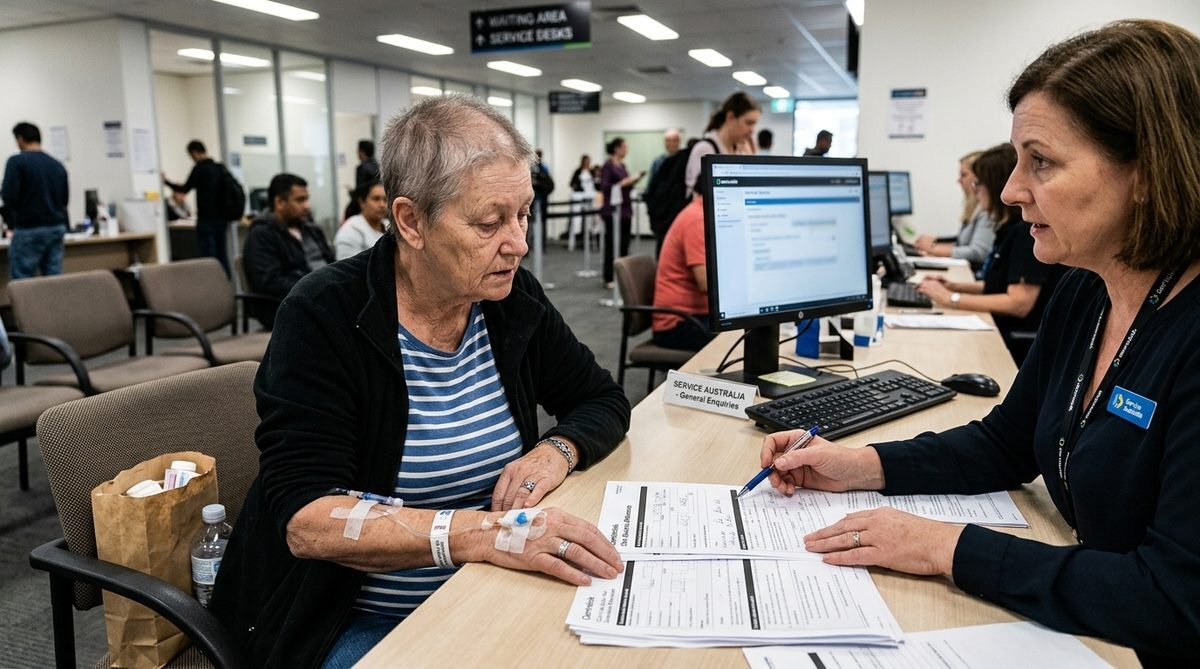
Can non-Australian citizens get a Medicare card?

Yes, some non-Australian citizens can get a Medicare card. Citizenship is just one path into Medicare (Australia). You may have the right to enrol through permanent residence, a pending permanent residence application, New Zealand status, a ministerial order, or a reciprocal health care agreement. A temporary visa by itself won't usually give you full Medicare access.
The key question isn't whether you hold an Australian passport. It's whether your current status meets an enrolment rule. Two people who arrived on the same day can get different answers because they have different visas or come from different countries.
This guide centres on that decision. It covers who may enrol, how much access each group gets, which documents count, and what to do when Medicare doesn't cover you.
Which status gives you the clearest path to enrolment?
Permanent residents have the clearest path for non-citizens. If Australia has granted you a permanent visa and you live in Australia, you can generally enrol in Medicare. There's no need to wait until you become a citizen. benefits
Some people can also enrol after applying for permanent residence. Extra rules apply here. You generally need to live in Australia and have permission to work, or have a parent, spouse, or child who lives here. Certain parent visa applicants face different limits, so applying for a permanent visa doesn't bring automatic cover in every case.
This is where many applications hit trouble. Someone may prove that a visa application was lodged but forget to include proof of work rights or family ties. Medicare then doesn't have enough evidence to decide the claim.
Think of enrolment as a status check backed by documents. The visa application is one piece. Where you live and other facts that make you eligible may count too.
How does New Zealand status affect the decision?
New Zealand citizens living in Australia can generally enrol in Medicare. They often need to prove their identity, New Zealand citizenship, and Australian residence.
Don't assume that birth in New Zealand always proves current citizenship. New Zealand nationality law decides who is a New Zealand citizen. Medicare staff still need documents confirming the person's status and identity.
A New Zealand permanent resident who isn't a New Zealand citizen may be treated differently. Residence rights in New Zealand don't turn someone holding another country's passport into a New Zealand citizen. Their Australian visa and any other grounds for eligibility must be checked on their own facts.
This detail catches out families with mixed passports. One partner may qualify through New Zealand citizenship, while the other needs a permanent Australian visa, a qualifying application, or separate visitor cover.
What happens if your country has a reciprocal agreement?
Australia has reciprocal health care agreements with a small group of countries. Eligible visitors from those countries may get Medicare cover for medically necessary care during their stay. Rules, covered services, and time limits differ between agreements.
Reciprocal access is more limited than the cover an Australian resident might expect. It may help pay for treatment that can't wait until you return home. But it may leave out planned treatment, ambulance transport, most dental care, and treatment in the private system.
Your nationality alone might not be enough. Some agreements consider where you lived before arriving in Australia or whether you were part of the other country's public health system. You may need a passport, visa evidence, proof of earlier residence, or a valid health system card from that country.
One common mistake is treating a reciprocal agreement like travel insurance. It isn't. The agreement covers set health services under government rules. Travel insurance may pay other costs, including ambulance fees, private hospital treatment, repatriation, cancellations, and lost property.
Why does the visa label matter less than its exact conditions?
Wide labels like student, worker, partner, or visitor don't settle Medicare eligibility. The answer can change based on the visa subclass, application stage, work rights, home country, and where you live.
A travel visa usually doesn't provide full Medicare eligibility. A visitor from a reciprocal agreement country may get limited access, while someone from another country may get none. A temporary worker might qualify under a special rule or ministerial order, but many temporary workers need private cover.
Students often need Overseas Student Health Cover. Some students from reciprocal agreement countries may also have limited Medicare rights. Even so, that doesn't always remove the insurance duty tied to their visa. The two types of cover follow different rules.
Visa condition 8501 requires some visa holders to keep adequate health insurance. Having a Medicare card doesn't always prove that this condition is met. Check the visa grant notice and written advice for your exact subclass before cancelling insurance.
Timing is another detail many guides miss. Your position may change before your passport does. Lodging a qualifying permanent residence application, getting a bridging visa, gaining work rights, or receiving a permanent visa can shift your path to enrolment. Check your Medicare eligibility after every major visa event.
How is Australian Medicare different from similar names overseas?
Medicare (Australia) is Australia's public health insurance system. It helps eligible people pay for care such as doctor visits, diagnostic tests, and treatment as a public patient in a public hospital.
Medicare (United States) is a separate US federal health insurance program. It mainly covers people aged 65 or older, plus some younger people with certain disabilities or medical conditions. Being enrolled in Medicare (United States) gives you no right to an Australian Medicare card.
A Green card proves lawful permanent resident status in the United States. It doesn't count as Australian permanent residence or prove Australian Medicare eligibility. A US Green card holder visiting Australia is checked under Australian rules, based on citizenship, Australian visa status, residence, and any agreement that applies.
These similar terms cause real mistakes on forms. Someone may be asked whether they're a permanent resident and answer yes because they're a US permanent resident. For an Australian Medicare application, Australian immigration status is what counts.
What does a Medicare card actually cover?
A Medicare card gives you access to benefits under the Medicare Benefits Schedule and linked public health arrangements. It doesn't make every health service free.
A doctor may bulk bill, meaning the doctor takes the Medicare benefit as full payment. If the fee is higher than the scheduled benefit, you may have to pay the gap. Specialists may also charge more than Medicare pays.
Eligible patients can be treated as public patients in public hospitals without paying for the covered hospital service. If you choose private treatment, you may face fees for the hospital, doctors, tests, and other care.
Medicare usually gives little or no cover for routine dental work, glasses, many allied health services, or ambulance transport. Ambulance rules vary by state. Medicines under the Pharmaceutical Benefits Scheme have separate eligibility and payment rules too.
Keep this in mind when deciding whether to hold private health insurance. A valid Medicare card can cut some costs, but it won't shield you from every large bill.
Which documents should you prepare?
Services Australia needs evidence that fits the eligibility route you're claiming. Send clear, current documents, not every immigration record you've ever received.
Your application may require:
- A current passport or another accepted identity document.
- Your visa grant notice or proof of immigration status.
- Evidence that you live in Australia, such as a lease, utility account, employment record, or bank statement with your address.
- Proof that you applied for permanent residence, if that is your route.
- Evidence of permission to work or a qualifying family relationship, where required.
- Documents linked to a reciprocal health care agreement, such as proof of prior residence or health system membership.
Names, birth dates, and passport details should be the same across all documents. If you've changed your name, include the document linking the old name to the new one.
Don't depend on a visa screenshot that leaves out dates or conditions. A full grant notice or official status record gives the assessor better evidence. For documents not written in English, use translations that meet the stated rules.
How do you submit an application?
Follow the current Medicare enrolment process published by Services Australia. Based on your circumstances, you may be able to send the enrolment form and documents online or through a service centre.
- Identify the exact eligibility ground that applies to you.
- Complete the Medicare enrolment form using the same details shown on your identity and visa records.
- Attach evidence for identity, immigration status, Australian residence, and any extra rule tied to your route.
- Keep copies of the form and every document submitted.
- Respond quickly if Services Australia asks for more evidence.
Family members can often be listed on one card, but each person must meet the right rules. Sharing an address or being married doesn't automatically make the whole family eligible. Families with mixed status may need separate applications or different kinds of health cover.
If you're approved, check when your enrolment starts. Don't assume you can claim every earlier medical bill. A provider may also have to fix billing details before an eligible claim can be handled.
Why might an application be delayed or refused?
Most trouble comes from missing evidence or applying under the wrong eligibility route. A passport shows identity and nationality. It may not prove Australian residence, visa conditions, or past membership of a health system.
An application may stall when the applicant:
- Provides an expired passport without supporting identity records.
- Sends proof of a permanent residence application but no evidence of work rights or qualifying family ties.
- Claims reciprocal access based only on holding a passport from a participating country.
- Uses a New Zealand residence document as proof of New Zealand citizenship.
- Assumes an overseas permanent residence document has effect in Australia.
- Leaves a family member off the evidence supplied for a joint application.
If Medicare refuses your application, ask for the reason in writing. Check that reason against the eligibility route you claimed. You may be able to add a missing document, fix an error, or ask for the decision to be reviewed.
Don't keep sending the same papers without fixing the stated problem. If the decision says you didn't prove Australian residence, send evidence that you live here. If visa status is the issue, get a clear immigration record.
What should you do while waiting for a decision?
Keep suitable health cover running until Medicare confirms your enrolment and start date. This is crucial if your visa requires insurance.
Ask health providers for itemised receipts that show the patient's name, service, date, fee, and provider details. If your Medicare cover later begins on a date that includes the service, these records may help with a claim. Backdated payment isn't guaranteed, so budget as though you'll need to pay the bill yourself.
Tell the clinic your Medicare application is pending before you receive treatment. Staff can explain the private fee and payment terms. For urgent care, get treatment first. Don't put off needed care while waiting for a card or enrolment decision.
Check ambulance cover as well. Visitors and new residents often think about hospital bills but overlook ambulance charges. Those fees can be high and follow state or territory rules.
What if you are not eligible?
If you don't meet a Medicare enrolment rule, private health insurance is the main way to control health costs. Pick cover that meets your visa conditions and suits the care you may need.
Read the waiting periods, exclusions, excess, annual limits, hospital network rules, and terms for pre-existing conditions. Cheap cover might meet a visa rule but still leave big gaps. Ask the insurer to confirm in writing that the policy suits your visa.
Keep cover active during any gap between visas. A pending application doesn't guarantee Medicare eligibility, and approval later may not pay every earlier cost.
If your status changes, check both systems again. New Medicare eligibility may allow you to change your private cover. First, confirm your Medicare start date and visa duties before cancelling the policy.
What is the one step to take now?
Match your current Australian visa and residence status to one Medicare eligibility route, then apply with documents that prove every part of that route before changing your health insurance.
Common questions
Do non-citizens in Australia get Medicare?
Some non-citizens can get Medicare, including many permanent residents and people from countries with a health care agreement. Eligibility depends on your visa, home country, and living situation.
Do you have to be an Australian citizen to be eligible for Medicare?
No, you do not have to be an Australian citizen to get Medicare. Permanent residents and some other eligible people can also enrol.
Can foreigners get free healthcare in Australia?
Some visitors can receive certain free or lower-cost health services under an agreement with their home country. Most other visitors must pay for care or use travel health insurance.
How long can I stay on my parents' Medicare card in Australia?
There is no fixed age when you must leave your parents' Medicare card. From age 15, you can choose to get your own Medicare card.

How Much Does It Cost to Have Your Prostate Removed Privately in Melbourne?
Read article →
Is It Worth Having Your Prostate Removed in Melbourne?
Read article →
Can You Get Anything Free if You Have Cancer in Melbourne?
Read article →
What Are the Negatives of Removing Your Prostate in Melbourne?
Read article →
Is Prostate Cancer Classed as a Disability in Melbourne?
Read article →