Can I Climb Stairs After Prostate Surgery? What You Actually Need to Know
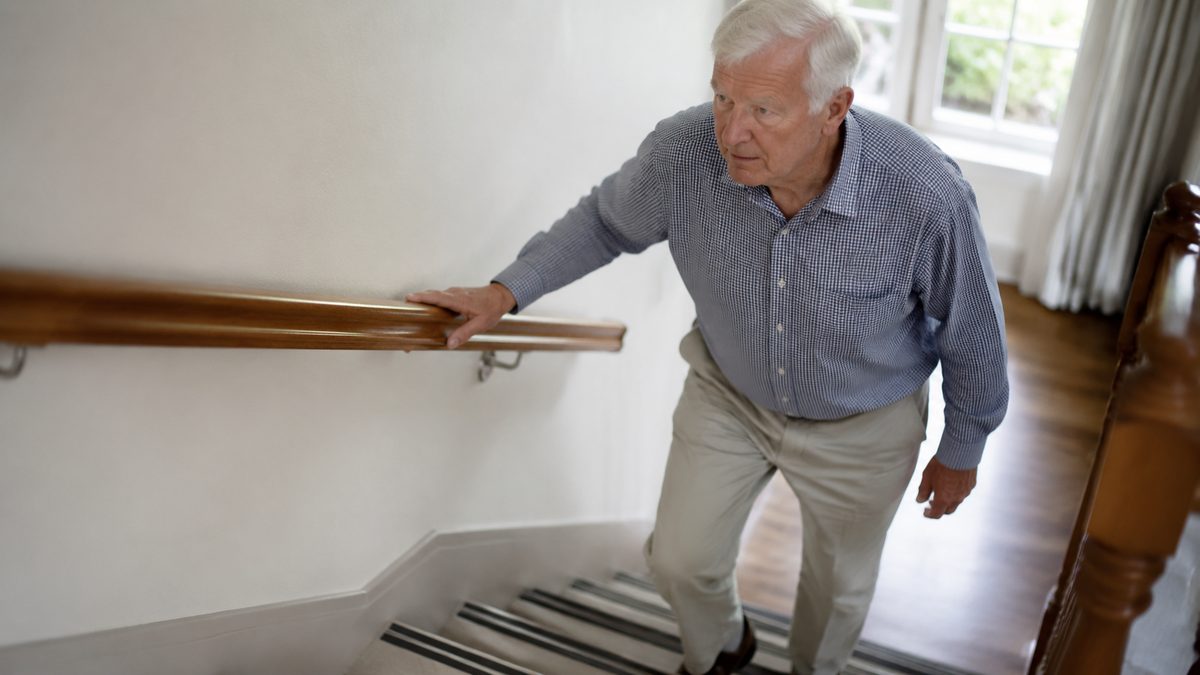
Yes, you can climb stairs after prostate surgery. Most surgical teams expect you to start within 24 to 48 hours of your procedure. Gentle stair climbing is part of early mobilisation, and current recovery protocols actively encourage it.
Most men feel comfortable managing a full flight of stairs within one to two weeks. What you need to avoid is not movement but strain: heavy lifting over 10 to 15 pounds, bearing down, and anything that puts sharp pressure on the repair site. Normal stair climbing does not fall into that category.
Why Moving Early Actually Helps Your Recovery
There is a common fear that any physical activity after surgery risks tearing something loose or damaging the repair. That fear makes sense, but the evidence points the other way. A retrospective cohort study of 288 laparoscopic prostatectomy patients found that enhanced recovery protocols built around early mobilisation cut hospital stays from a median of seven to eight days down to four to five days, with lower complication rates and no increase in readmissions or reoperations within 90 days.
Early movement works for two reasons: mechanical and circulatory. When you walk or climb stairs, your calf muscles pump blood back toward your heart, which reduces the risk of deep vein thrombosis, one of the more serious complications after any pelvic surgery. Movement also keeps your lungs working properly, reduces pneumonia risk, and helps your bowel wake up faster after anaesthesia.
One of my clients was terrified to get out of bed the morning after his robotic prostatectomy. He kept saying he could feel the catheter and was convinced that walking would dislodge something. His nurse walked him to the end of the corridor that afternoon, and by the next morning he climbed the single step out of the ward bathroom on his own. That one step felt enormous to him at the time. Two weeks later he was managing the stairs at home without thinking about it. His anxiety about movement was the bigger obstacle than any physical limitation.
What Is the Fastest Way to Recover From Prostate Surgery?
The fastest recovery comes from combining early movement with pelvic floor work, started before surgery if possible. Multiple randomised controlled trials show that pelvic floor muscle training beginning five weeks before surgery and continuing through the first twelve weeks post-operation significantly improves continence outcomes compared to doing little or nothing.
A meta-analysis covering 20 RCTs and 2,188 men confirmed that supervised pelvic floor exercise produces significantly better urinary incontinence remission than unsupervised or no exercise, with measurable improvements as early as two to six weeks after surgery.
In my experience, the men who recover fastest treat the six weeks before surgery as a training block. They build up walking distance, learn the pelvic floor exercises properly, and arrive at surgery in decent cardiovascular shape. The ones who arrive deconditioned spend the first two weeks of recovery catching up to baseline rather than building on it.
Here is what the evidence supports for speed of recovery. Walk every day from day one or two post-surgery. Gradually increase the distance. Do your pelvic floor contractions as soon as you are comfortable, which for most men is within the first 48 hours. Avoid sitting completely still for long stretches. Manage your pain well enough that you can actually move, because undertreated pain is one of the main reasons people stay still when they should not be.
How Long Should You Rest After Prostate Surgery?
Complete bed rest is not the goal. What you are resting from is strenuous effort, not gentle movement. Most men are discharged within one to five days depending on whether they had open, laparoscopic, or robotic surgery, and the expectation on discharge is that they will be walking around at home.
For the first two weeks, keep activity gentle. Short walks, stair climbing at a normal pace with a handrail, light household tasks. For weeks two through four, you can gradually extend your walking distance and return to driving once you are off the stronger pain medications and can perform an emergency stop comfortably.
Between four and six weeks, most men return to desk work if their job is sedentary. By six to eight weeks, the majority are cleared for all normal activities including moderate exercise.
What should you avoid after prostate surgery during this window? Lifting anything heavier than a bag of groceries for the first four to six weeks. Straining on the toilet. Any activity that creates downward pressure on the pelvic floor, which includes heavy resistance training, contact sport, and sustained high-intensity cardio. These restrictions exist because the anastomosis, the point where the surgeon reconnected the urethra and bladder, takes several weeks to reach full strength. Stair climbing does not threaten that repair. Deadlifting does.
How Long Does It Take for the Prostate Area to Heal After Surgery?
The surface wound heals in two to three weeks. The anastomosis reaches functional healing at around six weeks. Full tissue remodelling, the kind that determines your long-term continence and erectile function outcomes, continues for up to twelve to eighteen months.
This timeline matters because it explains why continence often improves gradually over the first year rather than arriving all at once. The pelvic floor muscles are adapting to a new anatomy. The nerves, if spared, are recovering. I remember one client who was devastated at the three-month mark because he still needed a pad. By month nine he needed nothing. The healing did not stop at six weeks even though his incision looked fine and his surgical team had discharged him.
A meta-analysis of postoperative exercise rehabilitation showed significant improvements in six-minute walking distance and quality of life when structured exercise began in the early postoperative period. The research covered colorectal, breast, and prostate cancer patients and found a mean improvement of 63.47 metres in walking distance, which is a meaningful functional gain for daily life. This tells you that exercise during recovery is not just safe but actively builds capacity that feeds into how well you heal.
Warning Signs That Mean You Should Slow Down
Most discomfort during early stair climbing is normal. Effort, mild breathlessness, and some awareness of the surgical site are expected. The signs that mean you should stop and call your clinical team are different in character.
Stop and seek advice if you feel sudden sharp pain at the surgical site during or after activity. The same applies to swelling, redness, or warmth around the wound, which can indicate infection. If you become dizzy or lightheaded on the stairs, sit down immediately and tell your team.
Excessive fatigue that does not improve with rest after the first week warrants a conversation with your surgeon. Calf pain or swelling in one leg is a red flag for deep vein thrombosis and needs urgent assessment.
One thing that often gets missed in discharge paperwork is that leaking urine when you climb stairs is common in the early weeks and does not mean something is wrong. The pelvic floor is working against gravity with extra load, and the muscle control takes time to build. Using a pad and continuing your pelvic floor exercises is the right response, not stopping movement.
The Thing Most Articles Get Wrong About Stairs and Prostate Surgery
Most articles frame stairs as a risk to manage. The more useful frame is that stairs are a tool. A flight of stairs is a low-load functional exercise that requires coordination, single-leg weight transfer, and mild cardiovascular effort. Done at an easy pace with a handrail, it is gentler than most physiotherapy exercises prescribed after orthopaedic surgery.
The real risk in the early weeks is not moving too much. It is moving in the wrong patterns, specifically any movement that involves a Valsalva manoeuvre, which is holding your breath and bearing down. That pattern, used instinctively when lifting something heavy or straining, is what creates the intra-abdominal pressure spike that stresses the anastomosis. Stairs climbed at a normal pace with relaxed breathing do not produce that.
The second thing most articles get wrong is treating the catheter period as completely separate from recovery. Men often wait until catheter removal before starting to think about pelvic floor work. This is a missed opportunity. Prehabilitation evidence is clear that starting pelvic floor training before surgery and continuing it from the first postoperative days produces significantly better continence outcomes than waiting. The catheter does not prevent gentle pelvic floor contractions.
A Practical Week-by-Week Guide
In the first week, focus on getting up and moving around the house every couple of hours. Climb stairs when you need to rather than avoiding them. Use the handrail. Take your time. Keep your breathing relaxed. Do not carry anything heavy up or down.
In weeks two and three, extend your walking time outdoors. Ten to fifteen minutes once or twice a day is a reasonable target. Continue the stairs as needed. Start reintroducing light tasks around the house.
By weeks four to six, most men are walking 30 minutes or more daily and managing stairs without thinking about them. Light resistance work with bands can often begin around week four with surgical team approval, but avoid loading the core and pelvic floor heavily.
From week six onwards, reintroduce structured exercise gradually. Cycling, swimming, and moderate gym work are all appropriate as your fitness and confidence build. The pelvic floor work should continue for at least twelve weeks post-surgery and ideally becomes a permanent habit.
Frequently Asked Questions
Can I climb stairs the day I get home from hospital?
In most cases, yes. If your home has stairs and you need to use them, you should be able to manage them safely. Go slowly, use the handrail, and rest if you need to. Your team would have flagged any specific restriction before discharge.
Will climbing stairs affect my catheter?
No. The catheter is secured and designed to tolerate normal movement. Walking and stair climbing will not dislodge it. Make sure the drainage bag is positioned below your bladder and secured so it does not pull.
When can I go back to work after prostate surgery?
For desk-based work, most men return between two and four weeks. For physically demanding jobs, six to eight weeks is more realistic. Your surgical team can advise based on the specific demands of your role.
How do I know if I am overdoing it?
Sharp pain at the surgical site, excessive bleeding, swelling, or fever are the clear signals to stop and call your team. General tiredness and mild discomfort after activity that settles with rest are normal. The rule of thumb is that if you feel significantly worse the following morning than you did the day before, you did too much.
Should I do pelvic floor exercises while I still have a catheter?
Yes, as soon as you are comfortable, typically within the first 48 hours. Gentle contractions help maintain muscle awareness and set you up for faster continence recovery after catheter removal. Your physiotherapist or continence nurse can show you how to do them correctly without straining.
What to Do Now
If you have not had surgery yet, start pelvic floor exercises this week and build your walking base. Arriving fitter makes every part of recovery easier. If you are in the early days after surgery, get up and move around the house today. Use the stairs when you need to. Keep your breathing relaxed and avoid lifting anything heavy.
If you do not already have a continence physiotherapist, ask your surgical team for a referral. Supervised pelvic floor training produces meaningfully better outcomes than working from a leaflet alone, and it is one of the highest-use things you can do for your recovery right now.Sources
Explore related health and wellbeing guides
This article is part of PTNA's consumer health and wellbeing library. Browse the Health & Wellbeing Resources hub to find related guides by topic, including Australian health cover, Medicare, prostate health, mental health, disability support and life insurance.
How Much Does It Cost to Have Your Prostate Removed Privately in Melbourne?
Read article →
Is It Worth Having Your Prostate Removed in Melbourne?
Read article →
Can You Get Anything Free if You Have Cancer in Melbourne?
Read article →
What Are the Negatives of Removing Your Prostate in Melbourne?
Read article →
Is Prostate Cancer Classed as a Disability in Melbourne?
Read article →