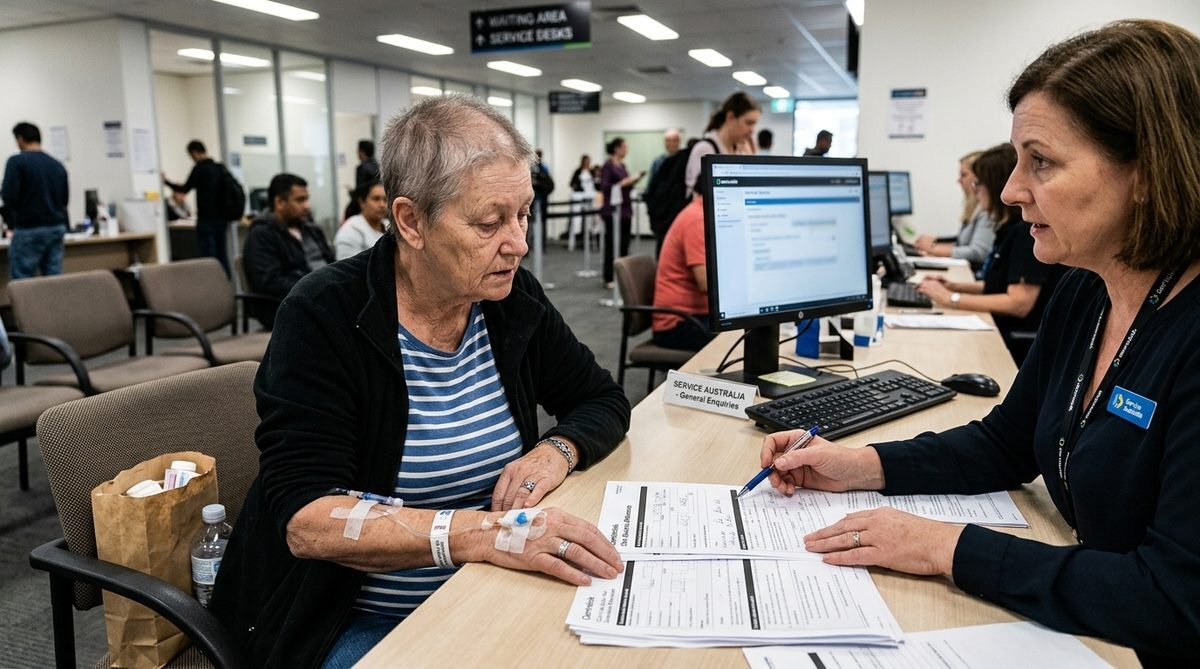
Can I Claim Disability Allowance for Bipolar? What You Actually Need to Know
Yes, you can claim disability allowance for bipolar disorder in Australia. But the diagnosis alone won't get you approved. Centrelink needs to see that your symptoms are severe enough to stop you from working or managing everyday life tasks.
That means documented functional impairment, not just a confirmed diagnosis. If your psychiatrist can show a pattern of episodes, cognitive difficulties, and real-world consequences like job losses or hospitalizations, you have a legitimate case worth pursuing.
Is Bipolar a Disability for Centrelink?
Centrelink treats bipolar disorder as a recognized medical condition that can qualify you for the Disability Support Pension (DSP). The relevant payment in Australia is the DSP, not a standalone "disability allowance" in the way some other countries structure it. To qualify, you need to meet a medical impairment threshold, which means showing that your condition is fully diagnosed, treated, and stabilized, yet still limits your ability to work.
Here's the catch: Centrelink wants to see that you've engaged with treatment. If you haven't tried medication, therapy, or psychiatric support, the assessment process will flag that. The system isn't designed to reward someone for avoiding treatment. It's designed to support people who have genuinely tried and still can't work at a sustainable level.
One of my clients went through two DSP rejections before we figured out the core problem. Her psychiatrist had been writing letters saying she "has bipolar disorder and struggles to work." That wasn't enough. What changed her outcome was a comprehensive letter detailing specific episodes, medication trials over several years, cognitive testing results, and the direct impact on her capacity to maintain employment. Third application, she was approved.
Do You Get Disability Allowance for Bipolar?
Whether you actually receive the DSP depends on how well your application documents functional impairment, not how severe you feel your condition is. Research shows that even during periods of mood stability (euthymia), people with bipolar disorder function significantly below healthy controls across work, cognitive, relationship, and daily living domains. That matters because it means the disability isn't just present during a manic or depressive episode. It's often ongoing.
Studies confirm that only around one-third of people with bipolar disorder achieve full recovery at work and in social life, even when medication reduces mood episodes in up to 90% of cases. The mood swings might reduce, but the person's ability to hold down a job, manage relationships, or complete complex tasks often stays compromised. That gap between stable mood and real-world functioning is exactly what a DSP application needs to capture.
What makes bipolar particularly complex to document is the episodic nature. Between episodes, someone might look and function reasonably well to an outside observer. But residual depressive symptoms persist more than 30% of weeks even after initial stabilization. Cognitive deficits affecting memory, processing speed, and executive function often remain during stable periods. These are the kinds of details that build a strong application.
How Difficult Is It to Get Disability for Bipolar?
Honest answer: it's harder than it should be. Initial claims frequently get rejected.
First, the invisibility problem. Bipolar disorder doesn't show up on a scan. There's no blood test. The impairment is functional and cognitive, which means it relies heavily on documented history rather than objective test results. Assessors who don't understand the cognitive side of the condition can underestimate how disabling it actually is.
Second, the episodic pattern works against you in assessments. If you happen to be in a stable period when you attend your medical assessment, you may present reasonably well. The assessor sees you on a good day and scores you accordingly. This is why longitudinal documentation matters far more than how you present on the day.
Third, the cognitive dimension often gets overlooked entirely. Cognitive impairment is a key driver of disability in bipolar disorder, particularly in people with longer illness duration. Memory problems, difficulty concentrating, and slowed processing speed can make sustained employment impossible even when mood is relatively stable. Neuropsychological testing can make this visible in a way that clinical letters alone cannot.
I know this because one of my clients had been functional enough on the surface to keep losing jobs rather than never getting them. He'd get hired, manage for a few months, then fall apart when his workload increased. His work history read as inconsistent rather than disabled. When we added neuropsych testing to his file, the pattern finally had an explanation the assessors could work with.
What Evidence Actually Strengthens a Bipolar DSP Claim?
The strongest applications I've seen share a few consistent features.
A detailed psychiatric history is non-negotiable. This means years of records, not a single letter. Centrelink wants to see that the condition is established, that multiple treatment approaches have been tried, and that functional limitation persists despite best efforts. Medication trials, hospitalizations, emergency presentations, and therapy engagement all belong in this picture.
Neuropsychological assessment adds significant weight. Because cognitive deficits often drive disability in bipolar disorder independently of mood state, having standardized test results that show impairment in memory, executive function, or processing speed gives the assessment something concrete to work with. Clinical consensus increasingly supports neuropsych testing as central to understanding functional outcomes in bipolar disorder.
Work history documentation matters more than people realize. A pattern of short-term positions, repeated sick leave, performance issues linked to mood episodes, or periods of complete inability to work tells a story. Written evidence from former employers or HR records can support this, though it's not always available or comfortable to obtain.
Collateral information from family members, carers, or support workers can fill in gaps that medical records miss. What happens at home, how the person manages self-care during episodes, whether they can manage bills and appointments without support. These real-world details address the functional domains that DSP assessments look at directly.
How Much Does Bipolar Disability Pay in Australia?
The Disability Support Pension rate in Australia changes with indexation, so the precise figure shifts over time. As of mid-2025, the DSP for a single person sits around $1,100 to $1,150 per fortnight, with additional supplements available depending on your circumstances. Partnered rates are lower per person.
Rent assistance, concession cards, and pharmaceutical benefits are also accessible for DSP recipients, which adds real value beyond the base payment. There are also income test and assets test rules that affect how much you receive if you're earning any income at all. If you work part-time and your condition allows for some work, the Working Credit and Pension Work Bonus rules govern how that interacts with your payment. It's worth getting specific advice on your situation because the interaction between DSP and any income can be complicated.
What Centrelink Looks For in a Bipolar Claim
Centrelink uses a Functional Impact Rating to score how your condition limits work-related activities. You need to meet a threshold that reflects serious impairment. For mental health conditions like bipolar disorder, the areas most likely to show marked limitation are: maintaining concentration and pace over time, managing changes or demands in a work setting, interacting with others without significant difficulty, and maintaining regular attendance.
Psychosocial stress is both a driver and a consequence of functional decline in bipolar disorder. High-demand or socially complex work environments are precisely the kinds of settings that precipitate relapse. This creates a cycle where attempting work triggers episodes, which further impairs functioning, which makes future work harder. Documenting this cycle explicitly, with dates and details, demonstrates something more meaningful than a static snapshot of current function.
Social functioning impairments are also relevant. Research shows that people with bipolar disorder have difficulties with social information processing, including recognizing emotional cues in others, that compromise relationships and workplace interactions. This is often invisible in a standard assessment but can be captured through neuropsychological testing and psychiatric evaluation.
The Part Most Articles Get Wrong
Most advice on this topic focuses on the acute, dramatic presentations: hospitalizations, severe manic episodes, psychosis. These do strengthen a claim. But the majority of people with bipolar disorder who struggle to work aren't in acute crisis most of the time.
They're living with persistent residual symptoms, cognitive fatigue, and an inability to sustain the consistency that employment requires. Functional recovery from bipolar disorder is now recognized by researchers and clinicians as a separate goal from stable mood. The treatments that stabilize mood don't necessarily restore cognitive function or social capacity. This means someone can have "well-controlled" bipolar disorder on paper and still be genuinely disabled in a functional sense. That's not a contradiction. It's what the evidence shows.
If your psychiatrist or GP describes your condition as "well-managed," that phrasing can accidentally undermine your claim. Well-managed symptoms and full work capacity are not the same thing. The documentation needs to make that distinction explicit.
Should You Get Legal or Professional Help?
For a DSP application involving bipolar disorder, professional help is worth serious consideration. Not because the system is impossible to navigate alone, but because the documentation requirements are specific, the assessment criteria are technical, and initial rejections are common even for legitimate claims.
A disability advocate, social worker with DSP experience, or a service like PTNA can help you understand what evidence you need, how to frame your psychiatrist's report, and what to do if you're rejected. Appeals are available and do succeed, particularly when the original application was missing key documentation rather than genuinely ineligible.
In my experience, the people who struggle most with the application process are those who assume the severity of their condition will be obvious to assessors. It isn't. The burden is on the applicant to make it obvious, with paper.
Frequently Asked Questions
Can I claim DSP for bipolar if I'm currently working part-time?
Yes, in some cases. If your part-time work is below a certain hours threshold and you meet the functional impairment criteria, you may still qualify. The DSP is about capacity for sustained work, not whether you're currently working at all.
Does bipolar disorder automatically qualify for the DSP?
No. Diagnosis alone isn't enough. You need documented evidence that the condition limits your ability to work at a level that meets Centrelink's impairment rating thresholds.
What if my bipolar disorder is "mild"?
Severity on a clinical scale doesn't map directly to DSP eligibility. What matters is functional impact. Someone with a "mild" diagnosis who has lost multiple jobs, has cognitive impairment on testing, and cannot sustain reliable attendance may have a stronger claim than someone labeled "severe" who is managing well with support.
Can I appeal a rejected DSP claim for bipolar?
Yes. You can request an Authorised Review Officer review, then escalate to the Administrative Appeals Tribunal if needed. Many successful DSP grants happen at appeal stage when the initial application was incomplete rather than ineligible.
How long does the DSP assessment take?
Processing times vary. As of recent years, it has ranged from several weeks to several months depending on the complexity of the claim and whether additional information is requested. Having complete documentation ready from the start reduces delays.
What to Do Next
If you're considering a DSP application for bipolar disorder, start by gathering two to three years of psychiatric records that show your treatment history, not just your diagnosis. Ask your psychiatrist for a functional report that addresses your capacity to work specifically, and consider requesting a neuropsychological assessment if cognitive difficulties are part of your picture.
If you've already been rejected, read the decision letter carefully to identify what evidence was missing rather than assuming you don't qualify. Getting the documentation right the first time saves months. If you want guidance on building your case or navigating the process, the team at PTNA works with people in exactly this situation.Sources
Explore related health and wellbeing guides
This article is part of PTNA's consumer health and wellbeing library. Browse the Health & Wellbeing Resources hub to find related guides by topic, including Australian health cover, Medicare, prostate health, mental health, disability support and life insurance.
How Much Does It Cost to Have Your Prostate Removed Privately in Melbourne?
Read article →
Is It Worth Having Your Prostate Removed in Melbourne?
Read article →
Can You Get Anything Free if You Have Cancer in Melbourne?
Read article →
What Are the Negatives of Removing Your Prostate in Melbourne?
Read article →
Is Prostate Cancer Classed as a Disability in Melbourne?
Read article →